Precision Slimline Profiles & Architectural Systems
Combining ultra-narrow sightlines, aerospace-grade 6063-T6 aluminum extrusion, and superior thermal isolation for high-end residential and commercial facades.
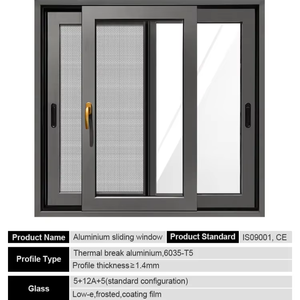
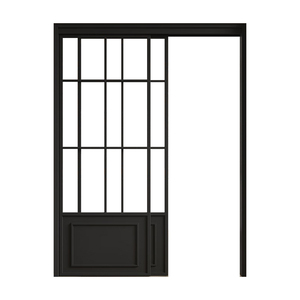
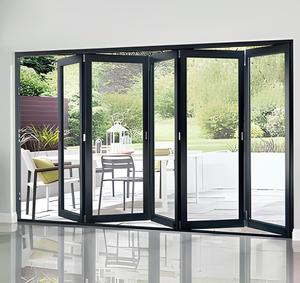
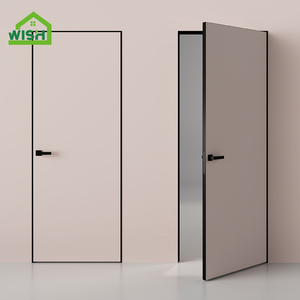
Decoding Slimline Fenestration: Structural Integrity & Thermal Physics
How leading Chinese manufacturers achieve minimal sightlines without compromising wind-load resistance or energy efficiency.
High-Tensile 6063-T6 Extrusions
The core structural challenge of slimline architectural windows is profile deflection under cyclonic wind forces. Guangdong Dejiyoupin Doors and Windows Co., Ltd. (DERCHI) utilizes primary 6063-T6 and 6060-T66 aluminum billet alloys with strict wall thickness control (1.8mm to 3.0mm structural webs). This geometry achieves high moment of inertia (Ix / Iy values), preventing glazing seal rupture across multi-story facades.
Polyamide Thermal Barriers
Achieving low thermal transmittance (U-values down to 1.1 W/m²K) requires sophisticated thermal break engineering. Profiles are separated using multi-chamber, glass fiber-reinforced PA66 GF25 polyamide insulation strips. Coupled with argon-filled low-E insulated glass units (IGUs) and warm-edge techno-spacers, our systems mitigate thermal bridging even under harsh temperature differentials.
Pressure-Equalized Drainage
Moisture ingress prevention is engineered via three-tier EPDM co-extruded continuous vulcanized gasket arrays and concealed pressure-equalized cascade drainage chambers. This ensures water tightness ratings exceeding 900 Pa under continuous dynamic wind-driven rain testing, fully satisfying AS2047, ASTM E331, and European EN 12208 certifications.
Slimline Profile Engineering Specifications
Direct comparative performance metrics across DERCHI architectural window configurations.
| System Series | Sightline Width | Thermal Insulation (Uw) | Acoustic Attenuation | Design Wind Pressure | Primary Hardware Integration |
|---|---|---|---|---|---|
| DERCHI Minimalist Slim-50 Casement | 38mm - 45mm | 1.2 - 1.4 W/m²K | Rw 38 - 42 dB | Class N6 (> 4500 Pa) | German Siegenia / Roto Concealed Hinges |
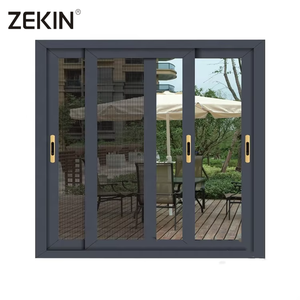
| Panorama Ultra-Narrow Sliding 75 | 18mm Interlock | 1.4 - 1.6 W/m²K | Rw 35 - 39 dB | Class N5 (3000 - 4000 Pa) | Heavy-Duty Stainless Steel Quad-Rollers (350kg) |
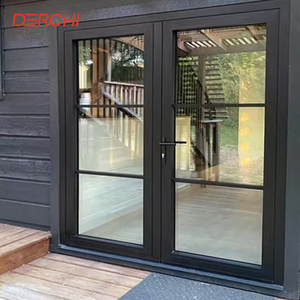
| Crittall-Style Heritage Slimline | 28mm - 35mm | 1.5 - 1.8 W/m²K | Rw 36 - 40 dB | 2400 Pa Serviceability | Multi-Point Multiplex Security Gearbox |
| Passive House 90 Architectural System | 52mm Narrow Bevel | 0.8 - 1.0 W/m²K | Rw 44 - 48 dB | 5000 Pa Extreme Typhoon Rated | Triple EPDM Continuous Vulcanized System |
Guangdong Dejiyoupin: Global Scale & Verification
Recognized as a Top 10 fenestration brand in China, our 180,000㎡ industrial footprint bridges architectural design and reliable fabrication.
180,000㎡ Manufacturing Base
Equipped with high-precision CNC 5-axis machining centers, robotic corner-crimping cells, and automated dual-component silicone glazing lines in Shishan Town, Foshan.
Comprehensive Testing & Audits
Certified to CE, ISO9001, AS2047 (N6 certified), NFRC, and UL standards. We provide certified laboratory test data for wind loading, air leakage, and water tightness verification.
Free CAD/BIM Shop Drawings
Our dedicated engineering department converts structural schematics into detailed fabrication packages, ensuring structural mullion checks and perimeter installation compatibility before machining.
Full Consolidation Logistics
Single-source fulfillment covering slimline aluminum windows, entrance doors, interior wood flush systems, and garage sectional doors consolidated into customized seaworthy steel-banded crates.
Future Trends in Architectural Glazing Sourcing
Actionable intelligence for project developers, quantity surveyors, and architectural glazing importers.
1. Embedded Building Automation & Smart Glazing
Modern commercial and luxury villa developments demand integrated concealed magnetic sensors, low-voltage electrochromic smart glass (PDLC/EC), and concealed motorized linear actuators. Procurement contracts increasingly specify pre-wired, dry-contact profile chases tested at factory level to eliminate on-site conduit retrofitting.
2. Embodied Carbon & Recycled Billets
With ESG reporting criteria intensifying in North America, Europe, and Australasia, top China suppliers are shifting toward low-carbon billets smelted using renewable hydro-power and closed-loop scrap recycling (minimum 60% post-industrial aluminum content). Procurement managers should demand third-party verified EPDs (Environmental Product Declarations).
3. Factory-Assembled Unitized Systems
Skyrocketing installation labor costs in destination markets have made fully assembled, pre-glazed unitized slimline systems the preferred procurement format over knock-down (KD) shipments. Although KD packing optimizes container volume, unitized window modules minimize on-site glazing errors and seal failures.
Five-Stage Global Sourcing Roadmap
A structured approach to custom window procurement with Guangdong Dejiyoupin.
Schedule Review
Architectural floor plan, structural opening schedules, wind pressure criteria, and regional thermal performance benchmarking.
CAD Engineering
Generation of parametric shop drawings, cross-sectional details, connection bracket engineering, and structural wind calculations.
CNC Fabrication
Precision multi-axis profile milling, automated corner joint injection, hardware fitting, and robotic glazing seal curing.
QA & Seaworthy Crate
Laser dimension checks, air/water testing verification, protective film application, and export-grade plywood crating.
Site Support
Delivery tracking, comprehensive installation guides, video-based site engineer supervision, and warranty replacement coverage.
Frequently Asked Procurement Questions
Direct technical answers addressing the concerns of overseas project managers and developers.
How do slimline profiles maintain wind-load resistance with reduced sightlines?
Structural resistance is maintained by increasing the profile depth rather than its face width. By expanding the internal cavity web (profile depths typically 70mm to 120mm) and integrating reinforced steel or 6060-T66 aluminum reinforcement inserts into critical mullion intersections, we achieve high section modulus (Ix) values that resist dynamic deflections up to 4500 Pa (equivalent to Australian N6 and ASTM E330 ratings).
What surface treatment specifications are recommended for marine coastal projects?
For installations within 5km of ocean shorelines (high chloride exposure), we recommend fluorocarbon PVDF coating (minimum 3-coat system complying with AAMA 2605) or marine-grade anodizing with a film thickness of Class 20 to 25 microns (Qualanod certified). For standard architectural environments, AkzoNobel or PPG architectural powder coatings meeting Qualicoat Class 2 standards provide reliable UV and corrosion resistance.
What certifications are provided for local building code approvals?
Our production facilities maintain CE certifications (EN 14351-1), ISO9001 quality management verification, Australian AS2047 and AS1288 performance and safety glazing accreditation, and North American NFRC / AAMA compliance documentation. Project-specific physical test certificates covering wind pressure, water tightness, air infiltration, and acoustic performance can be supplied prior to mass dispatch.
Can DERCHI accommodate fully bespoke custom architectural opening geometries?
Yes. Every project order is custom engineered to opening dimensions, corner configurations (including 90-degree floating frameless glass-to-glass structural corners), and pocket door cavities. Our structural engineering team generates complete 2D CAD and 3D Revit shop drawings for approval before raw material extrusion cutting begins.
How are oversized glass panes and delicate frames secured against container shipping damage?
Glazed units and profile assemblies are packed using fumigation-free, high-density plywood crates with internal EPE foam shock buffers, edge-guard reinforcement, and desiccant bags to prevent moisture staining during sea transit. Glazed units are crated at an angle to distribute ocean transit g-forces, ensuring zero breakage records across trans-Pacific and trans-Atlantic freight routes.
What thermal barrier technologies are integrated to prevent interior condensation?
Our systems incorporate glass-fiber reinforced PA66 polyamide strips with specialized low-emissivity multi-chamber configurations. Combined with triple-glazed units containing warm-edge composite spacers (such as Technoform or Swisspacer) and argon gas fills, the interior frame surface temperature remains consistently above the dew point, preventing condensation in cold climates.
What hardware brands are integrated into slimline sliding and casement assemblies?
We partner with premier hardware manufacturers, including German brands Siegenia, Roto Frank, Hoppe, and GU, alongside proprietary high-durability concealed hardware systems. All moving rollers, multipoint locks, and friction stays undergo rigorous cycle durability testing (minimum 50,000 opening/closing operations) and salt spray resistance validation exceeding 480 hours.
What is the typical production lead time and FOB/CIF delivery cycle?
Standard fabrication lead time is 25 to 35 calendar days following formal shop drawing approval and color sample sign-off. Bespoke profiles requiring custom extrusion dies typically require an additional 10 to 15 days. Ocean transit varies by destination port (e.g., 20–28 days to US West Coast, 30–38 days to Europe, and 35–45 days to South American destinations such as Santos or Callao).
Can multiple building facade and door products be consolidated in one container?
Yes. One of DERCHI's core advantages is consolidated single-source manufacturing. Importers can combine slimline windows, large pivot entry doors, cast aluminum courtyard gates, soundproof interior wooden doors, and garage doors in a single factory load, significantly reducing customs broker overhead and freight costs.
What after-sales and on-site installation support is provided for overseas projects?
Each unit ships with an individual QR-coded tag linked to its specific installation manual and parts diagram. Our English-speaking technical engineering team provides structured remote video installation supervision aligned with client time zones, accompanied by spare hardware packs (replacement rollers, handles, and gasket sets) with every container dispatch.