Featured Aluminium-Fibre Composite Doors
Engineered for extreme wind loads, severe coastal salinity, and modern architectural minimalism. Explore our certified exterior entryways, thermal patio systems, and commercial safety screen doors built to international standards.
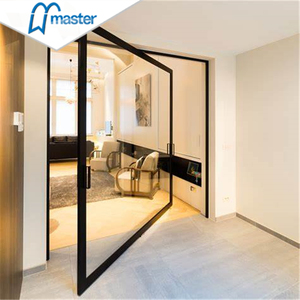
Modern Home Main Entrance Security Entry Front Doors Aluminum Patio Bi Folding Metallic Aluminum Glass Pivot Door
- Profile Grade: 6063-T6 Extruded Alloy
- Thermal Rating: U-Value ≤ 1.4 W/m²K
- Hardware: German Multi-Point Lock
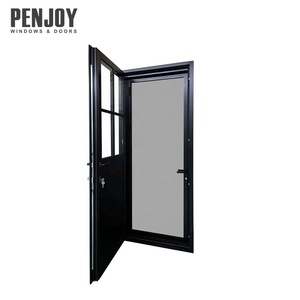
Thermal Break Aluminum Swing Door with Screen Window for Exterior Patio Custom Size
- Insulation: PA66 GF25 Polyamide
- Screen Infill: High-Tension Mesh
- Wind Load: AS2047 N6 Compliance
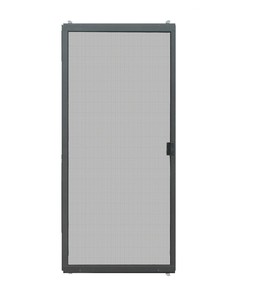
New Anti Air Aluminum Alloy Black White Fiberglass Sliding Screen Doors
- Mesh Material: Pultruded Fiberglass
- Track Mechanism: Stainless Steel Dual-Roller
- Coating: Fluorocarbon PVDF / Powder
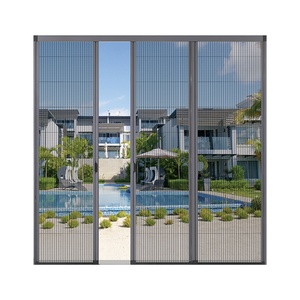
Aluminum Frame Fly Screen Door Fiberglass Mesh Lightweight Rust-Resistant Light Luxury Design 3-Year Warranty-Excellent
- Corrosion Proof: Marine Grade ISO 9227
- Sightline: Ultra-Slim 22mm Stile
- Warranty: Project Standard 3-Year
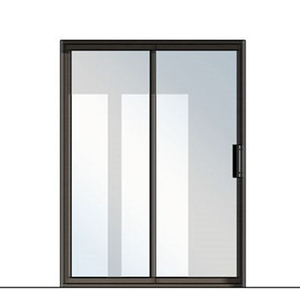
Partition Aluminium Fiber Glass exterior Sliding Door System and Doors Catalogue List
- Acoustic Core: Rw 38 dB Rating
- System Depth: 120mm Multi-Cavity
- Glazing Pocket: Up to 32mm DGU / Lam
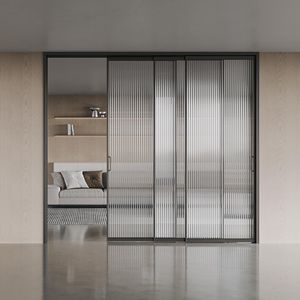
Modern Chinese Style Aluminum Sliding Door Aluminum Alloy Fiberglass Screen Netting Bathroom Living Room
- Moisture Barrier: Zero Swell Sub-Sill
- Aesthetics: Lattice / Custom Grids
- Operation: Smooth Silent Glide
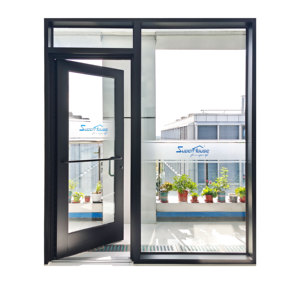
Modern Commercial Casement Security Door Aluminum Alloy with Fiberglass Screen Netting for Store and Escape Use
- Application: Storefront & Panic Exit
- Cycle Test: 300,000 Repeated Operations
- Safety Rating: Anti-Intrusion EN 1627
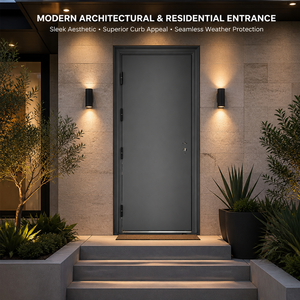
Luxurious Soundproof Aluminum Single Entrance Door - Home Door with External Sound Insulation at the Front Entrance
- Sound Isolation: STC 42 Acoustic Seal
- Sash Thickness: 85mm High Density Core
- Weatherstrip: EPDM Continuous Gasket
Guangdong Dejiyoupin (DERCHI) Industrial Ecosystem
Recognised as one of China’s elite Top 10 door and window manufacturers, DERCHI combines 25+ years of fenestration engineering with a fully automated, digitally managed 180,000㎡ industrial park in Foshan, Guangdong.
Stringent Global Certifications
Every batch of aluminium-fibre doors is backed by CE, ISO 9001, Australian AS2047, and UL fire-rating testing. Our engineering dossiers satisfy regional building codes including North American AAMA, South American ABNT NBR, and European EN 14351-1.
One-Stop Container Consolidation
Streamline logistics by combining external pivot doors, thermal break swing doors, fiberglass security screens, interior flush doors, and automated garage entrances into a single ocean freight container—maximizing cargo space and cutting port handling overhead.
Free In-House CAD & BIM Services
Our dedicated engineering department converts complex architectural schematics into high-precision CAD shop drawings and structural wind load calculations free of charge. We prevent costly on-site discrepancies before the first profile is cut.
The Mechanics of Aluminium-Fibre Composite Engineering
Evaluating the structural convergence of high-tensile 6063-T6 aluminum alloys and pultruded fiberglass reinforcement in modern high-performance fenestration.
In high-end architectural door design, specifiers have historically been forced to choose between the structural rigidity of extruded aluminum and the superior thermal insulation of non-metallic composites. Pure aluminum extrusions, while exhibiting extraordinary modulus of elasticity (approximately 69 GPa) and unmatched framing precision, possess high intrinsic thermal conductivity (~160 to 200 W/m·K). Conversely, unreinforced fiberglass composites excel in preventing thermal bridging but lack the surface finish resilience, hardware anchoring tenacity, and crisp architectural sightlines demanded by contemporary luxury architecture.
The modern Aluminium Fibre Door architecture resolves this paradigm. By employing a co-extruded or thermally broken hybrid profile featuring outer and inner 6063-T6 aluminium structural shells bridged by 25% glass-fibre reinforced polyamide (PA66 GF25) thermal struts, alongside integrated pultruded continuous-filament fiberglass mesh, manufacturers achieve a composite structural frame with unmatched physical characteristics. This hybrid construction drastically lowers overall assembly U-factors to below 1.2 W/m²·K while completely mitigating expansion-differential warping—a failure mode frequently observed when solid steel or timber doors face harsh solar heat gain.
| Performance Parameter | Traditional Hollow Metal / Steel | Solid Hardwood Doors | Aluminium-Fibre Composite (DERCHI Standard) |
|---|---|---|---|
| Thermal Transmittance (U-Value) | 3.2 – 4.5 W/m²K (Severe Heat Loss) | 1.9 – 2.6 W/m²K (Moderate) | 1.1 – 1.4 W/m²K (Passive-Grade) |
| Saline & Coastal Corrosion Resistance | Low (Rust prone at welds, blisters within 2 yrs) | Poor (Rapid rot, fungus, moisture swelling) | Exceptional (3,000+ hrs ASTM B117 Salt Spray) |
| Structural Stability (Bowing Under Heat) | High thermal expansion differential | High hygroscopic expansion & twisting | Zero Dimensional Drift (Fiber-Stabilized) |
| Acoustic Attenuation (Rw) | 28 – 32 dB (Hollow echo cavity) | 30 – 34 dB (Density-dependent) | 38 – 44 dB (Multi-Chambered Acoustic Core) |
| Life-Cycle Maintenance Overhead | Periodic rust-inhibitor & paint refinish | Annual sealing, varnishing, rot repair | Zero Maintenance (Anodized or PVDF Finished) |
Furthermore, in applications demanding enhanced anti-intrusion and insect exclusion without impairing cross-ventilation, modern fiberglass and stainless-steel high-tensile screen netting is integrated directly into the aluminum structural frame channels. Utilizing specialized spline-locking grooves and hidden structural interlocks, these doors withstand heavy lateral kick-in force (exceeding EN 1627 Class 3 security ratings) while maintaining an invisible appearance that preserves outdoor panoramic views.
Future Procurement Trends for Aluminium-Fibre Doors (2025–2030)
Macro-economic shifts, environmental mandates, and technical innovations redefining how global developers, B2B importers, and general contractors source fenestration products.
1. Decarbonization & Low-Carbon Billets
Global architectural procurement contracts increasingly specify low-carbon virgin aluminum or profiles extruded using ≥75% recycled scrap melted with hydropower. Forward-thinking suppliers that furnish Environmental Product Declarations (EPD) and certified carbon footprints will dominate municipal and institutional tenders.
2. Digital Prefabrication & Direct BIM
Hand-drawn site measurements are being replaced by 3D point-cloud laser surveys fed directly into manufacturer CAM (Computer-Aided Manufacturing) CNC routing lines. Importers will demand parameterized Revit and IFC family files directly from factories to eliminate dimensional misfits during dry-fit structural glazing.
3. Biometric & Smart-Grid Integration
The modern luxury main entry door is no longer purely mechanical. Specifiers are procuring factory-integrated electronic access controls—concealed motor-driven multi-point locks, 3D facial recognition, mobile Bluetooth credentials, and solar energy-harvesting door sills that interface with smart home building management systems (BMS).
4. Supply Chain Risk Mitigation
Developers are shunning fragile single-workshop broker arrangements in favor of Tier-1 manufacturing conglomerates that control profile extrusion, surface treatment, glass tempering, and assembly in-house. Auditable production schedules and video-monitored milestones are becoming standard contract conditions.
Pioneering Production Technologies
How advanced robotics, high-grade metallurgy, and composite material science are redefining door durability and structural limits.
5-Axis CNC Precision Profile Milling
By transitioning from manual punch tooling to continuous 5-axis German CNC machining, hinge pockets, drainage weeps, and electronic latch cutouts are executed to 0.05mm tolerances. This eliminates micro-gaps that compromise air permeability (Class 4) and water tightness (Class 9A).
Nano-Fluorocarbon (PVDF) & Anodizing
Advanced horizontal and vertical electrodeposition lines apply multi-layer PVDF fluoropolymer coatings capable of withstanding extreme solar ultraviolet degradation in equatorial climates. Coated profiles resist color shifting (ΔE ≤ 2.0) across 20-year exposure horizons.
Continuous Pultruded Fiberglass Cores
Incorporating continuous-filament roving saturated with thermosetting vinyl ester resins within structural sash channels creates a backbone that resists extreme torsional flex. Oversized pivot doors up to 4 meters high and 2 meters wide operate smoothly without sagging over decades of use.
Frequently Asked Questions by Global Buyers
Direct, engineering-backed answers to the most critical technical, commercial, and logistical questions encountered by overseas distributors, contractors, and architects.
How does DERCHI ensure thermal break stability in tropical and sub-zero climates?
We utilize PA66 GF25 polyamide insulation strips reinforced with 25% transverse glass fiber, crimped under calibrated knurling pressure monitors. This creates a mechanical shear strength exceeding 70 N/mm, preventing strip shear failure or profile separation under severe climatic expansion cycles between -40°C and +80°C.
What export packaging protocols protect high-gloss coatings during ocean transit?
Every door component undergoes five-layer protective packaging: static-free surface film, closed-cell foam edge guard wrappers, heavy-gauge corrugated corner jackets, full-body heat-shrink wrapping, and final crating inside non-fumigation ISPM-15 plywood crates with desiccant packs to prevent moisture corrosion inside shipping containers.
Can you provide custom engineering calculations for hurricane or cyclone regions?
Yes. Our engineering division produces structural wind pressure calculation reports, deflection evaluations (L/175 and L/250 criteria), and finite element analysis (FEA) based on specific site wind pressures (e.g., AS/NZS 1170.2, ASTM E1886/E1996, or European Eurocode 1) for large-span doors and pivot units.
What is the standard production lead time and Minimum Order Quantity (MOQ)?
We maintain a flexible commercial policy tailored to global partners: standard project MOQ begins at just 1 complete set for custom villa pivot doors, or 20–50 sets for commercial hotel/development orders. Standard production lead times run 25–35 days following CAD shop-drawing signoff and deposit verification.
What testing documentation is delivered with shipments for local customs clearance?
We supply a complete export documentation dossier, including Certificate of Origin (CO/Form E/Form F), factory quality inspection reports, third-party laboratory test certificates (CE EN 14351-1, AS2047, ISO 9001), raw material composition certificates, and detailed bill of materials to expedite custom broker clearance.
How are on-site adjustments handled by overseas installation teams?
Each door assembly includes 3D adjustable heavy-duty hinges (allowing ±3mm horizontal, lateral, and compression adjustments), factory pre-drilled fixing points, matching sub-frame anchors, color-coded installation schematics, and bilingual video instructions accessible via on-frame QR codes.
Partner with an Industry-Leading Fenestration Authority
Whether you require factory-direct pricing for a multi-unit luxury condominium, custom structural pivot doors for a high-profile villa, or container consolidation of high-tensile fiberglass screen doors—our engineering team is ready to review your schedule of openings.