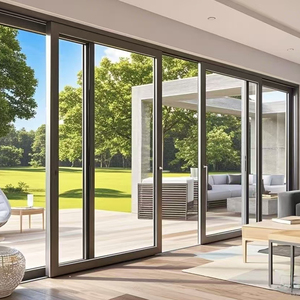
Engineered Fenestration Portfolio
High-Performance Architectural Windows & Doors
Explore our certified fenestration lines, engineered in our 180,000㎡ intelligent facility for luxury residential compounds, hurricane coastal zones, and premium commercial envelopes.
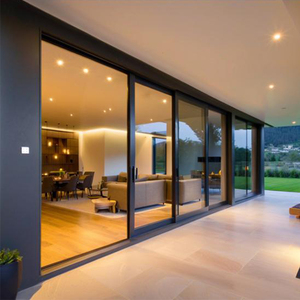
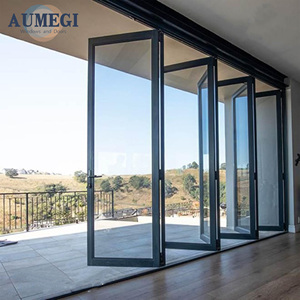
Global Manufacturing Eminence
Why Tier-1 Developers & Wholesalers Partner with DERCHI
Recognised among China's Top 10 fenestration enterprises, Guangdong Dejiyoupin Doors and Windows Co., Ltd. combines German precision automation with vertically integrated production in Foshan to eliminate intermediary margins.
180,000㎡
Modern Production Hub
25+
Years Engineering Expertise
600+
Specialized Technicians
100+
International Patents & Certs
Stringent Compliance Testing
Every window assembly is physically verified for structural deflection, cyclical wind load, air infiltration, and hydrostatic pressure, aligning strictly with AS2047, NFRC, NOA, and CE EN 14351-1.
- Third-party Intertek and TÜV testing reports
- In-house cyclic testing up to 100,000 operations
Full OEM/ODM Engineering
Our senior facade engineers provide complete BIM files and CAD shop drawings within 24 hours of receiving architectural schedules, ensuring zero discrepancies at job site installation.
- Custom extrusions & bespoke thermal breaks
- Customized mortise and multipoint hardware
Export-Crated Sea Logistics
Exporting fenestration requires packaging designed for violent container movements and ocean humidity. We use fumigated solid-wood crates with desiccant protection and film wraps.
- FOB, CIF, and DDP turnkey delivery terms
- Port clearance documentation and CO support
Dedicated Timezone Sync
Our international account teams mirror business hours across North America, Australasia, and Europe, eliminating transatlantic communication latency during fast-track tender phases.
- Bilingual architectural sales engineers
- Remote site installation video guidance
Fenestration Engineering Whitepaper
Technological Frontiers: Alu-Clad Timber & Thermal Aluminium
A comprehensive analysis of thermal thermodynamics, structural elasticity, and environmental longevity for high-performance fenestration specification.

The Rise of Alu-Clad Timber: Biomimetic Interior with Armor Exterior
For decades, architects faced an irreconcilable dichotomy: the tactile warmth and unmatched natural insulating capacity of solid timber versus the indestructible weather-resistance of architectural aluminium. The synthesis—Aluminium-Clad Timber Systems—has transformed modern luxury residential fenestration.
At our Foshan manufacturing facility, our hybrid timber windows utilize imported sustainable hardwood (FSC-certified European Oak, Larch, or American Walnut) multi-laminated to counteract torsional warping. The exterior aluminium cladding is anchored via floating polyamide clips, creating a decoupled expansion chamber. This accommodates differential thermal movement without inducing glass stress or air seal failure.
With interior U-values as low as 0.8 W/m²K when combined with argon-filled triple Low-E glazing, these units readily satisfy Passive House standards across cold alpine and humid oceanic microclimates.
Thermal Break Engineering: Polyamide Iso-Bars vs. Structural Foams
Non-thermal aluminium is essentially an energy highway, conducting cold and heat directly across the building envelope. Modern building energy codes mandate thermal barrier optimization. DERCHI engineers incorporate PA66 GF25 (polyamide reinforced with 25% glass fiber) thermal barrier strips up to 34mm in depth.
This barrier is further integrated with closed-cell polyolefin insulation cores within the internal cavities. The resulting window and door profiles achieve exceptional condensation resistance factors (CRF) exceeding 75, completely eliminating the risk of interior frame weeping and mold proliferation in humid regions or heavily air-conditioned luxury villas.
Surface treatments utilize fluorocarbon (PVDF) liquid sprays or architectural powder coatings tested to 3,000-hour continuous salt spray exposure, safeguarding finishes from degradation caused by oceanic saline air.

Specification Benchmark: Fenestration Systems Compared
| Profile Architecture | Avg. Thermal Transmittance (Uw) | Sound Transmission (STC) | Wind Load Resistance | Optimal Use Cases |
|---|---|---|---|---|
| Alu-Clad Timber (Composite) | 0.80 – 1.10 W/m²K | 42 – 48 dB | Up to 3,800 Pa (Serviceability) | Passive homes, alpine villas, luxury residential estates |
| Multi-Chamber Thermal Break Alum. | 1.20 – 1.60 W/m²K | 38 – 44 dB | Up to 5,000 Pa (Hurricane/N6) | High-rise facades, tropical coastal resorts, commercial |
| Solid Timber (Laminated Hardwood) | 1.10 – 1.40 W/m²K | 39 – 43 dB | Up to 2,500 Pa | Heritage restorations, protected conservation architecture |
| Standard Commercial Aluminium | 2.80 – 4.50 W/m²K | 28 – 32 dB | Up to 2,200 Pa | Interior partitions, mild climate budget renovations |
Market Intelligence 2026–2035
Emerging Procurement & Manufacturing Trends
Strategic purchasing insights for import distributors, commercial general contractors, and structural developers navigating evolving international standards.
Embodied Carbon & EPD Auditing
North American and European green building initiatives (LEED v4.1, BREEAM) are prioritizing Environmental Product Declarations (EPD). Global buyers increasingly favor extrusion plants using renewable hydroelectricity and certified recycled billet (minimum 40% post-consumer content).
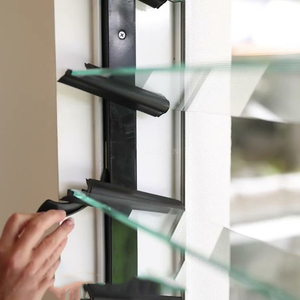
IoT Integration & Motorized Louvers
Static window installations are transforming into dynamic responsive envelopes. Procurement schedules show triple-digit growth in automated motorized louvers, electromagnetic perimeter multi-point locks, and BMS-integrated rain and wind actuators.
Direct-to-Factory Consolidations
Developers are eliminating domestic brokers to control escalating inflation. Sourcing entry doors, interior timber doors, thermal windows, and garage systems in consolidated 40ft High Cube containers reduces overall logistics expense by 28% to 35%.
Due Diligence Guide
Frequently Asked Questions on Importing Fenestration
Essential guidance for architects, procurement directors, and international builders sourcing custom architectural windows and doors from China.
How does DERCHI ensure thermal break and timber moisture stabilization during international freight?
All solid timber stock undergoes automated vacuum-kiln drying, stabilizing internal equilibrium moisture content (EMC) strictly between 8% and 12% to prevent checking or twisting. For maritime transportation spanning 30 to 45 days across equatorial zones, each unit is vacuum-sealed with moisture-absorbing silicate packs and secured inside solid-ply fumigated shipping crates. Aluminium thermal breaks utilize high-grade PA66 GF25 with identical coefficients of linear expansion to aluminium alloy, guaranteeing structural integrity across extreme temperature swings.
What engineering documentation is provided prior to production commencement?
Once project elevations, door schedules, or architectural blueprints are shared, our engineering department produces millimeter-precise CAD shop drawings and structural static calculations within 24 to 48 hours. Production does not initiate until the client, structural engineer, or lead architect signs and approves the shop drawings, hardware schedule, glass specification, and color match chips.
Which international building codes and fenestration certifications do your windows satisfy?
Our architectural products hold verified compliance certifications across primary global jurisdictions: Australian AS2047 and AS1288 (achieving maximum N6 structural pressure classifications); North American NFRC thermal performance ratings and Florida Miami-Dade NOA hurricane impact glazing compliance; European CE markings under EN 14351-1; and ISO9001 certified manufacturing facility audits. Full laboratory test certificates from Intertek, TÜV, and NATA-accredited facilities are supplied with quotation dossiers.
What are your standard OEM/ODM Minimum Order Quantities (MOQ) and production lead times?
For custom residential projects and architectural samples, our MOQ starts at a single complete villa order or 50 square meters. For commercial developments and distributor profile extrusions, bulk container pricing is unlocked at one 20GP container. Standard production lead times run between 25 and 35 calendar days following shop drawing sign-off, depending on specialty hardware configurations or unique powder coat color formulations.
How are warranty claims, field calibration, and replacement hardware managed abroad?
DERCHI provides a comprehensive 10-year warranty covering aluminium frame structural failure and powder-coating delamination, a 5-year warranty on insulating glass unit seals, and a 5-year warranty on multi-point architectural hardware. Every project includes extra spare hardware kits (rollers, handles, corner joints, weatherstripping). In the rare event of transit damage, replacement parts or glass units are air-freighted via DHL/FedEx at zero cost to the client.
Begin Your Engineering Consultation Today
Send your door schedules, facade elevations, or project tender specifications to our Foshan engineering center. Receive complimentary CAD shop drawings, acoustic assessments, and factory-direct DDP/CIF estimates within 24 hours.