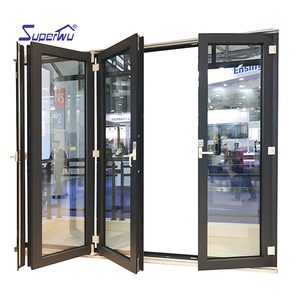
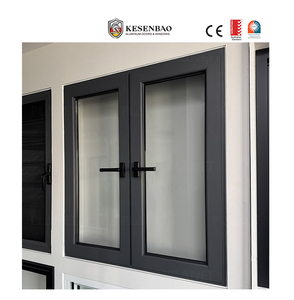
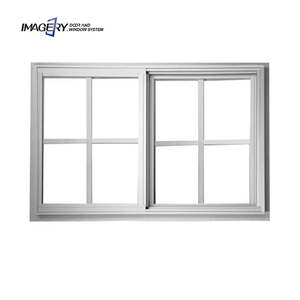
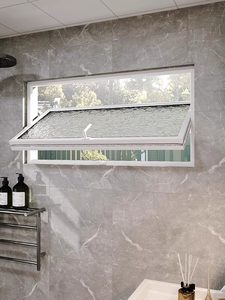
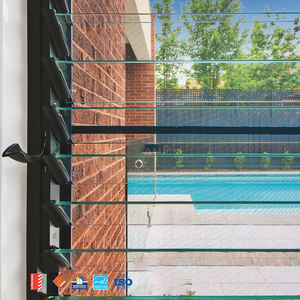
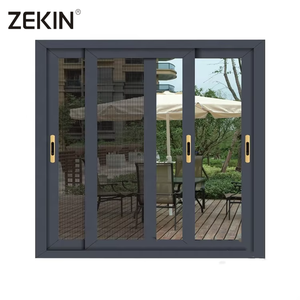
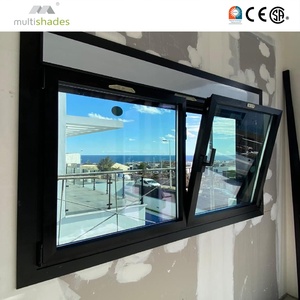
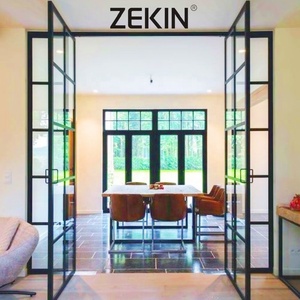
China Top Aluminum Double Pane Windows Factories & Supplier
Technical Whitepaper & Commercial Procurement Guide for Global Architects, Real Estate Developers, and Curtain Wall Contractors
As the international construction community accelerates toward net-zero building standards and strict thermal performance metrics, selecting the right architectural fenestration becomes paramount. Modern engineering demands that aluminum double pane windows offer not only elevated structural integrity against severe wind loads and seismic shifts, but also deliver state-of-the-art thermal barrier continuity and sound transmission class (STC) ratings. Sourcing from a premier Chinese manufacturing hub provides access to vertically integrated extrusion lines, computerized CNC fabrication, and certified glazing technologies that drastically compress cost schedules without compromising international building codes such as North American NFRC/AAMA, Australian AS2047, and European CE benchmarks.
Engineered Aluminum Window & Door Assemblies
Precision-manufactured fenestration systems tailored for luxury residential, coastal commercial, and institutional projects worldwide.
Why leading global developers shift their fenestration supply chains to our advanced Foshan manufacturing base.
Certified Metallurgical Integrity
We utilize strictly virgin primary billet 6063-T5/T6 architectural aluminum alloy with profile wall thicknesses ranging from 1.4mm to 3.0mm, completely free of brittle recycled scrap. This guarantees structural defiance against hurricane-force typhoons and coastal structural strain.
Our dual-extrusion thermal barriers employ German Technoform polyamide PA66 GF25 insulation strips. By effectively isolating interior and exterior metal profiles, condensation is eliminated while achieving thermal transmittance values down to U-factor ≤ 1.2 W/(m²·K).
Every double-pane insulated glass unit (IGU) is assembled in automated cleanroom environments with automated desiccant filling, molecular sieves, and dual-seal structural silicone boundaries (polyisobutylene primary seal, structural silicone secondary seal), preventing seal fogging for 25+ years.
Anticipating international code transitions, environmental compliance, and architectural shifts through 2030.
1. Decarbonized Low-Carbon Aluminum
Global developers increasingly require Environmental Product Declarations (EPD). Modern factories are pivoting to hydropower-melted "Green Aluminum", decreasing embodied carbon footprint per ton of profile extruded to comply with EU CBAM import tariffs.
2. Ultra-Narrow Sightline Minimalist Profiles
Architects demand maximum daylight exposure. The trend shifts from bulky 70mm casement sightlines down to concealed 25-30mm framing configurations that rely on structural bonding tape and high-strength alloy webs.
3. Warm Edge Warm-Spacer Upgrades
Standard aluminum spacer bars within the IGU are rapidly being phased out. Non-metallic composite spacers (such as Technoform or Swisspacer) are standardizing worldwide to curb edge condensation and lower whole-window Psi values.
4. Automated Motorization & Smart Home BAS
Commercial and high-end residential projects mandate motorized hidden actuators linked directly with Building Automation Systems (BAS), wind/rain sensors, and centralized safety override relays.
Engineering Benchmark Comparison
Physical specification matrices across standard residential vs. high-performance commercial double-pane configurations.
Performance Metric
Standard Residential Grade
Premium Commercial Thermal Break
Testing Standard
Alloy Spec & Hardness
6063-T5 (≥ 9-11 Webster)
6063-T6 / 6061-T6 (≥ 12-14 Webster)
ASTM B221 / GB 5237
Profile Wall Thickness
1.4mm – 1.6mm
2.0mm – 3.0mm Structural
AAMA / AS2047 Compliance
Thermal Insulation (U-Factor)
2.4 – 2.8 W/(m²·K)
1.2 – 1.6 W/(m²·K) (Warm-Edge + Argon)
NFRC 100 / EN ISO 10077
Acoustic Attenuation
STC 28 – 32 dB
STC 38 – 44 dB (Acoustic PVB Lami + DGU)
ASTM E90 / ISO 140
Air Permeability
Class 2 (0.3 cfm/ft²)
Class 4 / A4 Tightness
ASTM E283 / EN 12207
Water Penetration Resistance
300 Pa Static Test
700 – 1050 Pa Cyclic Test
ASTM E331 / EN 12208
Frequently Asked Procurement Questions (FAQ)
Direct technical and logistics answers from our senior engineering team to assist your procurement vetting process.
What surface treatments provide the highest salt-spray resistance for coastal oceanfront installations?
For projects situated within 5 kilometers of coastlines (such as Florida, the Caribbean, coastal Brazil, or Australia), standard anodizing is insufficient. We specify Fluorocarbon PVDF liquid spraying (AAMA 2605 compliant) containing minimum 70% Kynar 500 resin, or ultra-durable powders from AkzoNobel Interpon D3000. These coatings withstand 4,000+ hours of continuous neutral salt spray (ASTM B117) and 10 years of South Florida exposure testing without chalking, color fade, or filiform corrosion.
How does the factory prevent gas leakage and condensation in argon-filled double pane IGUs?
Argon gas retention hinges entirely on sealing chemistry. Our automated Bystronic insulated glass line applies a continuous primary seal of Polyisobutylene (PIB) with robotic precision, preventing water vapor ingress. The secondary seal uses two-part structural silicone or polysulfide with high bonding strength. Furthermore, desiccant 3A molecular sieves within the spacer eliminate initial humidity. Our IGUs show an annual gas leakage rate below 0.5%, rigorously compliant with EN 1279 and ASTM E2190 standards.
Can your engineering team support architectural custom profiles and generate free CAD shop drawings?
Yes. Our R&D division has a dedicated team of over 40 structural engineers. When presented with architectural schematics or window schedules, we perform wind-load deflection calculations (Mullion Ix/Iy analysis) and supply detailed CAD shop drawings—including perimeter anchors, flashings, and structural shimming details—completely free of charge for approved projects prior to production sign-off.
What packing protocols are utilized to prevent glass breakage and anodize scratching during transoceanic shipping?
Export protection comprises a four-tier packaging system: First, profiles are covered with non-marking low-tack protective film. Second, corner injection guards are fitted to all 90-degree junctions. Third, assembled frames are wrapped in waterproof PE shrink-foam. Finally, units are packed into heavy-duty ISPM-15 heat-treated, steel-banded plywood crates with desiccants, designed for forklift maneuvering and container stuffing without inter-crate compression.
What international fenestration certifications does the factory hold?
Guangdong Dejiyoupin Doors and Windows Co., Ltd. (DERCHI) holds ISO 9001, CE mark for European conformity, NFRC energy performance rating certification, North American AAMA/WDMA/CSA 101/I.S.2/A440 test verification, and Australian AS2047 (certified to the highest N6 structural category). We provide physical test certificates and compliance reports upon quotation.
Ready to Accelerate Your Fenestration Project?
Submit your architectural drawings, tender schedules, or bill of quantities (BOQ). Our project engineering team provides comprehensive thermal simulations, CAD submittals, and factory-direct pricing within 24 hours.