Engineering Whitepaper & Industrial Directory

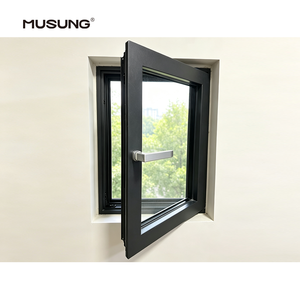
China Best Aluminium Ventilation Window Manufacturer & Factory

Next-generation architectural micro-ventilation, thermally broken acoustic profiles, and industrial louvers precision-engineered for commercial high-rises, passive houses, and hospitality projects worldwide.

Featured Architectural Aluminium Ventilation Windows

Factory-direct solutions fabricated with 6063-T6 virgin primary aluminum billets, precision multichamber thermal barriers, high-performance EPDM co-extruded gaskets, and tested pneumatic airflow control systems.

180,000㎡
Integrated Production Base
25+
Years Fenestration R&D
100+
Patents & Global Certs
600+
Certified Technicians

Technological Evolution in Aluminium Ventilation Windows

Architectural ventilation has transitioned from passive opening cutouts to high-precision building envelope sub-systems that regulate thermodynamic, acoustic, and indoor air quality (IAQ) dynamics.

Thermal Decoupling & Polyamide PA66 GF25

Traditional non-insulated frames cause severe thermal bridging and condensation. Modern ventilation systems utilize multi-chamber extruded polyamide insulating bars with 25% glass fiber reinforcement, driving overall window U-values down to below 1.2 W/(m²·K) even when micro-ventilation ports are incorporated.

Acoustic Micro-Trickle Chambers

Urban density requires fresh air without street noise pollution. Next-generation systems integrate labyrinth-type acoustic baffles with sound-absorbing micro-perforated linings inside the sash profile, achieving Rw sound reduction ratings of 38dB to 44dB while sustaining a constant air intake of 15–35 m³/h.

Aerodynamic Louver Profile Hydrodynamics

Modern ventilation louvers utilize complex aerofoil cross-sections capable of optimizing pressure drops. CFD (Computational Fluid Dynamics) modeling ensures optimal laminar airflow through interior spaces while achieving Class 4 water tightness under driving wind rain conditions.

Ventilation Window Topology Air Exchange Rate (ACH) Acoustic Attenuation (Rw) Water Tightness (EN 12208) Ideal Architectural Application
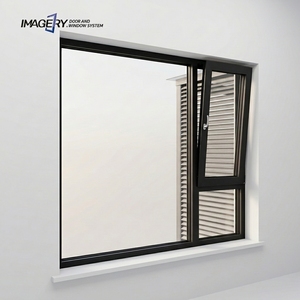
Casement Tilt & Turn 0.5 – 1.8 ACH (Adjustable) 38 – 45 dB Class E1050 (1050 Pa) Mid/High-Rise Residential, Luxury Hotels
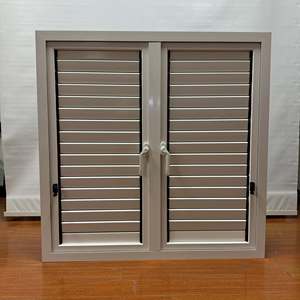
Integrated Louver System 2.5 – 6.0 ACH (High Flow) 28 – 34 dB Class 9A (600 Pa) Commercial Core, Institutional, Plant Rooms
Micro-Gap Trickle Vent 0.2 – 0.6 ACH (Continuous) 40 – 46 dB Class E1500 (1500 Pa) Passive House Projects, Cold Climate Condos
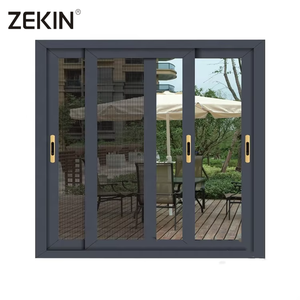
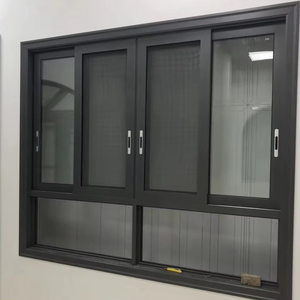
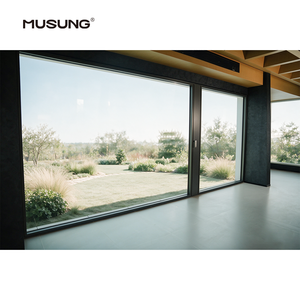
Multi-Chamber Sliding 1.0 – 4.0 ACH (Manual Open) 32 – 36 dB Class 7A (300 Pa) Tropical Coastal Resorts, Balcony Access

What General Contractors & Specifiers Must Anticipate

Navigating environmental product declarations (EPD), smart building building management system (BMS) integration, and strict coastal hurricane-zone standards when procuring from Chinese OEM/ODM hubs.

1. Low-Carbon Aluminum & Embodied Energy Compliance

Global developers are mandating strict carbon accounting (LEED, BREEAM, Green Star). Tier-1 Chinese manufacturers like DERCHI now leverage hydroelectric-smelted low-carbon primary aluminum billets with certified carbon intensities below 4.0 kg CO2e/kg Al. Sourcing from factories that offer verified Life Cycle Assessments (LCA) and third-party EPDs will be an ironclad compliance requirement for major cross-border commercial bids.

2. DC Concealed Actuation & Smart Building Integration

Modern ventilation is increasingly automated. Manual window winders are being replaced by concealed 24V DC chain and linear actuators embedded directly within the thermal break profile chambers. These connect seamlessly via KNX, BACnet, or Zigbee protocols into the central BMS to facilitate night-purge cooling, carbon dioxide threshold purging, and automatic storm retraction.

3. Prefabricated Sub-frame & Pre-Glazed Unitized Crating

Due to sky-high installation labor rates across North America, Europe, and Australia, procurement teams are shifting away from on-site glazing and knock-down (KD) assembly. Buyers now specify fully assembled, pre-glazed window units built with heavy-duty structural silicone and crated in steel A-frames. This enables direct crane hoisting onto building anchors, reducing on-site installation timelines by up to 60%.

4. Strict Surface Chemistry for Coastal & Microclimates

Standard architectural powder coatings degrade rapidly under severe salt fog and coastal UV exposure. Procuring teams must strictly specify Qualicoat Class 2 or Class 3 fluorocarbon (PVDF) 3-coat spray finishes or 25-micron architectural anodizing to pass 3,000-hour continuous salt spray tests (ASTM B117), preventing premature filiform corrosion near marine environments.

Why Global Specifiers Partner with DERCHI

Guangdong Dejiyoupin Doors and Windows Co., Ltd. (DERCHI) operates from Foshan—China’s global heart of precision aluminium manufacturing—providing end-to-end engineering, testing, and containerized delivery to worldwide project sites.

180,000㎡ Intelligent Facility

Our centralized manufacturing cluster hosts high-precision CNC multi-axis machining centers, automatic corner crimping robots, and dust-free robotic insulated glass unit (IGU) lines ensuring dimensional tolerances within ±0.5mm.

Australian AS 2047 & CE Certified

Our systems hold rigorous independent certifications including Australia's AS 2047 N6 rating (highest wind classification), CE (EN 14351-1), ISO9001, and UL fire-resistant parameters, offering proven structural assurance for engineers.

Comprehensive In-House CAD & BIM

We provide full architectural project submittals, free structural calculation sheets, shop drawings, and BIM revit models before extrusion, ensuring zero interference with on-site structural columns, lintels, and cladding systems.

Global Time-Zone Engineering Desk

Our bilingual fenestration engineers operate across overlapping business hours with the Americas, Europe, Oceania, and the Middle East, resolving RFI submissions, shop drawing markups, and hardware schedule revisions instantly.

One-Stop Project Consolidation

Eliminate multiple supplier overheads. Source complete architectural packages—exterior thermal ventilation windows, commercial curtain walls, massive pivot entry doors, and frameless interior partitions—consolidated in single containers.

Export-Grade Maritime Crating

Every fenestration unit undergoes factory pre-assembly testing, serialized barcode labeling, multi-layer pearl foam edge wrapping, and fumigated steel-reinforced plywood timber crating to guarantee 100% damage-free overseas sea arrivals.

Frequently Asked Technical Questions (FAQ)

Detailed answers addressing engineering specifications, quality control protocols, pricing structures, and overseas shipping logistics for international commercial contractors.

Q How do micro-ventilation windows prevent rain ingress during storm conditions?
Our micro-ventilation systems utilize an engineered staggered chamber design. Incoming air is routed through an upward-inclined labyrinth path while rain droplets hit external deceleration baffles and collect in pressure-equalized drainage weep troughs equipped with one-way EPDM check-valves. Even under dynamic wind pressures up to 600 Pa, water cannot reach the internal dry chamber.
Q What alloy composition and profile wall thickness does your factory maintain?
We exclusively extrude virgin 6063-T6 or 6060-T6 architectural grade aluminum alloy billets, completely free of recycled scrap impurities. All structural profile wall thicknesses strictly adhere to or exceed international standards: minimum 1.4mm to 1.8mm for residential casements, and 2.0mm to 3.0mm for commercial high-load façades, meeting AS2047, AAMA, and EN 12020-2 guidelines.
Q Can you customize hardware to match European or North American specifications?
Yes. Our standard systems feature high-grade precision hardware from world-class European hardware manufacturers (e.g., German Siegenia, Hoppe, Roto, Sobinco) as well as premium Chinese Tier-1 brands (Kin Long, CMECH). We can machine the profile euro-grooves to accept standard North American multipoint locks or European standard euro-cylinder mechanisms based on project drawings.
Q What glass configurations are available for optimal acoustic and solar control?
Our automated glass processing facility fabricates double-glazed and triple-glazed insulated glass units (IGU) incorporating Low-E soft coatings, warm-edge composite spacers, and 95% Argon gas filling. Glass makeups can be customized with acoustic PVB laminated glass (e.g., 6mm Low-E + 12Ar + 5mm + 0.76Acoustic PVB + 5mm), lowering exterior urban noise by up to 45 decibels.
Q What is the standard production lead time and minimum order quantity (MOQ)?
For standard profile finishes and glass specifications, our factory production lead time is 25 to 35 calendar days after finalized CAD shop drawing sign-off. As a factory-direct industrial manufacturer, we accommodate both whole-villa custom packages (MOQ starting at 30-50 m²) as well as large-scale multi-container commercial tenders (10,000+ m²) with staggered port consignments.
Q How does your quality control department inspect products before export dispatch?
Every production batch undergoes a 5-stage QC matrix: 1) Spectrometer chemical analysis of aluminum billets; 2) Profile anodizing/coating mil-thickness and cross-hatch adhesion testing; 3) IGU dew-point and hermetic seal verification; 4) 100% pre-assembly dimensional and squareness inspection; and 5) Random sample test-chamber verification for air permeability, water tightness, and structural windload deflection.
Request Technical Fenestration Specs & Factory Price List

Connect directly with DERCHI's senior facade engineering team. Download our comprehensive 2026 Architectural Ventilation Window Engineering Handbook, request CAD/BIM blocks, or submit your schedule for a factory-direct quotation within 24 hours.