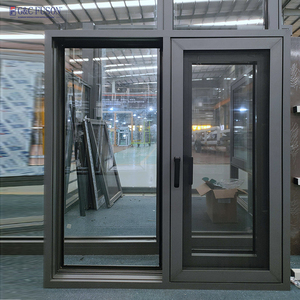
Recommended Architectural Security Fenestration Systems
Precision-engineered aluminum burglar-resistant and heavy-duty storm impact profiles engineered for high-end residential, hospitality, and commercial infrastructure.
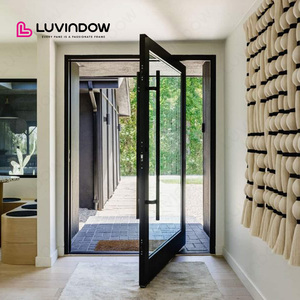
Modern Aesthetic Long Term Durability Low Maintenance Thermal Break Aluminum Pivot Door For Luxury Villa Entrance
Technical Specifications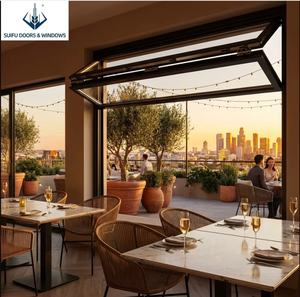
Modern Thermal Break Aluminum Bi-fold Window Pass Through Kitchen Window Push Up With Gas Strut Suspension Cafe Bar Counter
Technical Specifications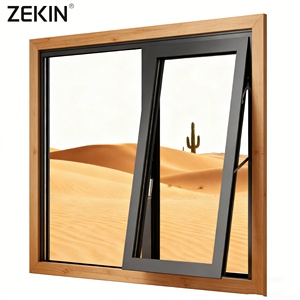
ZEKIN American Style Aluminum Outward Opening Awning Window with Double Glass NFRC AS2047 Hurricane Impact Swing Window
Technical Specifications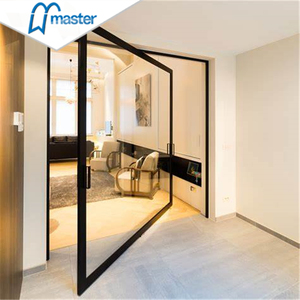
Modern Home Main Entrance Security Entry Front Doors Aluminum Patio Bi Folding Metallic Aluminum Glass Pivot Door
Technical Specifications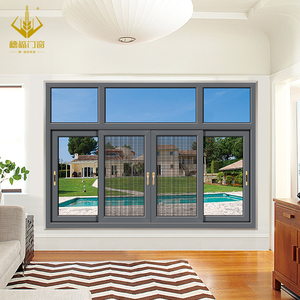
Customizable Double Glazed Sliding Window Kitchen Living Room Soundproof Energy Star Qualified Aluminum Alloy Horizontal
Technical Specifications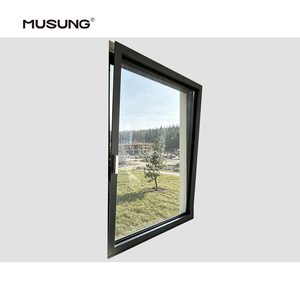
Custom Villa House Project Window and Door Thermal Break Insulated Window Soundproof Double Glazed Aluminum Casement Windows
Technical Specifications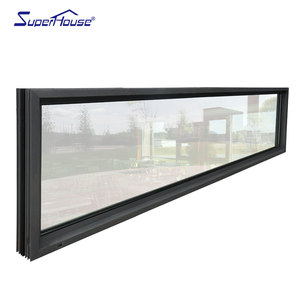
Fixed Boat Comply Superhouse Glass Window Commercial Hurricane Design Aluminum Swing Graphic Design Horizontal Modern Hanging
Technical Specifications180,000㎡
Integrated Production Base
25+
Years Engineering Heritage
100+
Global Patents & Certifications
600+
Skilled Technical Personnel
Engineering Architecture: Structural Integrity of Burglar-Resistant Aluminum Windows
A technical treatise on European CE standards, structural metallurgy, multi-point kinetic locking mechanisms, and the mitigation of opportunistic forced entry.
The contemporary building envelope is tasked with a dual responsibility: providing exceptional thermal efficiency while acting as an impenetrable structural barrier against unauthorized entry and forced physical breach. In international procurement, the classification of CE Certified Aluminium Burglar Windows requires rigorous adherence to European standard **EN 1627:2021** (Power-operated and manual burglar-resistant pedestrian doorsets, windows, curtain walling, grilles, and shutters). As verified global suppliers and Tier-1 exporters operating from an enterprise-grade 180,000㎡ manufacturing base in Foshan, Guangdong, our fenestration systems bridge the gap between architectural elegance and high-level physical defense (Resistance Classes RC2 to RC4).
To resist static loading (EN 1628), dynamic impact testing with a 50kg spheroconical bag (EN 1629), and prolonged manual attack using specialized manual and mechanical breaking tools (EN 1630), our systems rely on proprietary extrusion alloys, continuous structural internal bracing, and advanced mechanical interlocks. Standard consumer-grade aluminum windows fail under lever-arm shear stresses exceeding 3.5 kN; in contrast, our certified structural systems dissipate forced kinematic vector forces uniformly across the outer perimeter sub-frame.
6063-T6 Structural Metallurgy
Fabricated using architectural-grade primary billet aluminum with minimum wall thicknesses between 2.0mm and 3.0mm, delivering exceptional yield strength against crowbar deformation and hydraulic spreaders.
Multi-Point Mushroom Locking
Integrated perimeter gear systems with case-hardened steel mushroom cams and anti-lift striking plates that anchor the window sash firmly within the frame at maximum 400mm intervals.
P6B/P8B Structural Laminated Glass
Glazed with heavy-gauge poly-vinyl butyral (PVB) or SentryGlas® interlayer composites, retaining complete resistance against continuous sledgehammer or axe strikes without perimeter dislodgement.
Future Procurement Trends: Where Institutional Fenestration Is Headed
As commercial developers, municipal planners, and estate contractors modernize their project schedules, the procurement process for burglar-resistant aluminum fenestration is shifting from localized artisanal fabrication toward standardized, certified manufacturing frameworks. Institutional procurement professionals now emphasize the following macro-level requirements:
Full-Envelope Container Consolidation
Contractors avoid multi-vendor risk by sourcing custom entrance pivot doors, soundproof sliding systems, and security casements in a single container. Consolidating architectural lots optimizes ocean freight volume and harmonizes finish standards.
Pre-Engineered CAD Shop Drawings
Global procurement requires precision submittals. Engineering teams must deliver detailed shop drawings, anchoring elevations, and structural load calculations prior to extrusion cuts, ensuring seamless coordination with local site contractors.
Unified Testing: Wind Load to Security
Project scopes increasingly demand dual-rated performance: testing to European EN standards alongside regional building codes like Australia's AS2047, US NFRC hurricane impact certifications, and local seismic criteria.
Technology Vectors: The Evolution of High-Performance Security Windows
The evolution of high-security fenestration systems centers on addressing the classic trade-off between thermal bridging and structural hardness. Historic iron security grilles created cold spots, condensation, and restricted emergency egress. Advanced aluminum systems resolve this through three critical design breakthroughs:
1. Polyamide 66 Structural Thermal Decoupling: Modern burglar-proof aluminum frames employ PA66 GF25 (25% glass-fiber reinforced) thermal break barriers. Unlike soft PVC thermal strips, this structural barrier provides high tensile and shear resistance, maintaining profile geometry during thermal expansion and heavy prying attacks.
2. Concealed Internal Perimeter Security Glazing Beads: Traditional windows place glazing clips on the exterior or use accessible internal snap-in beads. Certified RC3/RC4 units lock the insulated glass unit (IGU) within a rebate bonded with two-component structural silicone adhesives. This stops intruders from removing the glass unit externally, even with specialized utility tools.
3. Micro-Switch Perimeter Sensor Integration: The convergence of physical security and building automation has accelerated the adoption of concealed magnetic reed switches (VdS-certified) embedded directly into the aluminum frame chambers. These internal sensors detect locking pin movement without external wiring, alerting building automation systems before a sash is forced open.
Manufacturing Authority: Guangdong Dejiyoupin (DERCHI)
Backed by over 25 years of manufacturing experience, Guangdong Dejiyoupin Doors and Windows Co., Ltd. (DERCHI) operates one of China's largest intelligent fenestration facilities. Operating out of a modernized 180,000㎡ production base in Shishan Town, Nanhai District, Foshan, our plant houses over 600 skilled technicians, automated multi-axis CNC machining centers, and an in-house quality control testing laboratory.
Ranked among China's Top 10 fenestration brands, we maintain full quality control across our supply chain—from profile extrusion and precision thermal assembly to insulated glass manufacturing and multi-point hardware integration. Our systems hold certifications including CE, ISO9001, Australian AS2047 (N6 cyclone rating), and UL fire-rated credentials, protected by more than 30 intellectual property patents. DERCHI export consignments use heavy-duty steel-banded plywood crating with internal moisture barriers, ensuring damage-free delivery to deepwater ports worldwide.
Frequently Asked Questions on Importing Security Windows
Essential guidance on certifications, structural engineering, logistical coordination, and warranty provisions.
What specific structural parameters define a CE Certified Burglar Window?
Under European regulations (EN 14351-1 and EN 1627-1630), a window receives burglar-resistant CE compliance only after passing physical laboratory tests across three parameters: static loading of up to 6 kN at primary locking nodes, dynamic pendulum impact via a 50kg twin-tire mass, and manual tool attack testing. Our systems achieve Resistance Class 2 (RC2) and Resistance Class 3 (RC3), confirming resistance against attacks using crowbars, screwdrivers, bolt cutters, and mechanical wedges.
How do you ensure structural integrity during long-distance ocean freight?
Every window and door system is protected by five packaging layers: an electrostatic peel-off film across all visible aluminum finishes, foam edge protectors on all four corners, a shrink-wrapped moisture barrier, corrugated shock absorption, and a fully enclosed fumigated plywood crate with internal blocking. This packaging secures the sash alignment and pre-hung hardware tolerances throughout ocean transit and intermodal transport.
Can custom architectural shop drawings be generated to match our local building schedules?
Yes. Our engineering department provides comprehensive CAD shop drawings, elevation details, and anchor point schedules at no additional charge. We adjust profile dimensions, thermal breaks, glass build-ups, and structural mullion reinforcements to meet your local wind load calculations, deflection limits, and building code specifications.
What is the difference between standard tempered glass and burglar-resistant laminated glass?
While monolithic tempered glass offers higher surface tension against blunt force, it shatters instantly into small granules once fractured, leaving the opening unprotected. Burglar-resistant windows require multi-layer laminated architectural glass (typically meeting EN 356 Class P5A to P8B). These units sandwich heavy PVB or SentryGlas® ionoplast interlayers between glass panes. Even when fractured, the resilient interlayer holds the glass assembly together, stopping intruders from breaking through.
What warranty and after-sales support protocols do you provide for international projects?
All aluminum extrusion frames carry a 10-year surface finish and structural integrity warranty (covering anodized and AkzoNobel powder-coat treatments). Heavy-duty multi-point European locking hardware carries a 5-year mechanical cycle guarantee. We provide replacement parts, detailed site installation manuals, step-by-step video walk-throughs, and live video support scheduled to your local business hours.
Ready to Secure Your Next Architectural Development?
Connect with our technical engineering and export logistics team to discuss custom sizes, CE/AS2047 structural documentation, or a complete project quotation.
Contact Us