Engineered Aluminum Bay & Projection Systems
Custom-engineered thermal break profiles, hurricane-impact double glazing, and high-performance hardware systems tested for South American coastal and high-rise developments.
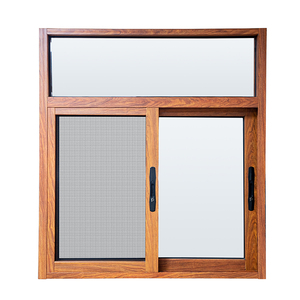 Wood-Grain Hybrid
Made In China Waterproof Aluminium Alloy Wood Grain Horizontal Opening Sliding Casement Windows
- Dual-finish fluorocarbon & wood grain
- EPDM multi-lip perimeter water barrier
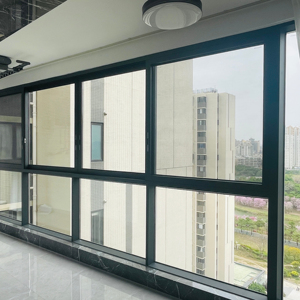 Commercial Spec
Excellent Quality Double Glass Tempered Aluminum Windows Sliding Windows For Home And Office
- Double tempered acoustic glass (5mm+12A+5mm)
- Heavy-duty stainless steel track runners
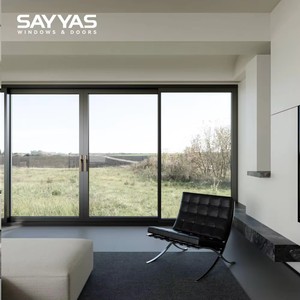 Heavy Duty System
Customized Modern Heavy Duty Aluminum Lift and Slide Door Integrated Screen Double Glazing Tempered Glass Sayyas Windows
- Lift-and-slide mechanism up to 400kg/leaf
- Integrated anti-mosquito stainless screen
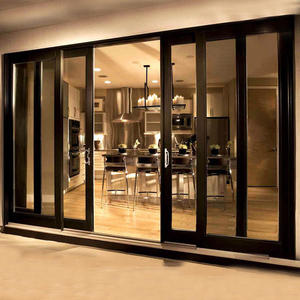 Veranda & Patio
Customized Aluminium Veranda Sliding Door Double Tempered Glass Windows And Doors with Rail Sliding Door For Sale
- High structural rigidity for expansive openings
- Embedded bottom threshold water drainage
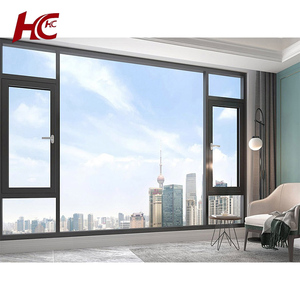 Hurricane Impact
Custom Hurricane Impact Soundproof Aluminium Window House Villa Hotel Modern Black Aluminum Glass Sound Proof Casement Windows
- Laminated SGP impact interlayer safety glass
- Acoustic damping rating exceeding 42 dB
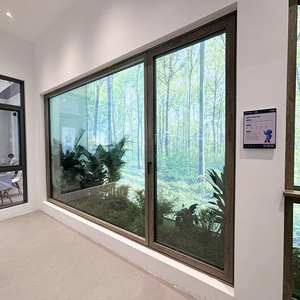 Multi-Vent Bay
Fuson Aluminum Alloy Drift Bay Windows Flat Opening Inner Inverted Drift Soundproof Glass System Broken Bridge Sliding Window
- Tilt-turn ventilation with drift slide operation
- Broken bridge polyamide insulation bar (PA66)
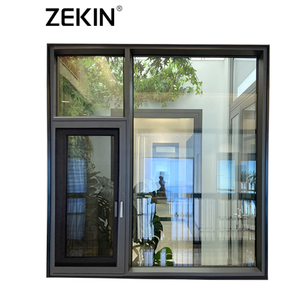 French Bay Arch
Custom Aluminum Window Hurricane Impact Proof Double Glazed French Bay Window Smart Aluminum Casement Windows
- German multi-point perimeter security locking
- Smart motorized actuators and rain sensor support
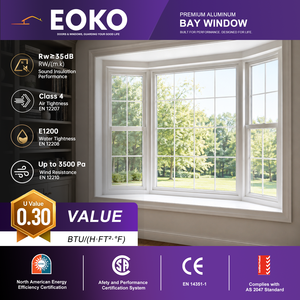 Bow & Bay Master
EOKO Custom Aluminum Bay and Bow Window with Double Glazing Thermal Break Window for Energy Efficient Residential House Design
- Polygon corner post variable coupling (90°-150°)
- Low-E coating optimized for high SHGC reduction
Engineering China Aluminum Bay Windows for Brazil's Architectural Reality
The import of architectural fenestration into Brazil demands far more than basic aesthetic appeal. As high-end residential architecture across São Paulo's luxury gated communities (condomínios fechados), Rio de Janeiro's waterfront boulevards, and Curitiba's bioclimatic developments reaches unprecedented heights, exterior envelopes must respond directly to distinct climatic stresses. High solar irradiance, salt-laden marine air, heavy cyclical tropical precipitation, and stringent regional standards dictate window profile engineering.
As one of China's tier-one fenestration engineering groups headquartered in Foshan—the world's capital of architectural aluminum processing—we bridge the critical divide between cost-effective, high-precision industrial production and rigorous Brazilian building codes. Our aluminum bay window systems are specifically configured to address the operational and mechanical realities faced by Brazilian civil construction firms, incorporating structural corner mullions designed for gust wind pressures exceeding 2,500 Pa while maintaining interior acoustic comfort.
Traditional bay window systems frequently fail at the variable angle junction posts (90°, 135°, and custom polygonal couplers) under thermal expansion. DERCHI incorporates internally reinforced extruded corner mullions with dual-chamber polyamide thermal breaks and vulcanized EPDM corner gaskets. This eliminates thermal bridging, prevents water infiltration under horizontal tropical downpours, and absorbs differential structural settlement.
Brazilian Regulatory Alignment: ABNT NBR 10821 & NBR 15575
Civil engineers and architectural specifiers throughout Brazil recognize that imported windows must strictly comply with ABNT NBR 10821 (External windows for buildings) covering air permeability, water tightness, and structural wind resistance across Brazil's five structural wind zones (from Zone 1 in the interior to Zone 5 in the southern coastal strip). Furthermore, under ABNT NBR 15575 (Performance Standard for Residential Buildings), window envelopes must guarantee verifiable acoustic attenuation against urban traffic and environmental noise (dB Rw thresholds) and thermal transmittance (U-values) that prevent excessive cooling loads under Brazil's thermal zones.
By utilizing 6063-T5 and structural 6061-T6 prime architectural aluminum alloys processed under automated CNC milling lines, DERCHI delivers custom bay windows featuring multi-point locking mechanisms, double and triple laminated safety glass options (including acoustic PVB and structural SGP interlayers), and marine-grade surface treatments certified under Qualicoat Class 2 and AAMA 2605 standards.
Localized Application Scenarios Across Brazil
Addressing the microclimates, urban architectural topologies, and security imperatives of Brazil's core construction markets.
Coastal Luxury Estates
Locations: Balneário Camboriú, Rio de Janeiro, Florianópolis.
Engineering Spec: Seaside salt spray demands 25-micron architectural anodized or PVDF fluorocarbon coatings to resist severe saline corrosion. Structural multi-pane bay windows provide panoramic marine vistas while withstanding heavy offshore windward squalls.
High-Rise Urban Condominiums
Locations: São Paulo (Jardins, Faria Lima), Belo Horizonte.
Engineering Spec: Dense urban zones suffer from ambient decibel levels above 70 dBA. Our thermal-break casement-bay configurations incorporate laminated acoustic glazing (Rw 38–42 dB) and pressure-equalized drainage chambers to isolate city traffic noise completely.
Highland Bioclimatic Mansions
Locations: Campos do Jordão, Gramado, Petrópolis.
Engineering Spec: Subtropical highland winter chill demands superior thermal insulation. 24mm polyamide (PA66) thermal breaks combined with argon-filled low-emissivity double glass prevent interior condensation while capturing solar heat gain efficiently during cold periods.
Gated Residential Mansions
Locations: Alphaville, Tamboré, Quinta da Baroneza.
Engineering Spec: Structural security combined with wide garden projection. Robust profiles with internal steel strengthening bars, German multi-point hardware, and anti-intrusion safety glass satisfy the stringent residential security standards expected by high-net-worth Brazilian families.
Macro Trends Shaping Brazilian Architectural Glazing (2025–2030)
The Brazilian real estate and commercial construction ecosystem is undergoing an unprecedented transformation driven by ESG standards, green building protocols (LEED and AQUA-HQE), and an architectural pivot toward biophilic, panoramic residential interiors. Analyzing Brazilian import trends highlights three critical market shifts:
1. Expansion of Maximum Glass Surfaces with Ultra-Narrow Sightlines
Contemporary Brazilian architectural language—championed by icons of Brazilian modernism and carried forward by modern studios in São Paulo and Curitiba—celebrates spatial continuity between lush exterior gardens and interior living spaces. Traditional bulky window frames are being replaced by high-strength aluminum bay designs featuring visible profiles under 45mm. Achieving this requires structural alloys with superior tensile yield strength (≥ 205 MPa), enabling minimal frames to carry 300+ kg structural insulated glass units safely under wind deflections of L/175 or lower.
2. Stringent Energy Codes and Solar Heat Gain Coefficient (SHGC) Optimization
With electricity tariffs rising across Brazil's regulated power grid, developers are penalizing fenestration systems that trigger excessive HVAC air-conditioning loads. In cities like Salvador, Fortaleza, and Brasília, exterior bay windows without specialized thermal controls create greenhouse effects. DERCHI's export assemblies incorporate selective solar-control coatings (Low-E with SHGC values between 0.28 and 0.35) combined with thermal bridge separation. This retains natural daylight transmission (> 60%) while rejecting up to 72% of solar infrared heat radiation.
3. Turnkey OEM/ODM Direct Import Models for Cost and Project Control
Historically, Brazilian developers purchased imported aluminum components through third-party multi-tier distributors, incurring heavy local intermediary margins on top of Brazilian import duties (II, IPI, PIS/COFINS). Leading developers and contractors are now bypassing local brokers to partner directly with certified tier-1 Chinese manufacturers capable of supplying complete, container-optimized, labeled fenestration systems. This factory-direct supply chain delivers cost efficiencies of 25% to 40% while ensuring direct engineering oversight via CAD/BIM shop drawing coordination.
Enterprise Strength: Engineered for Long-Distance Global Logistics
With an integrated 180,000㎡ industrial complex in Foshan, DERCHI provides Brazilian developers with unyielding quality control, verified certifications, and seamless project execution.

Full-Chain Industrial Scale
DERCHI's Foshan manufacturing center encompasses automated aluminum extrusion, horizontal and vertical fluorocarbon coating lines, glass processing (cutting, tempering, insulating), and precise CNC corner assembly. This closed-loop infrastructure guarantees absolute dimensional tolerances within ±0.5mm across high-volume production schedules.

Global Certifications & Lab Data
Every profile design and corner coupling system is backed by over 100 patents and formal certifications including CE, ISO9001, AS2047 N6 rating (highest wind, air, water resistance tier in Australia), and UL fire-rated compliances. Comprehensive wind-load and acoustic test documentation is provided to support Brazilian engineer sign-offs under local building mandates.

Ocean-Ready Crating & Support
Ocean transit from Shenzhen/Guangzhou to the Port of Santos, Paranaguá, or Rio de Janeiro takes 35 to 45 days. Products are protected with multi-layer protective PE film, desiccants, heavy corner shields, and fumigated steel-reinforced wooden crates. Every window frame and sash is tagged with unique floor and aperture codes matching client architectural schedules.
Frequently Asked Questions: Importing to Brazil
Direct technical and commercial answers addressing customs, logistics, sizing, and installation for Brazilian civil builders and distributors.
How does DERCHI ensure compliance with Brazilian ABNT NBR 10821 standards? +
What shipping terms (Incoterms) and ports of discharge are supported for Brazilian imports? +
How do you resolve custom angular connections (90°, 135°, or variable facets) in aluminum bay windows? +
Can DERCHI supply complete villa packages including doors, garage gates, and windows in one consolidated container? +
How is on-site installation supported after delivery to Brazilian jobsites? +
Ready to Engineer Your Project's Glazing Envelope?
Send us your window schedules, architectural elevations, or project BOQ (Bill of Quantities). Our engineering desk provides free CAD shop drawings, glass thermal performance data, and comprehensive FOB/CIF quotations within 24 hours.
- Direct factory pricing from Foshan, China (No intermediary markups)
- Full structural calculations for Brazilian wind zones (NBR 10821)
- Export-grade crating ensuring zero glass transit damage
Connect with a Senior Export Engineer for Technical Consultations
Send an Inquiry