Engineered Product Portfolios
Engineered Aluminum Screen & Security Door Systems
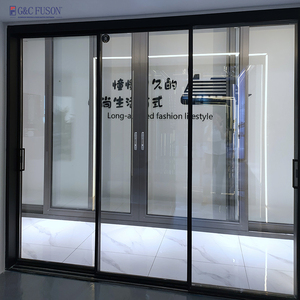
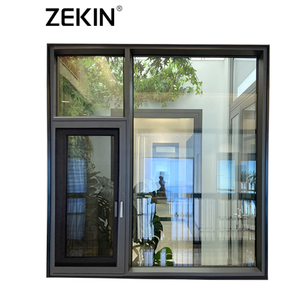
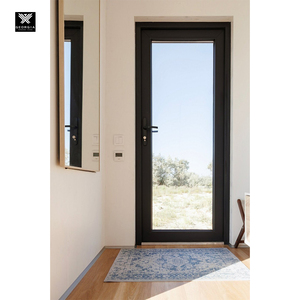
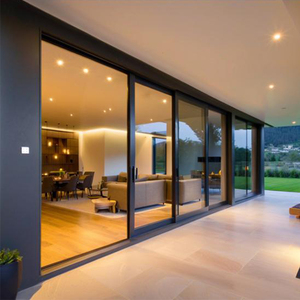
Seamlessly fusing ultra-fine insect interception with certified structural security. Engineered directly from our 180,000㎡ intelligent Foshan manufacturing hub to meet the architectural standards of the Seoul Metropolitan Area.
25+
Years Engineering Expertise
180,000㎡
Intelligent Manufacturing Base
600+
Specialized Technicians & Engineers
100+
Patents & Global Certifications
Engineering Superiority: Architectural Aluminum Mosquito Mesh Doors for the Seoul Market
In high-density modern urban environments like Seoul, architectural apertures demand unprecedented performance integration. The modern Korean architectural landscape—ranging from multi-story residential towers in Gangnam and Mapo to sprawling luxury individual villas in Seongbuk-dong and Hannam-dong—faces conflicting environmental demands. Structures require maximum unobstructed natural airflow during muggy East Asian monsoon summers, total insect exclusion, high-tensile forced-entry resistance, and seamless integration with minimalist interior aesthetics.
As premier China-based original equipment manufacturers and specialized exporters, Guangdong Dejiyoupin Doors and Windows Co., Ltd. (DERCHI) engineers advanced aluminum mosquito mesh door systems specifically calibrated for Korea's stringent energy codes and climatic dynamics. Unlike conventional flimsy roll-up fiberglass screens or lightweight aftermarket installations that quickly fail under cyclic wind pressures and UV degradation, our structural systems utilize multi-chamber extruded 6063-T5/T6 aviation-grade aluminum alloy profiles coupled with woven austenitic 304 and 316 marine-grade stainless steel security wire.
The resulting architectural assemblies function as unified physical security and biological filtration barriers. Operating under precision electrostatic powder coating and fluorocarbon PVDF surface passivation treatments, our assemblies comfortably endure the heavy acidic downpours of the East Asian rainy season (Jangma) without pitting, oxidation, or paint peeling. By utilizing ultra-narrow profile sights, DERCHI systems honor the clean spatial geometries of contemporary Korean spatial design while exceeding international building envelopes standards.
Urban Integration
Engineered for Seoul's Architectural Microclimates
Every district in the Seoul Capital Area features unique physical and structural challenges. Our door assemblies are configured to address localized residential demands.
High-Rise Apartments & Balcony Extensions (Balcony Balconies)
In high-rise Seoul complexes along the Han River (such as Banpo and Yeouido), upper-level residences experience severe wind-shear turbulence. Conventional screens blow out of tracks. DERCHI heavy-gauge sliding security mesh screens incorporate anti-derailment interlocking wheels, multi-point locksets, and structural hook-profiles engineered to resist suction forces exceeding 3,000 Pa.
Hannam & Seongbuk-dong Detached Luxury Estates
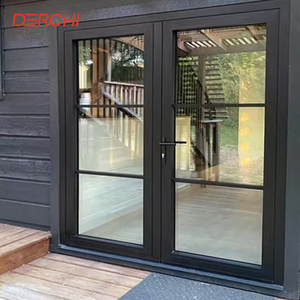
Seoul’s hillside luxury villas border natural forested zones, creating acute vulnerability to forest pests, mosquitoes, and small vermin. DERCHI cast-aluminum and heavy French entry doors with integrated 0.8mm–1.0mm high-tensile 316 woven stainless mesh provide perimeter defense against knife-shear attacks while establishing natural cross-ventilation that bypasses high air-conditioning loads.
Modern Commercial Cafes & Boutiques (Seongsu & Hongdae)
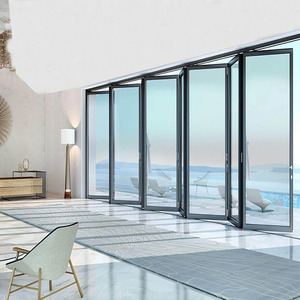
Trend-setting commercial districts prioritize indoor-outdoor transitions. Utilizing our ultra-narrow bifold sliding doors with integrated retractable pleated micro-mesh screens allows storefronts to open completely to pedestrian terraces during spring and autumn evenings while blocking street pests without sacrificing industrial aesthetics.
Evolving Trends in the Korean Door & Architectural Screening Industry
The South Korean market is experiencing structural pivots in architectural aperture procurement. Korean contractors and architects are shifting from segmented sub-contractors toward monolithic multi-functional facade assemblies. When sourcing from international manufacturing centers in China, several market drivers dictate successful deployment in Seoul:
1. Demand for Child Safety & Pet-Resistant Rigidity: Standard nylon insect meshes are vulnerable to clawing pets and present catastrophic fall risks for young children in high-rise complexes. The adoption of 0.8mm-gauge 304/316 woven stainless steel security screen doors (known as King Kong Mesh / 방충안전도어) has transitioned from an elite luxury option to an essential building safety specification. These screens withstand impact energies exceeding 1,200 Joules without frame dislodgement.
2. Climate-Adaptive Insulation Harmonization (Thermal Break Separation): Because Korean winters drop below -15°C while summers exceed 35°C with 85% relative humidity, thermal bridges must be rigorously managed. DERCHI integrates polyamide thermal break barriers (PA66 GF25) within our aluminum door frames. This ensures that even when mosquito screens are fitted directly adjacent to double- or triple-glazed Low-E insulated glass units, internal condensation risks are eliminated.
3. Ultra-Slimline Aesthetic Demands: Influenced by German minimalism and traditional Hanok planar alignments, Korean interior designers prioritize invisible framing. DERCHI slim-profile sliding systems offer visible frame widths as narrow as 18mm to 25mm, allowing maximum glass clarity while hiding insect-mesh channels inside modular track recesses.
DERCHI Industrial Ecosystem
Why Top Korean Builders Partner with DERCHI
Eliminate intermediaries. Direct factory supply from Foshan's core architectural cluster straight to Incheon or Busan ports, backed by enterprise-grade testing.

One-Stop Portfolios
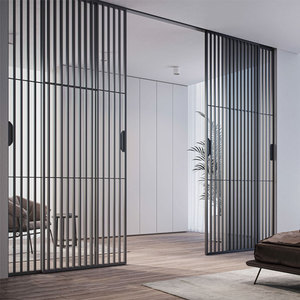
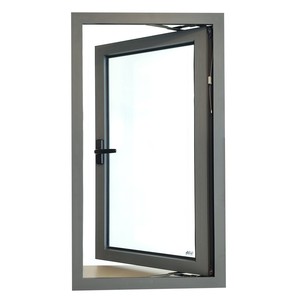
Source complete building aperture schedules—heavy entry doors, casement systems, interior slim partitions, and sliding mosquito screen systems—consolidated in unified, tagged shipping containers to optimize Korean import duties.

Certified Structural Rigidity
Certified to international ISO9001, CE, Australian AS2047 (N6 cyclone rating), and NFRC thermal standards. Certified air tightness, water tightness, and structural wind-load test documentation supplied for local structural reviews.

Full Custom CAD & BIM
Our dedicated engineering department generates comprehensive, millimeter-accurate CAD shop drawings and millwork elevations for architectural approval prior to aluminum extrusion, guaranteeing exact structural site fitment.

Synchronized Export Support
Located in the UTC+8 timezone, our specialized export team operates in practical synchronicity with Seoul (UTC+9), eliminating costly communication lags and coordinating expedited shipments to Incheon Port.
Procurement Knowledge Base
Frequently Asked Questions: Sourcing from China to Seoul
Clear, direct answers for Korean architects, general contractors, developers, and distributors.
Q1: How does DERCHI ensure corrosion resistance in coastal Korean port cities?
For coastal zones such as Incheon, Busan, or Sokcho, we utilize 6063-T6 aluminum treated with Qualicoat-certified AkzoNobel fluorocarbon (PVDF) electrostatic coatings or Class 15/20 architectural anodization. Stainless mesh screens are exclusively fabricated from certified SUS316 marine-grade wire woven to 1.0mm thicknesses, completely preventing red rust and salt-spray crystallization.
Q2: Can your aluminum mosquito mesh door systems match Korean apartment aperture standards?
Yes. Korean residential construction frequently utilizes custom rough openings for system balcony extensions. Every DERCHI order is built-to-order according to submitted door and window schedules. Our engineers deliver free CAD confirmation drawings to confirm clear clearances, subframe anchoring, and threshold details prior to production.
Q3: What are the lead times and logistics arrangements from Foshan to Incheon Port?
Standard fabrication timelines range from 25 to 35 days depending on profile finish choices and hardware customization. Direct ocean transit from Nansha or Yantian ports in South China to Incheon or Busan Port takes approximately 4 to 6 days. We provide comprehensive export documentation (FOB, CIF, or DDU/DDP terms) for seamless Korean customs clearance.
Q4: Do your security mesh screen doors comply with Korean child fall-prevention standards?
DERCHI security screen systems utilize high-tensile 304/316 wire with an aperture size of 1.5mm to 2.0mm and high-pressure compression wedge bead fixation. They withstand shear forces, knife punctures, and continuous body-weight impacts over 1,000 N, serving reliably as high-rise fall protection while completely preventing insect penetration.
Q5: What hardware systems are used for multi-point locking security?
We partner with premier hardware engineering brands including Siegenia, Hoppe, GU, and heavy-duty custom DERCHI architectural multi-point locksets. Locks integrate anti-lift deadbolts and can be configured to interface with modern digital smart-mortise locks, RFID tags, and biometric smart-home systems widely adopted throughout Seoul.
Q6: How are doors packaged to prevent damage during long-distance transit and handling?
Export components are individually protected with scratch-resistant protective film, encased in reinforced foam corner protectors, wrapped in multi-layer waterproof thermal plastic, and secured inside solid, heat-treated plywood crates (ISPM 15 compliant for South Korea import regulations), preventing transit abrasion or flexure.
Advance Your Seoul Architectural Projects with Factory-Direct Quality
Consult with our facade engineering specialists. Submit your window and door schedules, architectural CAD concepts, or project procurement estimates for an immediate engineering evaluation and competitive factory quotation.