Featured Architectural Systems & Entrance Portals
Each system integrates thermal breaks, multi-ply stabilized timber laminates, and exterior marine-grade powder coatings specifically formulated to withstand the harsh driving rain, brackish winds, and cyclic temperature fluctuations characteristic of Northern Germany.
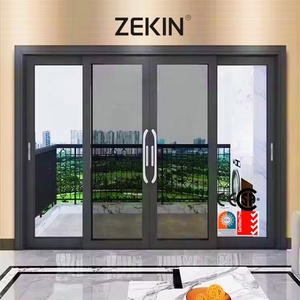
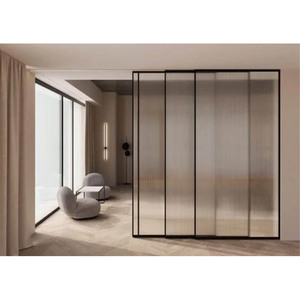
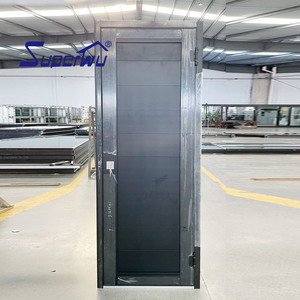
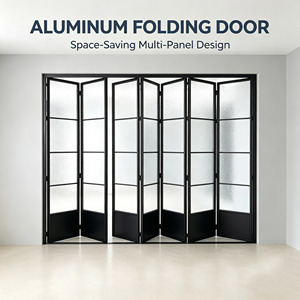
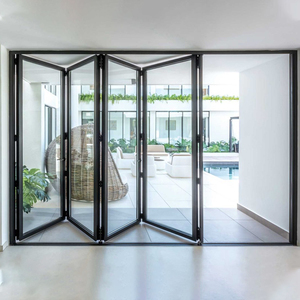
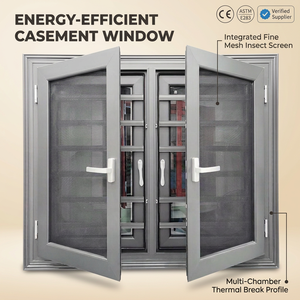
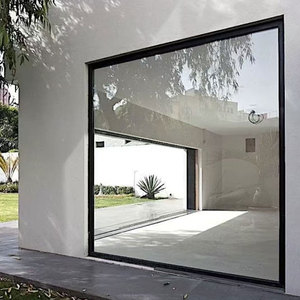
Modern Aluminum Fixed Window with Wide Viewing Area and Minimal Frame Design Fixed Bay Window for House
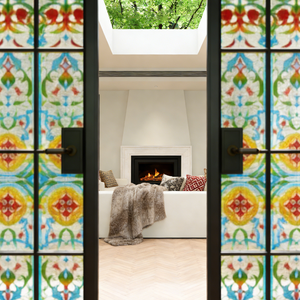
Engineered for the Microclimates & Architecture of the Free and Hanseatic City of Hamburg
From the storm-battered riverside estates of the Elbchaussee to the ultra-contemporary urban masterplans of HafenCity, door engineering in Hamburg requires rigorous structural adaptation. Our composite aluminium-timber front doors solve the age-old dilemma of authentic material warmth versus extreme atmospheric durability.
Elbchaussee & Blankenese Coastal Villas
Residential properties along the Elbe estuary confront severe microclimatic stress: high-velocity maritime winds, saltwater atmospheric aerosols, and persistent horizontal driving rain (Schlagregen). Our hybrid construction pairs heavy-gauge, marine-anodized architectural aluminium on the exterior face with multi-laminated European white oak on the interior. This prevents warping, rot, and paint deterioration while preserving interior luxury.
HafenCity & Speicherstadt Urban Enclaves
Hamburg’s modern waterfront districts require sleek, monumental proportions combined with strict thermal performance. Our oversized pivot entrance systems—reaching heights up to 3.8 meters—incorporate German-engineered concealed pivot hardware, thermal barrier breaks utilizing multi-chamber polyamide struts (PA66 GF25), and vacuum insulation panels (VIP) to easily exceed KfW 40 and 40 Plus building standards.
Winterhude & Eppendorf Altbau Revitalization
Preserving the classical Hanseatic streetscapes of Hamburg's historic turn-of-the-century quarters demands customized milling, profile replication, and acoustic attenuation. Our bespoke CAD production enables developers to recreate historical coffered reliefs, transom lights, and integrated fanlights while elevating physical performance to modern DIN EN 14351-1 CE benchmarks and 42 dB sound transmission loss.
The Timber-Aluminium Hybrid Advantage
Conventional solid timber doors installed in Northern Germany often succumb to structural expansion, joint cracking, and surface peeling due to Hamburg’s high relative humidity ($>80\%$ during winter months). Conversely, unclad solid timber requires annual sealing and painting cycles.
Our composite entrance door systems isolate structural responsibilities through decoupled architectural layering:
- External Shield: T6-tempered architectural aluminium extrusion with Qualicoat Class 2 powder coating or multi-stage fluorocarbon (PVDF) finish, resistant to coastal oxidation and UV degradation.
- Core Insulation: Polyurethane foam injection core supplemented with vacuum aerogel thermal breaks, mitigating cold bridging down to $U_f$ values of $0.72\,\mathrm{W/(m^2K)}$.
- Interior Structure: Triple-laminated cross-grained timber slabs (FSC-certified Oak, Larch, or Pine) dried to a precise moisture content of $10\% \pm 2\%$, eliminating moisture-induced warping completely.

Alignment with German Energy Codes (GEG) & Security Mandates
Germany's Building Energy Act (Gebäudeenergiegesetz - GEG) and national KfW funding schemes dictate rigorous physical thresholds for fenestration products. Below is our engineering compliance matrix for Hamburg developments.
| Performance Parameter | German Standard / GEG Mandate | Our Engineering Specification | Compliance Advantage in Hamburg |
|---|---|---|---|
| Thermal Transmittance ($U_d$) | GEG 2024 Maximum: $\le 1.30\,\mathrm{W/(m^2K)}$ Passivhaus Standard: $\le 0.80\,\mathrm{W/(m^2K)}$ |
Certified $U_d$ from $0.68$ to $0.79\,\mathrm{W/(m^2K)}$ (Triple Glazing Argon 4-18-4-18-4 Low-E) | Qualifies projects for maximum federal KfW 261 / 461 renovation and new-build grants. |
| Burglar Resistance | DIN EN 1627 Recommended: RC2 / RC3 | RC2 standard, RC3 available; Winkhaus / KFV multi-point automatic motorized latching systems | Recognized by German insurance providers; tamper-proof P5A laminated safety glass options. |
| Driving Rain Tightness | DIN EN 12208: Class 7A (300 Pa) | Class 9A / Exceeding 600 Pa rating with continuous EPDM triple-seal gaskets | Zero water penetration during severe Elbe storm surges and fall torrential downpours. |
| Air Permeability | DIN EN 12207: Class 3 | Class 4 (Highest category, tested air leakage $\le 3\,\mathrm{m^3/(h\cdot m^2)}$ at 100 Pa) | Prevents micro-drafts, eliminates acoustic whining during high Hanseatic wind squalls. |
| Acoustic Insulation ($R_w$) | VDI 2719 Sound Insulation Classes | Tested acoustic reduction up to $R_w = 44\,\mathrm{dB}$ with acoustic interlayers | Critical for inner-city Hamburg developments near major shipping canals or rail transit. |
Subsidized Carbon Reductions
Hamburg property investors are aggressively targeting Net Zero Carbon and DGNB Gold certifications. By sourcing timber from sustainably certified managed forests and utilizing low-carbon aluminium billets smelted using hydroelectric power, our entrance systems deliver exceptionally low embodied carbon footprints.
Smart Biometrics & Smart Home
Over 70% of new villa inquiries in the Hamburg metropolitan area specify keyless entry. We seamlessly integrate concealed German ekey biometric fingerprint scanners, facial recognition cameras, and motorized multi-point locksets directly into the door sash during factory assembly.
Flush Architectural Minimalist Lines
Architects across Blankenese and Rotherbaum demand seamless coplanar alignments where the door leaf, aluminium exterior casing, and structural glazing form an uninterrupted, flush surface plane. Our engineered coplanar series eliminates awkward overhangs, reducing maintenance points.
World-Class Manufacturing Base Backed by 25+ Years of Export Excellence
Guangdong Dejiyoupin Doors and Windows Co., Ltd. (operating the DERCHI enterprise standard) is recognized as one of China’s top manufacturing authorities for high-end fenestration and entrance solutions. Operating from our state-of-the-art 180,000 square meter industrial complex in Foshan, Guangdong, we bridge the gap between factory-direct cost efficiencies and exacting European technical tolerances.
For Hamburg commercial contractors, building material distributors, and high-end residential developers, we mitigate cross-border supply chain risks through comprehensive in-house quality assurance:
- Full Technical Shop Drawings: Free bilingual CAD & BIM details generated for every project schedule, ensuring exact dimensional compatibility before production tooling begins.
- Consolidated Ocean Logistics: Direct maritime shipping from Foshan/Shenzhen to Port of Hamburg (HHLA Container Terminals) with export crating engineered for rough North Sea maritime transit.
- Strict Quality Protocols: Every door undergoes 100% dry-assembly, laser squareness verification, seal integrity air-chamber testing, and hardware operational cycles prior to dispatch.


Consolidated Freight
Consolidate your entire door schedule—entrance doors, interior wood doors, and matching casements—into unified FCL shipping containers to minimize customs brokerage overhead at Port of Hamburg.

Global Code Compliance
Fully certified to CE (EN 14351-1), ISO9001, AS2047, and UL fire standards, verified by third-party testing institutions to satisfy German Prüfingenieur building control audits.

Bespoke Architectural Flexibility
Complete design freedom across non-standard rough openings, custom RAL powder shades (such as DB 703 or Anthracite RAL 7016), decorative grooving, and specialty wood veneers.

Dedicated Project Engineers
Experienced engineering specialists coordinate directly during Central European Time (CET) business hours, providing structural calculations, threshold cross-sections, and remote installation guidance.
Frequently Asked Questions for Hamburg Buyers
Clear, transparent guidance addressing structural certifications, customs clearance, shipping lead times, and thermal verifications for projects across Northern Germany.
How do your aluminium-clad timber doors satisfy German GEG and Passivhaus standards?
What is the total transit time and logistics process from your factory to the Port of Hamburg?
Are your door systems compliant with European CE marking and DIN EN 14351-1 standards?
Can we integrate German hardware brands like Winkhaus, Roto, or KFV into your entrance doors?
How do you guarantee that the timber components will not warp in Hamburg’s damp maritime climate?
What packaging protections are used to prevent transit damage during rough North Sea shipping?
Ready to Source Architectural Entrance Doors for Your Hamburg Project?
Whether you are designing a private villa along the Elbe, restoring a classical Altbau residential building, or procuring for a major commercial residential complex in HafenCity, our engineering team is ready to prepare full CAD shop drawings, acoustic and thermal calculations, and factory-direct estimates.