Architectural Whitepaper: Engineering Fenestration for the High North
The architectural landscape in Norway presents one of the world's most unforgiving testing grounds for exterior entrance doors and fenestration technology. From the salt-laden maritime gales battering the western fjords of Bergen and Stavanger to the biting arctic chills and heavy structural snowloads of Tromsø and the Inland plateau, an exterior entry door cannot merely serve as an aesthetic threshold. In strict alignment with Norway’s stringent building regulations (TEK17) and Enova energy conservation paradigms, residential and commercial building envelopes mandate ultra-low thermal transmittance (Ud-values below 0.8 W/m²K), verified air-barrier continuity (Class 4 EN 12207), and uncompromising structural resistance against driven rain and gusting winds (EN 12210 Class C5/E1200).
As China’s foremost manufacturing conglomerate with over 25 years of engineering mastery, Guangdong Dejiyoupin Doors and Windows Co., Ltd. (operating internationally as DERCHI) engineers high-density, multi-chambered thermal barrier aluminium composite systems infused with advanced structural fiber thermal barriers (polyamide PA66 reinforced with 25% glass fiber / engineered mineral aerogel matrices). By fusing the indestructible rigidity and sleek, modern minimalism of marine-grade 6063-T6 extruded architectural aluminium profiles with space-grade fiber thermal breaks, DERCHI eliminates thermal bridging, completely halts coastal galvanic corrosion, and prevents structural door slab warping induced by extreme indoor-to-outdoor temperature differentials of up to 45°C.
Engineered Systems for Nordic Residential & Commercial Architecture
Explore our premium architectural fenestration and heavy-duty thermal entrance collections customized to Norwegian building codes.
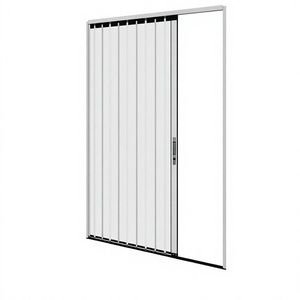
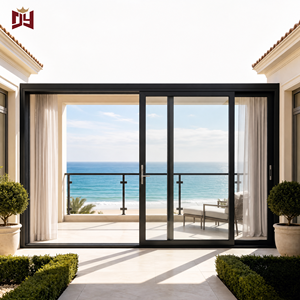
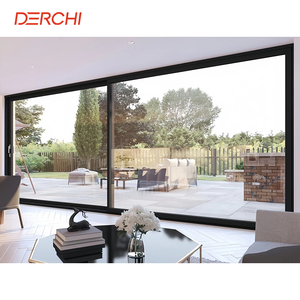
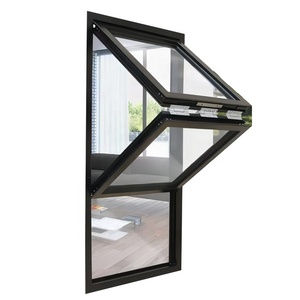
Tailored Deployments Across Norway’s Microclimates
How DERCHI aluminium fiber door systems solve localized architectural hurdles from the Arctic Circle to the southern archipelagos.
1. Fjord Coastal Resilience (Vestlandet)
Coastal municipalities such as Bergen, Ålesund, and Stavanger experience severe horizontal rain driven by North Sea cyclones, combined with high atmospheric salt aerosol concentration. DERCHI utilizes marine-grade fluorocarbon (PVDF) and Class 2 Qualicoat architectural powder coatings on thick-wall 6063-T6 alloy frames. Enhanced with EPDM multi-lip vulcanized perimeter gaskets and continuous drainage sub-sills, our systems guarantee zero water ingress under test pressures exceeding 1200 Pa.
2. Sub-Zero Thermal Envelopes (Innlandet & Nord-Norge)
In inland regions such as Røros and northern sectors like Tromsø, temperatures plummet to -30°C while modern interior hydronic systems maintain +22°C. Traditional uninsulated doors warp due to thermal expansion stress, creating drafty gaps. DERCHI’s patented polyamide-fiber thermal bridge break isolates external and internal profiles, completely stopping frost condensation, cold-draft draft siphoning, and core deformation under aggressive 50°C thermal gradient swings.
3. Mountain Hytter & Modern Nordic Cabins
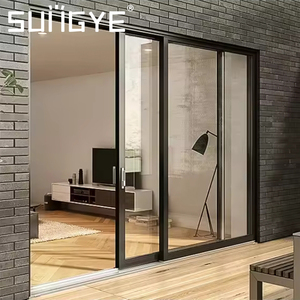
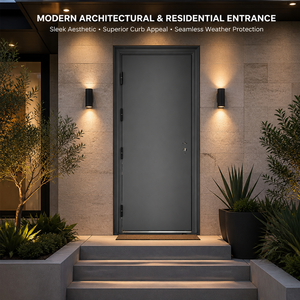
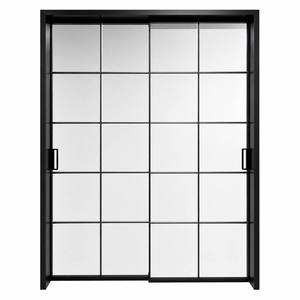
The Norwegian "Hytte" culture has transformed into high-end architectural retreats featuring floor-to-ceiling glass, heavy sliding patio doors, and monumental entrance doors. Mountain locations deal with extreme snow drifts and isolated maintenance access. Our fiber-reinforced composite lift-and-slide doors and structural aluminium entrance systems provide multi-point mechanical latching, intruder security (RC2/RC3 rating), and trouble-free operation without seasonal timber swelling or rotting.
Engineering Benchmark: DERCHI vs. Norwegian Standard Building Directives (TEK17)
| Performance Attribute | TEK17 Minimum Regulatory Threshold | DERCHI Engineered System Capabilities | Tested Standard |
|---|---|---|---|
| Thermal Transmittance (Ud) | Ud ≤ 1.2 W/m²K | Ud 0.75 - 0.88 W/m²K (Passive House ready) | EN ISO 10077-1/-2 |
| Air Permeability / Tightness | Class 3 (≤ 0.6 m³/(h·m²) at 50 Pa) | Class 4 (Exceeds maximum airtightness scale) | EN 12207 |
| Watertightness Under Pressure | Class 7A / 9A (300 - 600 Pa) | Class E1200 (Watertight up to 1200 Pa hurricane simulation) | EN 12208 |
| Wind Resistance / Structural Deflection | Class C3 (1200 Pa) | Class C5 / B5 (Tested up to 2000 Pa test loads) | EN 12210 |
| Acoustic Attenuation (Rw) | Rw ≥ 30 dB (Urban Residential) | Rw 38 dB – 45 dB with fiber-dampened core | EN ISO 717-1 |
| Corrosion Resistance Classification | Grade 4 (Neutral Salt Spray 240 hrs) | Grade 5 / Qualicoat Seaside (Acidic & Marine Tested 1000+ hrs) | EN 1670 / ISO 9227 |
Future-Facing Architectural Trends in Norway
Strategic directions defining window, entrance door, and facade procurement in Scandinavia through 2030.
Circular Economy & Carbon Footprint
Norwegian developers under BREEAM-NOR certification increasingly demand Environmental Product Declarations (EPD) showcasing low-carbon supply chains. Aluminium boasts a virtually indefinite recycling life-cycle. DERCHI’s extrusion manufacturing integrates clean-energy metallurgical smelting, closed-loop scrap recovery, and cradle-to-gate transparency, allowing contractors to secure top sustainability credits.
Smart Access & Unobtrusive Automation
The Norwegian affinity for sleek Nordic minimalism has driven the obsolescence of bulky door handles. The current trend prioritizes flush-recessed vertical pull profiles, integrated biometric fingerprint scanners, Yale Doorman or motorized RFID multi-point lock units, and automated silent drop-down thresholds that activate automatically upon closure to retain floor-level heat.
Timber-Aluminum Hybrid Aesthetics
While architects cherish the tactile warmth of natural Scandinavian timber on interior surfaces (Nordic Oak, Larch, Ash), they universally acknowledge wood's exterior maintenance vulnerability along Norway’s damp coastlines. DERCHI’s specialized wood-aluminium composite and fiber-core profiles provide indestructible marine-shield aluminium externally while integrating fine architectural hardwood skins internally.
DERCHI Industrial Dominance: Top 10 Chinese Fenestration Powerhouse
Headquartered in Foshan, China’s global capital for precision architectural aluminium extrusion, Guangdong Dejiyoupin Doors and Windows Co., Ltd. (DERCHI) represents the pinnacle of fenestration manufacturing:
180,000㎡ Mega-Scale Automated Facility
Equipped with German CNC multi-axis milling centers, automated glass sealing lines, and computerized corner crimping stations, ensuring micron-level joinery tolerances.
600+ Skilled Craftsmen & Engineers
Dedicated structural engineering team proficient in European BIM modeling, providing free shop drawing development and thermal bridge simulations within 24 hours.
International Certifications (CE, AS2047, ISO9001)
Products audited rigorously for global code compliance, backed by 8 premier international standards and over 30 design and invention patents.
Direct Sea Freight to Oslo, Bergen & Stavanger
Export-grade fumigated plywood reinforcement, moisture-absorbing desiccants, and container consolidation services tailored for Norwegian freight forwarders.
Procurement Clarity
Frequently Asked Questions by Norwegian Importers & Contractors
In-depth technical and logistical clarity for architects, building supply distributors, and general contractors in Norway.
How do DERCHI doors achieve the TEK17 requirement of Ud ≤ 0.8 W/m²K?
We achieve low thermal transmittance by utilizing our patented thermal break profiles. We embed 34mm–54mm structural polyamide PA66 GF25 thermal breaks filled with polyurethane or aerogel insulation strips, coupled with triple-glazed insulated glass units (IGUs) incorporating argon gas (90%+ fill rate) and Swisspacer warm-edge spacers. For solid panels, we infuse vacuum insulation panels (VIP) or high-density rigid polyurethane foam, systematically reaching Ud-values as low as 0.75 W/m²K.
How do you guarantee weather-tightness against Norwegian coastal storms?
DERCHI systems feature a triple continuous EPDM gasket barrier system engineered with vulcanized vulcanization corners to prevent joint shrinkage. Our threshold profiles incorporate concealed drainage channels with anti-backflow gravity valves, preventing wind-driven seawater or driving rain from penetrating the frame even during storm surges exceeding 1200 Pa (Class E1200 standard under EN 12208).
Can DERCHI pre-install Scandinavian standard lock cases and smart hardware?
Yes. During CAD design approval, our CNC milling centers are programmed to rout mortise slots compatible with Scandinavian oval cylinders, ASSA ABLOY lock cases (such as Connect or Module series 8765 / 565), and smart electronic systems such as Yale Doorman. We also provide our proprietary heavy-duty multi-point German-engineered hardware pre-assembled from the factory.
What documentation and test reports are provided for Norwegian municipal approval?
Every order shipped to Norway is backed by a full documentation dossier: CE marking declarations of performance (DoP), EN 14351-1 factory production control compliance certificates, structural wind load and thermal finite element method (FEM) simulation reports, and detailed CAD installation shop drawings to facilitate seamless approval with local Norwegian building inspection authorities (Kommunen).
How are heavy sliding and pivot doors packaged to prevent ocean transit damage?
Export consignments destined for Scandinavian ports undergo strict packaging protocols: glass and profile surfaces receive protective peelable film, corners are shielded with rigid high-density PE bumpers, frames are completely sealed in multi-layer foam wraps, and the entire unit is enclosed within custom-engineered, fully enclosed fumigated plywood crates with integrated lifting base-skids for crane and forklift maneuvering.
What is the standard production and shipping lead time from Foshan to Norway?
Standard customized production takes 25 to 35 business days following CAD drawing sign-off and color code confirmation. Direct container maritime transit from Shenzhen/Guangzhou ports to Oslo, Brevik, or Kristiansand typically spans 32 to 42 days. We offer both FOB China and CIF Norwegian port commercial terms, assisting your domestic broker with all export clearance paperwork.
Ready to Engineer Your Norwegian Architectural Project?
Submit your project door schedules, opening dimensions, or CAD elevations. Our bilingual engineering specialists will deliver a comprehensive, TEK17-compliant structural quotation and shop drawings within 24 hours.