Architectural Portfolio: Commercial & Luxury Residential Systems
Precision-engineered multi-track sliding suites, integrated fenestrations, and thermally insulated patio openings verified against rigorous international building standards.
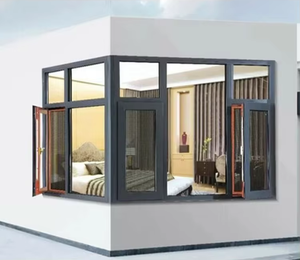
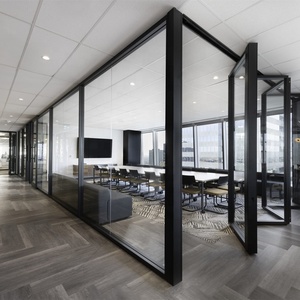
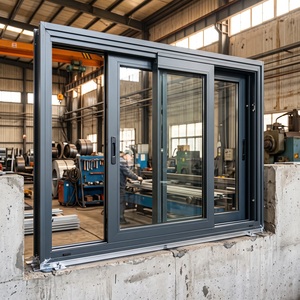
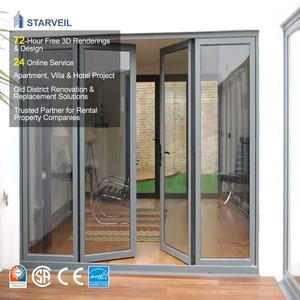
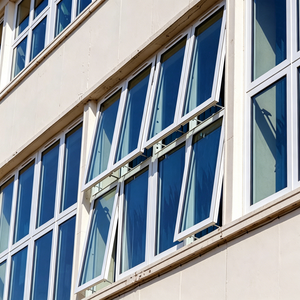
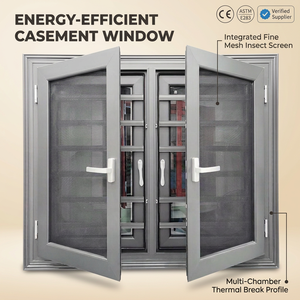
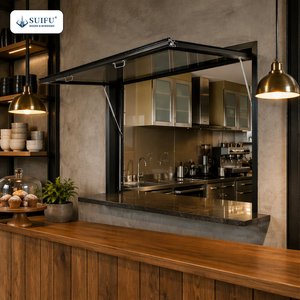
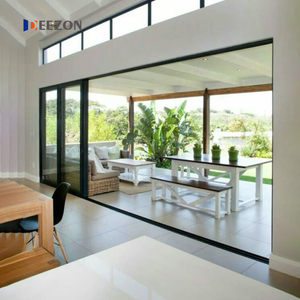
Engineering Overview: Modern Fenestration Integration
Modern building architecture demands an uncompromising balance between structural wind load resistance, thermal envelope isolation, and maximum visual transparency. Sourcing aluminum sliding door with windows systems requires an advanced understanding of how intersecting structural mullions, drainage channels, and thermal breaks interact under real-world meteorological pressures.
Historically, sliding doors and adjacent operable or fixed window lites were framed as separate assemblies, joined on-site with field couplers. Modern engineering favors unified, integrated fenestration matrices. Standardizing extrusion profiles—typically utilizing 6063-T5 or high-tensile 6060-T6 architectural alloys—minimizes deflection across high-span structural elevations, streamlines fabrication lead times, and reduces air leakage paths across multi-panel configurations.
Technological & Development Trends in Aluminum Fenestration
The global market for architectural aluminum openings is undergoing unprecedented regulatory and structural transitions. Commercial developers, facade engineers, and volume distributors must navigate shifting energy mandates while fulfilling the demand for minimalist luxury design.
Polyamide Thermal Barriers
Integration of wide, multi-chambered polyamide (PA66 GF25) thermal struts has largely replaced pour-and-debridge polyurethane methods, yielding U-values down to 1.1 W/(m²·K) for high-performance LEED v4 and Passivhaus building envelopes.
Slim Sightline Interlocks
Interlocking vertical mullions are engineered as narrow as 20mm while deepening the profile inertia moment (Ix) backward into the room. This preserves expansive glass-to-frame ratios without compromising extreme wind load criteria.
Recessed Continuous Drainage
Zero-threshold, ADA-compliant sub-sills incorporate concealed cascade drainage valves. These systems resist dynamic water infiltration up to 700 Pa while maintaining flush step-free transitions between interior luxury flooring and exterior terraces.
Engineering Standards & Performance Matrix
Direct comparisons of mechanical ratings demonstrate why precise alloy tempering, gasket durometer, and profile depths determine long-term durability across institutional and residential developments:
| Performance Parameter | Standard Commercial Grade | Architectural High-Performance | DERCHI Heavy Duty System |
|---|---|---|---|
| Alloy & Temper Spec | 6063-T5 (1.4mm - 1.6mm wall) | 6063-T6 (1.8mm - 2.0mm wall) | Primary Billet 6063-T6 (2.0mm - 3.0mm wall) |
| Structural Wind Load (ASTM E330 / AS2047) | Serviceability up to 1500 Pa | Design Load up to 3000 Pa | AS 2047 N6 Pass (Up to 4500 Pa Cyclonic) |
| Acoustic Isolation (STC / Rw) | STC 28 - 32 dB | STC 35 - 38 dB | STC 42 - 45 dB (Laminated Acoustic IGU) |
| Water Penetration Resistance | Pass @ 300 Pa | Pass @ 450 Pa | Static & Dynamic Pass @ 700+ Pa |
| Hardware Cycle Durability | 20,000 cycles | 50,000 cycles | 100,000+ continuous glide cycles (SS316 bogie) |
Strategic Procurement Trends for Global Buyers (2025–2030)
Procurement executives, commercial quantity surveyors, and international project directors are systematically reorganizing tier-one supply chains. The shift away from multi-vendor fragmentation toward integrated manufacturing partners reflects several practical market drivers:
Consolidated Container Logistics
Developers are eliminating dimensional mismatches and container deadhead space by sourcing main entry pivot doors, matching sliding curtain doors, fixed lites, and awning vents under a single consolidated factory schedule.
Pre-Glazed Factory Assemblies
Escalating on-site labor rates in North America, Australasia, and Europe have heightened demand for unitized, factory-glazed and pre-hung modular assemblies that drop directly into rough architectural openings.
Traceable Material Documentation
Strict regional carbon border adjustment mechanisms and warranty audits require verifiable documentation, including AAMA/NFRC certificates, EPD declarations, and marine-environment fluorocarbon test results.
Procurement FAQ: Technical & Commercial Inquiries
Direct engineering answers addressing the structural, financial, and logistical aspects of sourcing architectural aluminum assemblies from tier-one Chinese manufacturing plants.
How do you guarantee air-tightness and water-tightness at the intersection of sliding doors and windows?
We deploy continuous vulcanized EPDM triple-gasket systems paired with precision CNC-machined injection-molded corner joint blocks. Intersecting junctions undergo structural silicone sealing and are fitted with internal water deflection guides that channel hydrostatic head pressure into one-way weeping channels, preventing blowback at pressures exceeding 700 Pa.
Can your aluminum profiles accommodate high-load coastal cyclone conditions?
Yes. Our impact-rated architectural series are tested to Australia AS2047 N6 and US hurricane-impact requirements. The assemblies utilize reinforced primary 6063-T6 aluminum alloys with minimum 2.0mm to 3.0mm structural web wall thicknesses, combined with multi-point stainless steel locking gear and PVB/SGP laminated safety glass units.
What architectural surface treatment options are available for severe coastal corrosion?
We offer high-performance AkzoNobel powder coatings certified under Qualicoat Class 2 standards, as well as 3-coat/2-bake fluorocarbon (PVDF) finishes exceeding AAMA 2605 criteria. For severe coastal marine environments, we recommend a 25-micron minimum anodic oxide film thickness or hyper-durable PVDF to provide 20+ year protection against salt spray corrosion.
What is the typical production lead time and CAD approval process for OEM/project orders?
Upon receiving the architectural window and door schedule, our engineering department produces detailed 1:1 CAD shop drawings within 48 to 72 hours. Following client drawing sign-off and hardware specification freezes, mass production runs typically complete within 25 to 35 calendar days, supported by rigorous pre-assembly dry-fit testing.
How are oversized, heavyweight sliding door panels packaged to prevent transit damage?
Every profile surface is covered with low-tack protective polymer films, wrapped in impact-absorbing pearl cotton, fitted with corner edge-guards, and crated inside fully enclosed, fumigated, marine-grade plywood cases. For container optimization, assemblies are crated according to opening sequences with moisture-absorbing desiccant packs to prevent condensation damage during transoceanic shipping.
Can we mix different door and window categories inside a single consolidated shipping container?
Absolutely. Operating an integrated 180,000㎡ plant allows us to consolidate aluminum sliding doors, casement windows, luxury cast aluminum entry doors, minimal pivot assemblies, and interior glass partition systems into unified shipping manifests. This drastically cuts demurrage fees, port charges, and single-source project overhead.