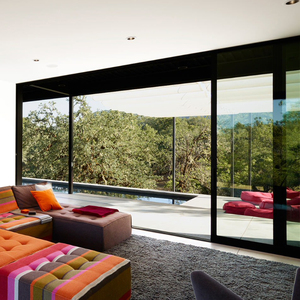
Engineered Product Showcase
Precision Aluminum Cellar & Enclosure Portals
Explore our audited, heavy-duty architectural aluminum door series. Engineered with aircraft-grade aluminum alloy profiles, dual-pane Low-E insulated glazing, and German-designed roller hardware for premium wine cellars, commercial lounges, and residential estates.
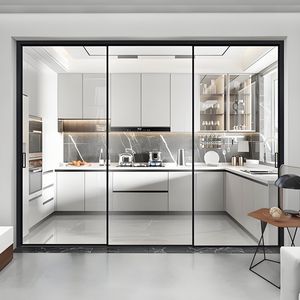
Aluminum Sliding Door Double Glazing Soundproof Two-Track Interior Cellar Door
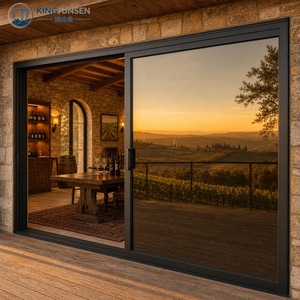
BT200 Sliding Glass Doors Double Tempered Insulated Glass for Modern Wine Cellar
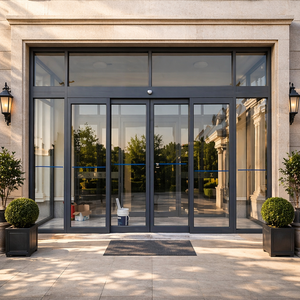
Aluminum Alloy Thermal Break Sliding Door CE ISO9001 Certified Modern Design
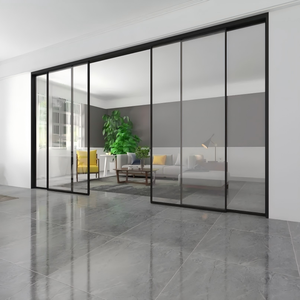
Narrow Aluminum Alloy Door Minimalism Hanging Rail Sliding Cellar Door
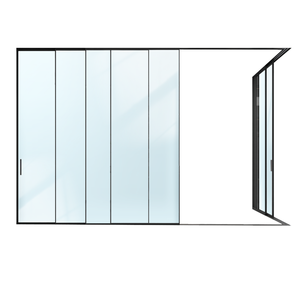
Push-Pull Aluminum Alloy Sound Insulation Door Lifetime Warranty for Cellars
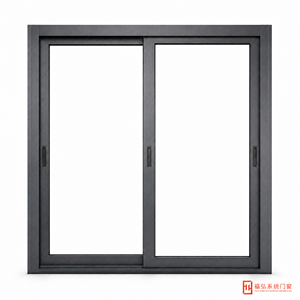
Heavy Duty Thermal Break Aluminum Sliding Door Dark Grey Waterproof Custom
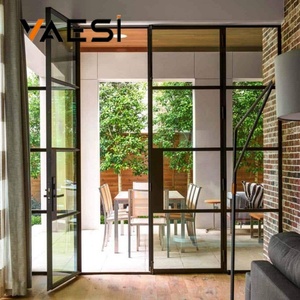
Modern Aluminum Alloy Glass Casement Door Durable for Cellars & Mansions
Manufacturing Leadership
Guangdong Industrial Strength & Global Compliance
DERCHI (Guangdong Dejiyoupin Doors and Windows Co., Ltd.) represents the vanguard of Chinese precision fenestration engineering. Operating an ultra-large intelligent fabrication base in Foshan, we bridge bespoke architectural vision with certified mass-customization.
Stringent Global Certifications
DERCHI doors undergo testing under CE, ISO9001, AS2047 (Australian N6 Standard), and UL fire-rated protocols. Structural deflection, wind-load capacity, water-tightness, and acoustic metrics conform strictly to international engineering standards.
100% Bespoke CAD/BIM Shop Drawings
Every commercial or luxury residential opening is unique. Our in-house technical engineering department provides millimeter-accurate CAD shop drawings and 3D structural calculation reviews free of charge prior to cutting raw profiles.
Export-Crated Sea-Freight Protection
We provide full project consolidation across multiple openings. All cellar doors are wrapped in multi-layer pearl foam, protected with edge-guards, and encased within fumigated solid plywood crates to guarantee damage-free discharge at destination ports.
Industry Whitepaper & Technical Analysis
Engineering Next-Generation Aluminum Wine Cellar Portals
A true architectural cellar door is not merely a visual barrier; it is a critical thermodynamic envelope separator. In modern luxury residential design, high-end hospitality environments, and boutique wineries, wine preservation depends fundamentally on maintaining the Golden Preservation Triangle: a stable temperature between 12°C and 14°C (53°F–57°F), relative humidity between 55% and 70%, and near-zero vibrational and UV infiltration.
Historically, wooden cellar doors dominated estate basements. However, natural wood suffers irreversible warping, mold expansion, and perimeter gasket failure when subjected to high interior humidity paired with hot, dry external ambient air. As verified by forensic building diagnostics, the deployment of architectural aluminum alloy 6063-T6/T5—engineered with multi-chamber internal geometry and high-tensile structural integrity—has completely revolutionized subterranean and interior wine cellar preservation.
| Evaluation Parameter | DERCHI Thermal Break Aluminum | Conventional Standard Aluminum | Solid Hardwood Cellar Doors |
|---|---|---|---|
| U-Factor (Thermal Insulation) | 0.28 – 0.34 W/(m²·K) [Ultra-Low] | 0.85 – 1.20 W/(m²·K) [Condensation Risk] | 0.45 – 0.65 W/(m²·K) [Prone to Leakage] |
| Air Tightness Class | Class 4 (EN 12207) / Airtight Perimeters | Class 2 [Moderate micro-infiltration] | Degrades over 12 months as timber flexes |
| Condensation Resistance Factor | CRF > 72 (Zero sweating at 70% RH) | CRF < 40 (Severe exterior frame condensation) | Subject to surface fungal colonization |
| Acoustic Damping (Rw / STC) | STC 38 – 42 dB (Damps refrigeration compressors) | STC 25 – 28 dB | STC 30 – 33 dB |
| Structural Service Life | 50+ Years (Zero thermal deformation) | 30 Years | Requires regular resealing and realigning |
Structural Thermal Break Technology vs. Condensation Sweating
The single most dangerous failure mode in modern walk-in cellar design is condensation along frame profiles. When moist ambient air meets a non-thermally broken aluminum surface chilled by interior cooling equipment, dew point thresholds are immediately breached. Water beads trickle downward, destroying timber floor finishes, creating microbial health hazards, and shorting out internal perimeter lighting circuits.
DERCHI overcomes this structural vulnerability by integrating continuous polyamide (PA66 GF25) reinforced thermal break isolators. By mechanically separating the external exterior face from the interior conditioned profile, heat transfer across the frame is reduced by up to 85%. Coupled with automotive-grade, co-extruded EPDM continuous seal gaskets, the door maintains an unbroken thermal envelope that eliminates condensation under ambient relative humidities reaching up to 88%.
Spectrally Selective Glazing: Low-E Coating & Argon Thermal Matrices
Visual transparency in contemporary cellar construction is non-negotiable—collectors demand uninterrupted visual access to vintage vintages from their dining and entertainment lounges. However, ordinary single-pane or standard clear tempered glass allows long-wave infrared radiation and harmful ultraviolet wavelengths (290nm–380nm) to penetrate the storage vault, causing photochemical wine degradation known as "light struck" defect (goût de lumière).
Our cellar portals utilize dual-pane or triple-pane hermetically sealed architectural glass assemblies: 6mm Low-E Tempered Exterior Glass + 12mm 90% Argon Gas Cavity with Warm-Edge Spacers + 6mm Clear or Smoked Tempered Interior Glass. The spectrally selective soft-coat Low-E surface reflects over 96% of solar infrared and block 99% of damaging UV frequencies while delivering pristine visual clarity and zero perimeter sweating.
Global Market Intelligence
Future Procurement Trends in Architectural Cellar Doors
Commercial specifiers, luxury general contractors, and hospitality purchasing heads must align procurement with evolving sustainability metrics, automated climate controls, and minimalist spatial design.
1. Ultra-Narrow Sightlines
Architects are eliminating bulky traditional frames. Demand is shifting exclusively to ultra-slim 18mm–24mm vertical stiles with hidden structural jambs, transforming cellar entrances into frameless glass display vitrines.
2. Integrated Smart IoT Access
Modern residential vaults now mandate commercial-grade access control. Procurement contracts require built-in biometric fingerprint scanning, RFID keycard bypass, and BACnet/Modbus integration for facility management systems.
3. Thermal Decoupling Specs
Zero-energy architectural standards (LEED, Passivhaus, WELL Building) now scrutinize internal interior envelope breaks. Specifiers increasingly enforce audited U-factors below 0.32 W/(m²·K) for all conditioned wine enclosure entries.
4. Pre-Hung Precision Assemblies
To eliminate on-site labor errors, general contractors demand fully factory-pre-hung systems: pre-drilled frames, factory-seated concealed pivot hinges, pre-routed mortises, and snap-in magnetic drop-down acoustic sweep gaskets.
Procurement Guidance
Frequently Asked Questions by Specifiers & Importers
Clear, uncompromised technical answers addressing common structural, shipping, and engineering challenges faced by international builders and interior designers.
How does an aluminum cellar door prevent exterior frame condensation?
Condensation occurs when the frame's exterior temperature drops below the ambient room's dew point. Our cellar doors incorporate a structural PA66 GF25 fiberglass-reinforced polyamide thermal barrier separating the interior and exterior aluminum extrusions. Combined with dual/triple-glazed insulated Low-E glass filled with Argon, heat conduction is blocked, ensuring the exterior frame remains at ambient room temperature without sweating.
Can DERCHI produce custom oversized pivot doors for estate cellars?
Yes. Our heavy-duty architectural pivot systems support sash dimensions up to 2.2 meters in width and 4.0 meters in height, with individual panel weights exceeding 450 kg. We utilize commercial-grade German and Italian oil-damped hydraulic concealed floor closers engineered for 500,000 continuous opening cycles with 90-degree hold-open functions.
What surface finishes are recommended for high-humidity environments?
We provide fluorocarbon PVDF coating (AAMA 2605 compliant) and hard-anodized surface treatments (15–25 microns thickness). These finishes deliver extreme resistance against oxidation, chemical cleaning agents, and high-salinity coastal humidity, ensuring zero fading, peeling, or chalking over a guaranteed 20-year structural service life.
How are cellar door shipments packed to ensure damage-free delivery?
All doors undergo modular pre-assembly and full QC dry-fitting at our Foshan facility. Components are disassembled, coded to CAD installation schedules, wrapped in protective stretch film with scratch-proof corner protectors, and secured within custom heavy-duty plywood crates with shock-absorbing foam bases. Crates are containerized and braced for trans-ocean freight.
How do you guarantee air-tight sealing at the bottom threshold?
We employ automatic mechanical drop-down sweep seals recessed inside the lower door profile. When the door closes, a hidden plunger mechanism engages the jamb, driving a silicone acoustic gasket down tightly against the finished floor or low-profile thermal sill, eliminating air leaks without creating an unsightly tripping threshold.
What documentation do you provide for import customs clearance?
DERCHI provides a comprehensive documentation suite with every export order, including Certified Commercial Invoices, Itemized Packing Lists, Bills of Lading, Certificate of Origin (Form E, CO, etc.), CE Declarations of Performance, Mill Test Certificates for aluminum extrusions, and certified lab test reports matching destination import requirements.
Transform Your Wine Enclosure Project Today
Connect directly with our senior fenestration engineers in Foshan. Send us your door schedules, opening dimensions, architectural elevations, or target performance requirements for a complimentary CAD proposal and factory-direct price quotation within 24 hours.