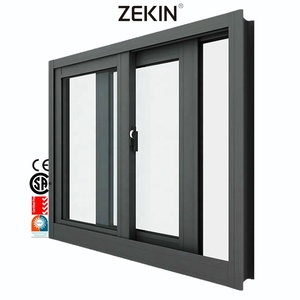
Export Product Portfolio
High-Performance Aluminum Casement & Fenestration Assemblies
Manufactured to surpass global standards including AS2047, NFRC, CE, and ASTM hurricane impact standards. Engineered with virgin 6063-T6/T5 architectural aluminum profiles and multi-point perimeter compression hardware.
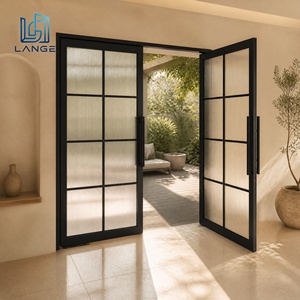
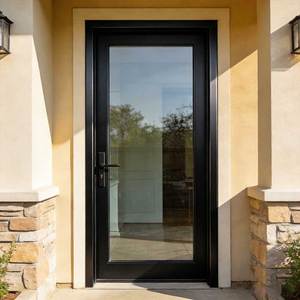
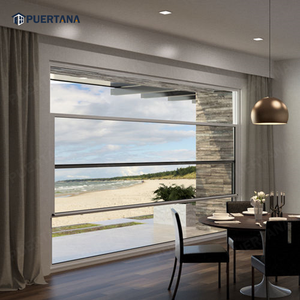
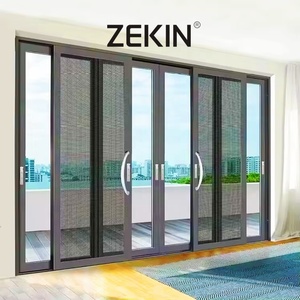
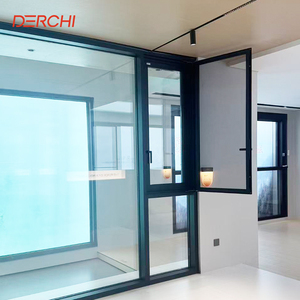
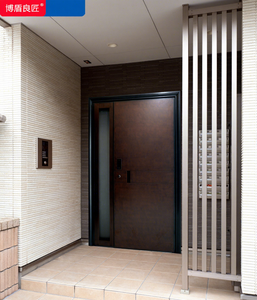
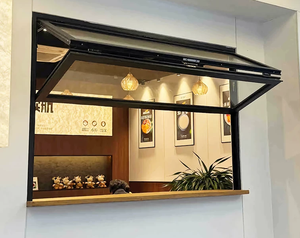
Architectural Engineering of High-Performance Aluminum Casement Windows
In modern architectural building envelopes, the aluminum casement window represents the pinnacle of structural integrity, airtightness, and thermal performance among all operable window configurations. Unlike conventional sliding or hung window assemblies, an outward or inward-swinging casement system utilizes mechanical compression gaskets along the full perimeter of the sash. When actuated by European-style multi-point locking gear, the casement sash physically draws against the frame gasket, creating a hermetic seal against wind-driven torrential rain, turbulent draft infiltration, and external acoustic disturbance.
As a global tier-one aluminum fenestration manufacturer and high-volume exporter operating from Foshan, Guangdong—the epicenter of global aluminum extrusion and processing—our production base combines European thermal break technology, automated CNC milling centers, and rigorous thermodynamic testing to deliver engineered fenestration packages specified for demanding residential estates, commercial developments, and coastal high-rises.
Core Engineering Tenet: Air-water-structural performance is dictated by profile extrusion wall thickness (minimum 1.6mm to 2.0mm structural wall complying with ASTM B221 and AS/NZS 1866), polyamide PA66 GF25 thermal insulating struts, EPDM vulcanized sealing systems, and structural silicone glazing compatible with dynamic cyclonic wind loads.
Thermodynamic Efficiency & Polyamide Thermal Break Mechanics
Aluminum is naturally an exceptional thermal conductor, possessing a thermal conductivity value (k) of approximately 160 to 200 W/(m·K). Without thermal separation, exterior heat or cold transfers directly into the building interior, compromising energy efficiency and causing interior condensation (sweating) that degrades interior wall finishes and breeds indoor air contaminants. To solve this, our thermal break aluminum casement systems incorporate precision-extruded PA66 GF25 (polyamide reinforced with 25% glass fiber) thermal barrier struts.
Polyamide struts reduce the thermal conductivity bridge down to approximately 0.3 W/(m·K), effectively interrupting heat conduction paths. When integrated with insulated glazing units (IGUs) composed of double or triple-pane Low-E coatings, warm-edge silicone composite spacers, and 90%+ Argon gas fills, our casement fenestration achieves overall window U-factors as low as 0.22 BTU/(h·ft²·°F) [1.25 W/(m²·K)], easily meeting strict Passive House thresholds, Title 24 compliance, and ASHRAE 90.1 commercial standards.
Structural Wind Load Resistance & Deflection Criteria
Fenestration systems installed in coastal zones (such as Florida, the Caribbean, the South China Sea, and South America's Pacific rim) must withstand severe negative and positive wind pressures. In accordance with ASCE 7-22 wind load provisions and AS 2047 deflection criteria, structural window transoms and mullions must limit deflection to less than L/175 or L/250 under ultimate design pressures (up to 5000 Pa). Our casement systems feature internal corner keys bonded with two-component polyurethane joint adhesives (corner crimping with epoxy injection), ensuring zero joint opening under repeated cyclonic cycles.
Macro Procurement Trends Shaping Global Architectural Fenestration
Global procurement directors, curtain wall consultants, and real estate developers are shifting specification protocols in response to net-zero regulatory frameworks, supply chain de-risking, and embodied carbon scrutiny. We identify four core trends dictating international casement window sourcing through 2030:
1. Low Embodied Carbon & Recycled Billets
Institutional developers demand low-carbon aluminum smelted with renewable hydro power (<4 kg CO2e/kg Al). Traceable material passports and Environmental Product Declarations (EPDs) are becoming mandatory B2B tender requirements across North America and Europe.
2. Direct-From-Factory Turnkey BIM Integration
Architects and General Contractors increasingly bypass regional multi-tier brokers, sourcing custom fenestration directly from high-capacity factories capable of providing certified Revit/CAD shop drawings and coordinated factory-glazed curtain packages.
3. Smart Micro-Ventilation & Concealed Actuators
Commercial and luxury residential buyers are moving toward motorized casement hardware hidden within the frame rebate. Concealed chain actuators interface seamlessly with smart Building Management Systems (BMS) for automated night purge and natural airflow.
4. Extreme Weather Resiliency (Dual Impact & Bushfire)
Severe climate events require multi-hazard certifications. Casement frames must integrate PVB/SentryGlas laminated impact glazing to pass Miami-Dade large missile impact standards while achieving high Bushfire Attack Level (BAL-40/BAL-FZ) ratings.
Enterprise Manufacturing Capabilities: Guangdong Dejiyoupin (DERCHI)
Recognized among the Top 10 premium door and window manufacturing enterprises in China, Guangdong Dejiyoupin Doors and Windows Co., Ltd. (operating the internationally recognized DERCHI brand) anchors global fenestration supply chains with unparalleled production scale and stringent European-grade fabrication precision.
25+ Years of Export Excellence & Engineering Prowess
With an expansive 180,000㎡ intelligent production base in Shishan Town, Foshan, DERCHI integrates the entire value chain under one roof: automated profile CNC machining, precision angle cutting, hydraulic corner crimping, automated silicone injection, IGU glass tempering/lamination, and crating lines.
Our workforce of over 600 skilled technicians, metallurgists, and facade engineers supports developers and commercial builders across 80+ nations, including Australia, the United States, Canada, the United Kingdom, Brazil, Chile, and the Middle East.
180,000㎡
Intelligent Production Facility
25+
Years Manufacturing Heritage
600+
Engineers & Production Craftsmen
100+
International Patents & Testing Passes

Internationally Validated Certifications & Test Approvals
CE | AS2047 | NFRC | ISO9001 | Florida Hurricane Approved

Acoustic Attenuation (STC/OITC) & Modern Urban Fenestration
Acoustic insulation is paramount in high-density urban environments and airport flight corridors. Sound transmission operates on distinct air-pressure frequencies. Standard sliding windows fail to block lower-frequency urban traffic rumble due to brush seal leakages. Our casement windows employ ternary ethylene-propylene-diene monomer (EPDM) continuous automotive-grade hollow gaskets along three sealing lines: outer rain barrier, central decompression chamber, and inner air seal.
Combined with asymmetric glass make-ups (e.g., 6mm Low-E outer + 12mm Argon space + 4mm glass + 0.76mm acoustic PVB + 4mm glass), our casement assemblies achieve Sound Transmission Class (STC) ratings exceeding 42 dB and Outdoor-Indoor Transmission Class (OITC) up to 36 dB, suppressing exterior urban decibels to a serene indoor whisper level under 30 dB.
European Multi-Point Hardware Integration
The structural life and tactile satisfaction of an aluminum casement window depend entirely on its operating hardware. A casement sash hanging on inferior friction stays will sag, misalign, and leak air within 18 months of installation. We partner directly with premium European hardware titans—including Siegenia, Roto Frank, Hoppe, and CMECH—to engineer custom-tailored casement actuation systems.
- 304/316 Heavy-Duty Marine Stainless Hinges: Rated to support sash deadweights up to 130 kg (286 lbs) without hinge fatigue or sash deflection, tested through 50,000 continuous open-close cycles.
- Continuous Perimeter Mushroom Head Cam Pins: Provide multi-directional anti-jemmy locking points that engage alloy strike keeps at 300mm intervals around the perimeter, guaranteeing equalized gasket compression and superior burglar resistance (RC2/PAS 24 rated).
- Micro-Ventilation Tilt & Turn Dual Functionality: Optional multi-action gearbox handles allow 90° turn for full egress cleaning and 15° tilt from the top for draft-free, secure inclement weather air exchange.
Procurement Advisory
Frequently Asked Questions on Aluminum Casement Window Sourcing
Key technical, logistic, and regulatory answers for commercial architects, facade engineers, and project quantity surveyors.
What specific structural parameters define a true commercial-grade aluminum casement window?
A commercial-grade aluminum casement window must meet three critical structural thresholds:
1) Extrusion Profile Wall Thickness: Minimum 1.6mm for fixed frames and 1.8mm to 2.0mm for operable sashes using 6063-T6 or 6060-T6 structural aluminum alloy.
2) Corner Joint Construction: Mechanically crimped extruded corner cleats combined with anaerobic corner sealant injection to ensure airtightness and corner rigidity under high wind shears.
3) Glazing Capacity: The glazing rebate pocket must accommodate minimum 24mm to 36mm insulated glass units (IGUs) to support laminated impact or acoustic configurations.
How does an aluminum casement compare with sliding systems regarding water penetration and air infiltration?
Casement windows vastly outperform sliding windows in weather-tightness. Sliding windows rely on brush-type wool pile weatherstripping, which creates frictional gaps and water leakage under sustained dynamic wind loads. Casement windows utilize continuous hollow EPDM compression gaskets. When the multi-point lock lever is actuated, the sash mechanically clamps against the frame, closing all microscopic gaps. Our casement units achieve air infiltration rates <0.05 cfm/ft² (ASTM E283) and static water penetration resistance up to 700 Pa - 1000 Pa (ASTM E331 / AS4420).
Can DERCHI engineer custom sizes and oversized architectural casements for high-wind coastal zones?
Yes. Every window order is fully tailored to architectural project elevations and structural door schedules. Our internal design engineering department prepares complimentary 2D shop drawings and 3D BIM models for sign-off prior to production. For oversized casement sashes exceeding standard dimensions, we integrate structural corner gussets, reinforced transom profiles, and 316-grade friction stays engineered to resist cyclonic negative wind loads up to 6.5 kPa.
What export packaging standard is used to prevent salt spray corrosion and glass breakage during ocean transit?
We employ a standardized five-layer export preservation method:
1) Protective peelable film on all painted/anodized aluminum surfaces;
2) High-density polyethylene (EPE) corner bumper caps;
3) Heat-sealed waterproof bubble wrap envelope;
4) Custom-built non-fumigation ISPM-15 compliant plywood crates with internal timber dunnage;
5) Steel perimeter strapping with desiccants packed inside each container to neutralize marine condensation during equatorial shipping routes.
What surface treatment options are available to withstand harsh UV and marine atmospheric exposure?
We provide three architectural finishing tiers compliant with AAMA standards:
1) Architectural Powder Coating: Qualicoat Class 2 approved thermosetting polyester powders (AkzoNobel / Tiger Drylac) offering 10-15 year colorfast warranties.
2) PVDF (Fluorocarbon) Coatings: Two-coat or three-coat Kynar 500 / Hylar 5000 liquid spray finishes complying with AAMA 2605, engineered for maximum resistance to UV radiation, acid rain, and airborne salt particles (20+ year performance).
3) Anodizing: Architectural Class I anodized finishes (20-25 microns) offering superior surface hardness and corrosion immunity.
What documentation is provided to satisfy local building control inspectors and customs clearance?
With each project shipment, DERCHI supplies a complete compliance binder: mill certificates for aluminum billets (chemical composition & tensile strength), glass calibration test reports, thermal simulation calculations, IGCC/SGCC certificates for tempered/laminated glass, full-scale NATA/NFRC laboratory physical test reports, commercial invoices, categorized packing lists, and certified Certificates of Origin (CO / Form E / Form F) for preferential customs duty treatment.
Accelerate Your Project With Engineered Fenestration Solutions
Connect with our senior facade engineering team today to review your project schedules, download our complete technical specification catalog, or arrange a 360° virtual factory video audit.
Contact Us