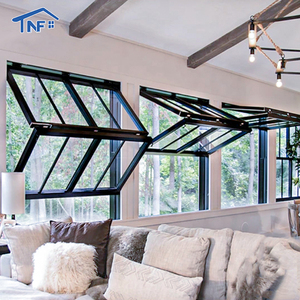
Aluminum Fold Up Kitchen Bar Vertical Bifold Window System
Hardware: Heavy-duty counterbalanced gas struts
Thermal U-Value: 1.6 W/m²·K
Application: Hospitality, Cafes & Patios
Manufactured from high-tensile 6063-T5/T6 architectural aluminum alloy extrusions, integrating polyamide PA66 thermal breaks, multi-point perimeter locking micro-ventilation systems, and robotic argon-infilled insulated glass units.
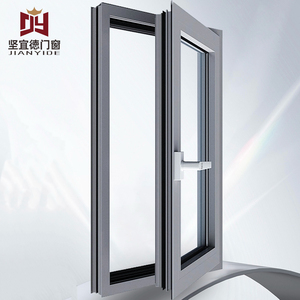
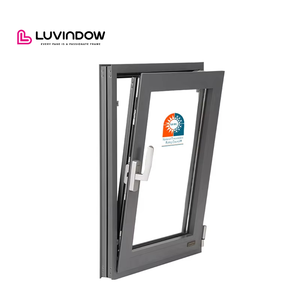
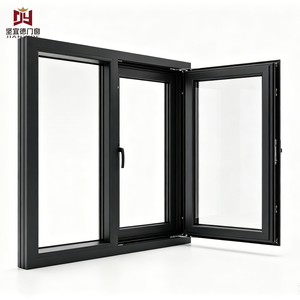
Operating from Foshan, China's international hub for advanced aluminum metallurgy and fenestration engineering, we execute stringent end-to-end quality governance for high-demand international markets.
Our aluminum tilt and turn assemblies pass international structural and thermal validation schemes. We maintain complete certified testing documentation for CE, ISO9001, AS2047 (Australian N6 Standard), and NFRC (North America), satisfying strict regional codes including ABNT NBR in South America and European EN standards.
By leveraging high-precision 4-axis and 5-axis German CNC profile machining centers, extrusion cuts, drainage perforations, and hinge recesses achieve tolerances within ±0.1mm. Automated corner-crimping accompanied by two-part structural epoxy injection guarantees airtight, waterproof miter joints that resist structural sagging.
We provide full CAD shop drawing services, glass loading calculation certificates, and thermal modeling prior to manufacturing. Shipments are packed in steel-banded, fumigated solid timber export crates with humidity-absorbing desiccant, facilitating sea freight to North America, South America, Europe, Australia, and the Middle East without deflection or damage.
A granular look at the critical thermal barriers, metallurgical formulations, and acoustic sealing matrices integrated into our factory production line.
| System Component | Material Specification | Engineering Function | Standard Performance Baseline |
|---|---|---|---|
| Primary Extrusions | Alloy 6063-T6 / 6060-T66 (Wall: 1.8mm – 2.2mm) | Structural framing resistance, extreme wind-load absorption | Tensile Strength ≥ 205 MPa; Yield Strength ≥ 170 MPa |
| Thermal Isolators | Technoform Polyamide PA66 GF25 (24mm – 34mm) | Elimination of interior/exterior thermal bridging | Conductivity λ ≤ 0.30 W/(m·K); Flame Retardant UL94-V0 |
| Glazing Architecture | Double/Triple Tempered Low-E + Warm-Edge + 90% Argon | Solar heat gain modulation, condensation prevention | Center of Glass U-value down to 0.60 W/(m²·K) / SHGC 0.22–0.38 |
| Gasket Matrix | Continuous Vulcanized EPDM / Silicone Foam Co-extrusion | Triple air barrier seals with hermetic corner vulcanization | Elastic recovery > 85% at -40°C to +120°C; Class 4 Air Tightness |
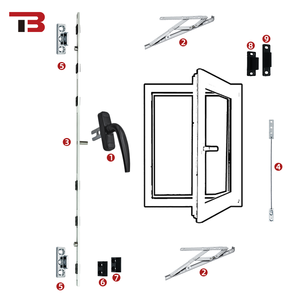
| Multi-Point Gearing | Stainless Steel 304 / Hardened Zinc Alloy Die Cast | Simultaneous locking cams around sash perimeter for airtight closure | PAS 24 / RC2 Burglar Resistance; > 25,000 cyclic durability |
Key technological, regulatory, and supply chain shifts that real estate developers, contractors, and architects must navigate between 2025 and 2030.
Global regulatory pressure (such as the EU Energy Performance of Buildings Directive and US ASHRAE 90.1 updates) is lowering whole-window U-factor mandates to below 0.8 W/(m²·K). Procurement is prioritizing structural frames designed for 48mm+ triple-pane and vacuum-insulated glass (VIG) integrations without sash sag.
The era of manual-only multi-point hardware is evolving. Leading developers are specifying hidden motorized actuators embedded directly in the profile rebate. These concealed mechanisms interface with central Building Management Systems (BMS) to automate nocturnal purge cooling and IAQ regulation without compromising sightlines.
Corporate ESG requirements now analyze embodied carbon under LEED v4.1 and BREEAM certifications. Procurement agreements increasingly mandate hydro-powered, recycled content billet production (≤ 4.0 kg CO2/kg Al), complete with verifiable third-party Environmental Product Declarations (EPD).
How modern extrusion design and mechanical systems are resolving the dual challenges of structural slimness and thermal efficiency.
Shift toward flush exterior casements and frame sightlines under 45mm, delivering expansive daylight penetration without degrading wind resistance.
Utilizing structural silicone bonding between the glass perimeter and aluminum rebate to make the glass unit an active load-bearing member, eliminating sash diagonal sag.
Incorporating dual-detent tilt gearboxes providing 10mm micro-tilt positions for continuous, rainproof, secure ambient draft circulation while occupied or away.
Evolution from standard powders to 30-year Qualicoat Class 3 and AAMA 2605 PVDF coatings formulated to resist UV radiation and coastal salt oxidation.
Direct technical answers addressing engineering verification, testing standards, lead times, and logistical governance for international door and window orders.