Enterprise Assemblies
Certified Architectural Fenestration Systems
Factory-direct access to structural-grade aluminum sliding systems, thermal barrier swing portals, impact-rated fenestration, and hurricane-certified patio access units manufactured to CE, AS2047, and ISO9001 quality parameters.

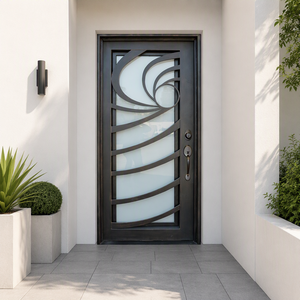
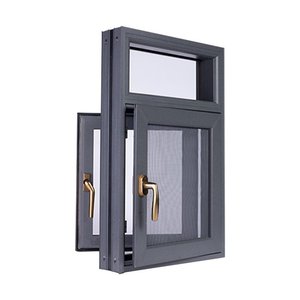
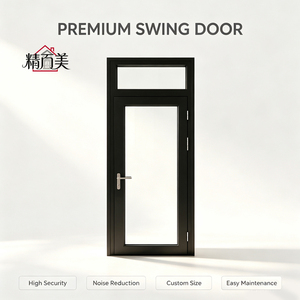
180,000㎡
Foshan Manufacturing Base
25+
Years Engineering Provenance
100+
Global Patents & Compliance
600+
Technical Specialists In-House
Technical Architecture
Industrial Metallurgy & Structural Engineering of Modern Aluminium Hatch Portals
In high-density commercial infrastructure, coastal hospitality installations, and architectural villa developments, an access hatch or utility door is far more than a simple closure. It serves as an engineered mechanical barrier that must sustain wind loadings, cyclical thermal movement, galvanic atmospheric corrosion, and stringent egress security standards.
Industrial aluminum hatch doors and architectural portal assemblies rely heavily on extruded 6063-T5 or 6063-T6 architectural-grade alloys, configured with integrated multi-cavity thermal chambers. The thermodynamic efficacy of an opening assembly hinges on its thermal break system. Leading global extrusion lines employ structural Polyamide (PA66) glass-fiber reinforced barrier strips that segregate exterior metal plates from interior profiles, effectively preventing condensation formation and minimizing thermal conductance across building envelopes.
Engineering Paradigm: Structural calculations for marine, roof, and utility hatches require meticulous verification of modulus of elasticity (approx. 68.9 GPa for 6063-T6) and yield strengths exceeding 214 MPa. When combined with multi-point stainless steel cam-latches and EPDM continuous compression perimeter seals, an aluminum hatch door transitions from an ordinary enclosure into a hermetically verified pressure envelope.
Beyond profile chemistry, structural performance under environmental duress is verified via rigorous international benchmarking protocols, including Australia's AS2047 cyclic fatigue standards, European CE standards (EN 14351-1), and Florida Building Code (FBC) High-Velocity Hurricane Zone (HVHZ) missile impact testing. These technical criteria ensure the structural integrity of the leaf and frame, as well as the longevity of continuous hinge systems, pneumatic lifting struts, and recessed threshold locks.
| Performance Criterion | Architectural Grade (6063-T6) | Structural Marine Grade (5083/6061) | Standard Steel Equivalents | Testing & Compliance Protocol |
|---|---|---|---|---|
| Yield Strength | 214 MPa (Min) | 228 - 240 MPa | 215 - 250 MPa | ASTM E8 / ISO 6892 |
| Corrosion Resistance | AAMA 2605 Fluorocarbon (PVDF) | Class 1 Anodized (25μm Marine) | Susceptible to Oxide Scaling | ASTM B117 (Salt Spray 3000+ Hrs) |
| Thermal Conductivity (U-Value) | 1.4 - 1.8 W/m²K (With Break) | 1.6 - 2.1 W/m²K (Custom Gasket) | 3.2 - 5.8 W/m²K (High Loss) | NFRC 100/200, EN ISO 10077-2 |
| Acoustic Attenuation | Rw 38 - 44 dB (Laminated IGU) | Rw 35 - 40 dB (Composite Core) | Rw 32 - 36 dB (Hollow Core) | ASTM E90 / ISO 717-1 |
| Cyclic Operation Life | 100,000+ Operational Cycles | 80,000+ Mechanical Cycles | 40,000 Cycles (Hinge Sag) | EN 1191 Operational Durability |
Future Procurement Intelligence
Technological Trajectories Shaping Global Hatch & Portal Sourcing
Procurement teams and project engineers are navigating transformative advancements in fenestration metallurgy, smart automation, and carbon footprint reduction protocols.
Smart Mechatronic & BMS Integration
Modern utility portals and oversized flush hatches increasingly integrate motorized spindle actuators, automated rain sensors, and BACnet/Modbus protocols, enabling automated natural ventilation and fire-smoke clearance synced directly to building management systems.
Photovoltaic BIPV & Aerogel Inserts
Next-generation horizontal roof hatches and structural glass deck doors now embed translucent building-integrated photovoltaics (BIPV) coupled with silica aerogel perimeter thermal barriers, achieving near-zero U-values (down to 0.8 W/m²K) without compromising natural daylight ingress.
Low-Carbon Recycled Metallurgy (Circular Aluminum)
Global supply chain mandates such as the EU CBAM are elevating demand for hydro-powered, 75%+ post-consumer scrap billets (such as Circal-grade alloys). Sustainable factories with ISO 14064 verification lower embodied carbon from 18 kg CO₂/kg to under 4.0 kg CO₂/kg of extruded aluminum.
Factory Competence
Direct-from-Source Industrial Manufacturing Precision
Operating from Foshan's premier production corridor, Guangdong Dejiyoupin Doors and Windows Co., Ltd. (DERCHI) engineers certified fenestration products backed by an agile tier-one fabrication infrastructure.
180,000㎡ Fully Integrated Campus
Consolidating structural extrusion processing, CNC robotic corner crimping, automated PVDF/powder surface treatments, and insulated glass unit (IGU) lamination in one location to eliminate subcontracting variances and guarantee dimensional accuracy within ±0.5mm tolerances.
Complete Structural BIM & CAD Support
Our in-house design and engineering department generates shop-approved 2D/3D BIM/CAD submittals, anchor calculations, and drainage schematics free of charge, ensuring complete alignment with architectural specifications and local structural codes prior to cutting metal.
Export-Grade Heavy-Duty Crated Logistics
Every hatch frame, sash, and hardware module is shrink-wrapped, enclosed in edge-protected pearl cotton, and crated in fumigated reinforced plywood cases. This safeguards anodized surfaces and glass seals throughout intermodal sea transit to North America, South America, and Europe.
Procurement Clarity
Frequently Asked Questions: Global Sourcing & Compliance
Technical answers addressing dimensional customization, marine corrosion protection, airtightness ratings, and intermodal ocean freight terms.
Q1
What alloy temper and surface finish are best for high-salinity marine environments?
For oceanfront, vessel, and coastal utility access portals, we recommend 6063-T6 or 5083 marine aluminum treated with a minimum 25-micron Qualicoat-certified architectural anodization or a 3-coat fluorocarbon PVDF coating compliant with AAMA 2605. This prevents pitting and filiform corrosion in salt-fog environments tested beyond 3,000 hours per ASTM B117.
Q2
Can DERCHI fabricate non-standard hatch apertures and custom flush thresholds?
Yes. Every order is manufactured against precise opening schedules. Our CNC machining centers execute custom frame extrusions, concealed flush-floor drainage thresholds, barrier-free ADA-compliant profiles, and oversized single-leaf assemblies up to 3.5m in height, verified by structural finite element analysis (FEA).
Q3
How do you verify water tightness and structural wind load capacity before delivery?
Our quality control protocols test air infiltration (ASTM E283), water penetration resistance under dynamic pressure (ASTM E331), and structural wind load performance (ASTM E330 / AS2047 N6). Pressure chambers test full assemblies with continuous EPDM double gaskets to eliminate perimeter capillary leakage.
Q4
What hardware systems and safety lifters are integrated into heavy roof hatches?
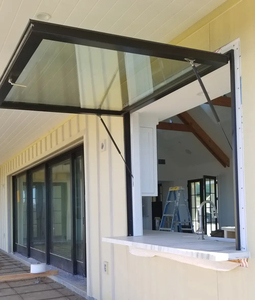
Heavy-duty access doors utilize 316-grade stainless steel continuous piano hinges, dual pneumatic gas-spring struts with built-in hold-open locking arms, and interior/exterior multi-point rotary latches designed for one-handed operation under OSHA emergency egress standards.
Q5
What international documentation and freight terms do you support?
We provide comprehensive export clearance services including FOB, CIF, and DDP shipments. Documentation packages include CE Declarations of Performance (DoP), factory test certificates, ISO9001 audit submittals, mill test sheets, and fumigation certificates for export crates.
Q6
How are warranty claims and remote installation queries managed internationally?
All structural assemblies are backed by a comprehensive multi-year warranty. We provide annotated bilingual CAD shop drawings, digital video installation manuals, and 24/7 video support with senior structural technicians to assist on-site installation teams globally.