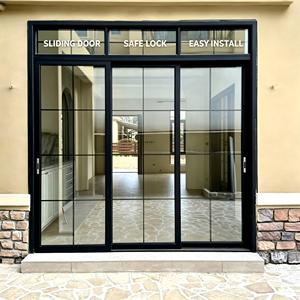
Engineering Seamless Planes: The Evolution of Flush Casement Architecture
In the vanguard of modern envelope engineering, the aluminium flush casement window embodies an uncompromising balance between minimalist exterior aesthetics and severe structural performance. Unlike conventional overlapping casements that create visual steps across facades, flush systems seat the sash completely co-planar with the outer frame. Guangdong Dejiyoupin Doors and Windows Co., Ltd. (DERCHI) leverages 25+ years of Tier-1 manufacturing prowess across our 180,000㎡ industrial footprint to deliver flush fenestration packages certified to AS2047, CE, and ISO9001 specifications, serving architects, builders, and volume distributors worldwide.
Factory Direct Portfolio
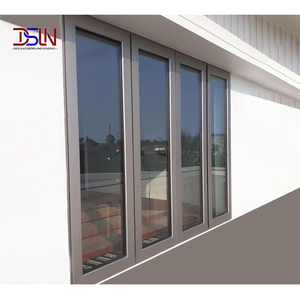
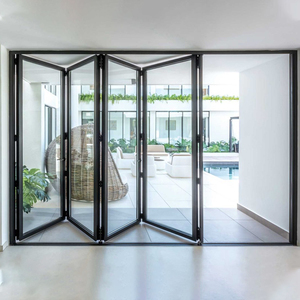
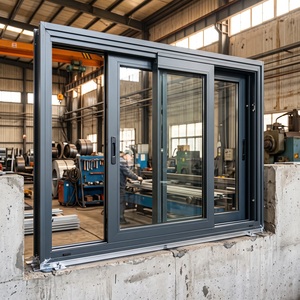
Featured Architectural Glazing & Window Systems
Tested configurations manufactured with precision multi-chamber extrusions, European multipoint hardware, and high-performance thermal insulation glass assemblies.
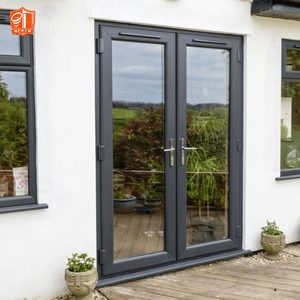

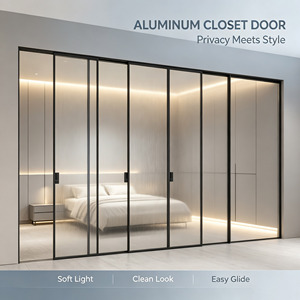
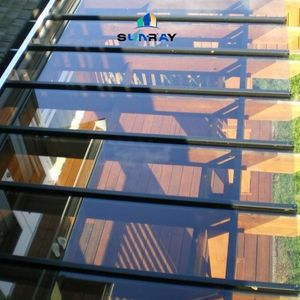
25+
Years Manufacturing Experience
180,000㎡
Integrated Production Base
600+
Engineers & Technicians
100+
Global Patents & Testing Passes
Enterprise Manufacturing Pillars
Why Top Global Developers Source Aluminium Flush Casements From DERCHI
From Foshan’s metallurgical epicentre directly to project sites across Australia, North America, the Middle East, and Latin America. We resolve the critical friction points of precision fabrication, air-water tightness, and long-range logistics.
Architectural 6063-T5/T6 Profiles
Our flush profiles are custom-extruded utilizing high-tensile, virgin 6063-T5 aluminium billet. Profile geometries incorporate polyamide PA66 GF25 thermal breaks that isolate external climate conduction, eliminating condensation and yielding extreme thermal performance (U-values down to 1.1 W/m²K).
Coplanar Dual EPDM Sealing
Achieving absolute flush alignment demands micro-tolerance gasket channels. DERCHI integrates vulcanized, continuous triple-barrier EPDM sealing strips alongside concealed drainage channels, guaranteeing zero water ingress even under 600 Pa cyclic pressure tests.
AS2047 & CE Certified
DERCHI products have undergone and passed stringent structural wind deflection (up to 4500 Pa), ultimate limit state loading, and acoustic attenuation verifications (up to STC 42 dB) compliant with Australian AS2047, European CE, and North American NFRC benchmarks.
BIM & Free CAD Shop Drawings
We eliminate installation failures prior to production. Our in-house engineering desk provides complete architectural CAD shop drawings, structural wind load analysis, and glass deflection calculations for engineering sign-off, ensuring turnkey project execution.
Strategic Sourcing Intelligence
Future Procurement & Engineering Trends in Flush Fenestration
The global aluminium flush casement window market is experiencing a profound paradigm shift driven by stringent decarbonization codes, structural glazing innovations, and industrialized prefabrication demands.
1. Concealed Hardware & Ultra-Slim Sightlines
Procurement teams are shifting decisively toward systems with 180° concealed flush hinges, invisible friction stays, and hidden motorized operators. By eliminating visible exterior hardware and reducing visible sash widths to under 50mm, modern flush systems maximize daylight factor ratings while adhering to strict structural rigidity mandates.
2. Hyper-Insulation & Passive House Compliance
Building envelope regulations in North America and Europe now penalize thermal bridging. Modern flush casement tenders require composite multi-barrier extrusions paired with warm-edge spacers, argon-filled triple Low-E glazing, and aerogel or polyurethane thermal cavity inserts capable of achieving U-factors below 0.8 W/m²K.
3. Resilient Marine-Grade Surface Metallurgy
With coastal urbanization expanding across the Americas and Southeast Asia, procurement specifications demand Qualicoat Seaside Class or AAMA 2605 fluorocarbon (PVDF) electrostatic coatings. These surface chemistries prevent gloss loss, chalking, and salt-fog oxidation for over 30 years under severe coastal exposure.
Factory Deep Dive
Precision Manufacturing Methodology in Our 180,000㎡ Base
What separates a consumer-grade window from an industrial-spec architectural installation is the precision of mechanical joinery and process QA.
Automated Corner Crimping & Corner Joint Injected Matrix
Flush casement sashes cannot tolerate sagging; even a 0.5mm misalignment disrupts the flush plane and compromises weatherproofing. DERCHI utilizes German double-head CNC miter saws operating to within ±0.1mm tolerances. Corner joints are secured with heavy-duty cast aluminium cleats, hydraulically cold-crimped, and subsequently injected with high-viscosity two-component polyurethane joint sealant. This transforms individual profiles into an impervious structural monocoque that eliminates water seepage at mitered seams.
Hardware pairings incorporate certified European locking gear—such as German Siegenia, Roto, or CMECH multipoint systems—offering perimeter mushroom cam deadbolts that compress the sash uniformly against frame gaskets upon actuation.
Procurement Specification Matrix
- Alloy Composition: Primary 6063-T5 / 6060-T6
- Profile Wall Thickness: 1.6mm - 2.2mm (Architectural Duty)
- Thermal Barrier: Polyamide PA66 GF25 (24mm - 34mm)
- Water Tightness: Standard 600Pa - Heavy Duty 900Pa
- Acoustic Rating: STC 32 dB to 44 dB (Configuration Dependent)
- Hardware Lifecycle: Tested beyond 50,000 cycles
Technical Sourcing Clarity
Frequently Asked Questions: B2B Procurement & Engineering
Direct answers to the structural, logistics, and production questions raised by commercial quantity surveyors, developers, and facade consultants.
What specific advantages do aluminium flush casement windows offer over standard casement designs?
Aluminium flush casements eliminate the protruding exterior lip characteristic of traditional stormproof or lipped casements. Because the sash sits fully flush with the outer frame, the window mirrors the planar purity of structural curtain walling. Functionally, this avoids perimeter dirt traps, enables concealed 180° hinge integration, improves perimeter gasket compression uniformity, and provides superior resistance to aerodynamic wind-buffeting noise.
How does DERCHI manage thermal performance and condensation on high-humidity sites?
Our systems incorporate high-performance polyamide (PA66 GF25) thermal breaks that structurally disconnect exterior and interior aluminium extrusions. Combined with insulated glass units (IGUs) incorporating warm-edge composite spacers, dual Low-E coatings, and Argon gas fill, internal surface temperatures remain well above dew points, virtually eliminating interior condensation even in extreme tropical or sub-zero climates.
Can you supply certified test reports compliant with regional building standards (e.g., AS2047, NFRC, CE)?
Yes. DERCHI products are independently certified to AS2047 (reaching N6 wind loading criteria), CE structural and safety standards, and ISO9001 factory audits. Detailed laboratory test reports covering air permeability, static and cyclic water penetration, structural wind deflection, and acoustic performance (STC/Rw) are supplied during project tendering to facilitate local engineering sign-off.
What are your minimum order quantities (MOQ), production timelines, and export crating standards?
For commercial contracts and custom bespoke residential schedules, our standard production lead time is 25 to 35 days following CAD shop-drawing sign-off. Units are packed for heavy ocean freight: surfaces are masked with peelable low-tack protective film, corner-guarded with high-density EVA foam, wrapped in multi-layer pearl wool, and palletized inside fumigation-free ISPM-15 compliant solid plywood crates designed for direct crane or forklift unloading on site.
Do you support complete container consolidation across mixed architectural door and window types?
Yes. As a comprehensive 180,000㎡ industrial group, DERCHI specializes in one-stop consolidation. Developers and distributors frequently consolidate flush casement window schedules, ultra-wide pivot entry doors, sliding systems, and automated glass roof skylights into unified 40ft HQ container shipments, maximizing volume economics and eliminating container freight dead space.
Engineer Your Project With China's Premier Fenestration Factory
Connect directly with our engineering sales desk for full specification sheets, custom BIM/CAD details, and competitive factory-direct container quotations.