Top Trusted Aluminium Double Glazed Windows Factories & Supplier
Precision Thermal Break Fenestration Systems, Acoustic Attenuation Engineering, and Architectural Glazing Solutions for Global Commercial, Residential, and Coastal Developments.
Enterprise Procurement Portfolio
Engineered Architectural Glazing & Entry Systems
Our export-certified manufacturing lines integrate precision-extruded primary 6063-T5 aluminium profiles, polyamide thermal barriers, and warm-edge double glazed units calibrated for extreme atmospheric resistance and structural integrity.
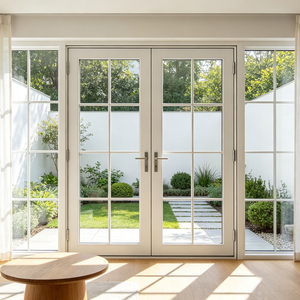
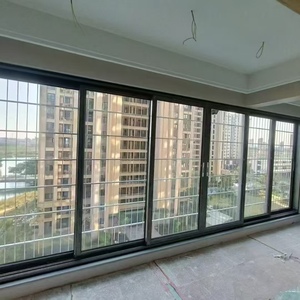
Ultra-narrow sightline frames incorporating reflective tinted double glazing engineered specifically for high solar radiation zones to drastically suppress HVAC loads.
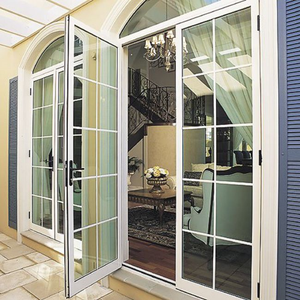
Heavy-duty stainless steel quad-rollers supporting sash weights up to 400kg with effortless glide operation and integrated drainage tracks engineered for torrential rainfall.
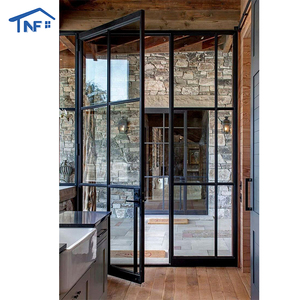
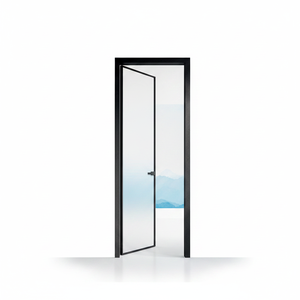
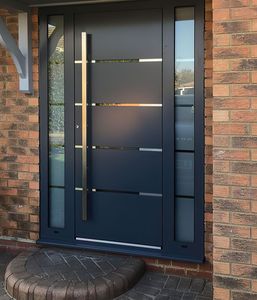
Concealed German-engineered hydraulic floor spring system enabling seamless 360-degree rotation of monumental sashes exceeding 3.5 meters in architectural clear height.
In commercial and luxury residential construction, selecting an aluminium double glazed windows factory and supplier is not simply a transactional procurement choice—it is a critical structural, environmental, and thermal engineering decision. Aluminium, while celebrated for its exceptional strength-to-weight ratio and architectural durability, possesses a high inherent thermal conductivity of roughly 160 to 200 W/m·K. Mitigating this thermal bridge necessitates advanced polyamide 66 reinforced with 25% fiberglass (PA66 GF25) thermal isolators mechanically crimped between interior and exterior aluminium extrusions.
Modern insulated glass units (IGUs) rely on dual-seal barrier systems. The primary seal consists of polyisobutylene (PIB), preventing moisture vapor transmission into the air space, while a secondary structural seal of silicone or polysulfide preserves mechanical elasticity against wind oscillation. Incorporating warm-edge composite spacers (such as stainless steel backed polypropylene or structural silicone foam) eliminates edge-of-glass thermal bridging, elevating internal condensation resistance and preventing perimeter mold development across challenging climatic zones.
25+
Years Manufacturing
180k㎡
Integrated Production
600+
Certified Engineers
100+
Patents & Standard Tests
Industry Forecasting
Future Procurement Dynamics & Global Supply Chain Evolution
Strategic procurement officers and master builders must align project specifications with forthcoming international mandates and manufacturing paradigms.
Total Embodied Carbon & Circular Supply Chains
Green building certification frameworks, including LEED v4.1, BREEAM, and the EU Carbon Border Adjustment Mechanism (CBAM), are forcing tier-1 developers to scrutinize the upstream smelting source of bauxite. Sustainable sourcing prioritizes secondary recycled content and hydroelectric-smelted low-carbon aluminium billets, slashing embodied carbon from 16.5 kg CO²e/kg down to under 4.0 kg CO²e/kg.
Direct-From-Factory Modular BIM Integration
Procurement methodologies have evolved past static PDF catalog submittals. Modern architects mandate parametric Revit and IFC 3D Building Information Modeling objects directly populated with accurate thermodynamic profiles, structural hinge loads, and seismic deflection matrices, enabling real-time clash detection and lifecycle thermal simulation prior to profile extrusion cut-off.
Supply Consolidation & Multi-Port Risk Shielding
Volatile global ocean logistics have catalyzed the adoption of whole-envelope consolidation models. Enterprise contractors no longer manage separate contracts for entry systems, sliding assemblies, and casement windows. Direct sourcing from unified 180,000㎡ industrial complexes ensures unified fluorocarbon coating batches, single-bill-of-lading container loads, and guaranteed site installation schedules.
R&D Horizons
Technological Trajectories: The Future of Fenestration
Breakthrough materials and intelligent automation are transforming double glazed aluminium systems from static weather barriers into high-performance kinetic building envelopes.
Hybrid Vacuum-Insulated Glazing (VIG)
Pairing an outer vacuum-insulated glass cavity (featuring a 0.15mm microscopic vacuum gap) with an inner conventional gas-filled double glazed unit. This architecture achieves center-of-glass U-factors below 0.45 W/m²K without increasing sash profile bulk.
Electrochromic & Photovoltaic Glass
Dynamic transition coatings modulated via building automation systems adjust variable light transmission (VLT) and solar heat gain coefficients on demand. Integrated transparent BIPV photovoltaic interlayers harvest ambient solar energy directly from window facades.
Concealed Mechatronic Hardware
Full elimination of visible hinges, handles, and limit stays in favor of continuous electromagnetic locking tracks and internal servo-actuators integrated into the window frame perimeter, connecting directly with KNX, Crestron, and Matter smart building backbones.
Nanotech Self-Cleaning Coatings
Titanium dioxide (TiO²) exterior photocatalytic and superhydrophilic chemical coatings breakdown organic particulate under natural ambient UV radiation, allowing rainwater to rinse away surface contamination on high-elevation curtain walls.
DERCHI Industrial Infrastructure & Rigorous Quality Control
Headquartered in Foshan, Guangdong—the worldwide epicenter of precision architectural metalworking—Guangdong Dejiyoupin Doors and Windows Co., Ltd. sets the global benchmark for fenestration excellence.
180,000㎡ Mega Facility
Operating automated European CNC profile machining centers, robotic corner-crimping equipment, and an integrated dust-free cleanroom IGU glass processing facility delivering unmatched dimensional accuracy down to ±0.5mm tolerances.
Certified Global Compliance
Tested and certified to Australian AS2047 N6 structural criteria (wind pressures up to 4500Pa), European CE standards, ISO9001 quality systems, and American UL fire-rated engineering protocols, with full laboratory validation documentation provided.
In-House CAD/BIM Shop Drawings
Every single custom fenestration unit undergoes full engineering vetting by our 600+ industrial specialists. We generate structural calculations, thermal wind-load stress analysis, and production shop drawings prior to cutting a single extrusion.
Complete Envelope Sourcing
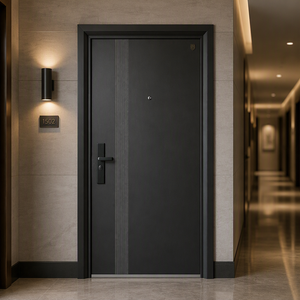
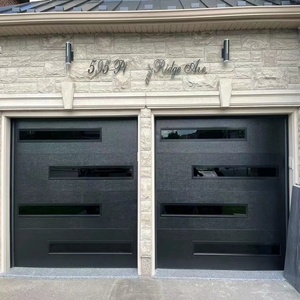
Eliminate fragmented supply chains by consolidating precision aluminium double glazed windows, custom grand pivot entrance doors, structural stainless steel security units, and automated overhead glazing in uniform shipping containers.
Procurement Knowledge Hub
Frequently Asked Questions: Global Window Sourcing
What defines a certified thermal break system versus standard aluminium frames?
Standard aluminium frames are continuous single extrusions through which thermal energy radiates directly, leading to massive heat transfer and condensation buildup. A certified thermal break physically interrupts this bridge using precision-knurled, fiberglass-reinforced polyamide (PA66 GF25) extrusion struts mechanically crimped between interior and exterior profiles. This separation lowers the frame conductivity (Uf) from over 6.0 W/m²K down to under 1.6 W/m²K, preserving internal climate control and meeting stringent international building energy codes.
How does DERCHI guarantee seal durability and eliminate internal fogging in IGUs during overseas shipping?
Our automated cleanroom insulating glass lines utilize a dual-barrier hermetic sealing protocol. An extruded primary matrix of polyisobutylene (PIB) prevents air/gas leakage and moisture penetration, coupled with automated molecular sieve desiccant filling inside the anodized aluminum or warm-edge composite spacer frame. The secondary seal consists of structural structural silicone or polysulfide with high cohesive strength. Units undergo strict dew point testing (down to -40°C without internal condensation) and pressure equalization valves are installed for container loads transiting extreme altitude shifts to prevent deflection or glass blowout.
Which surface finish standard is recommended for coastal, high-salinity marine environments?
For environments within 5 kilometers of ocean shorelines (such as coastal Australia, Florida, or maritime Latin America), we specify architectural fluoropolymer (PVDF) liquid spray coatings containing 70% Kynar 500 resin conforming to AAMA 2605 specifications, or Class 1 electrolytic anodization (≥ 25 microns). These finishes provide impenetrable barriers against airborne chloride attack, aggressive salt spray, intense solar UV radiation, and environmental chalking, supported by documented 3,000+ hour salt-spray testing.
Can your engineering team support custom structural requirements, shop drawings, and local building codes?
Yes. Every architectural proposal is reviewed by our dedicated design engineering department. We evaluate opening dimensions, local wind pressure profiles (AS/NZS 1170, ASCE 7, or EN 1991), and required seismic deflection clearances. We generate comprehensive CAD shop drawings detailing head, jamb, and sill flashing details, mullion structural moments of inertia, and anchor locations at zero cost prior to contract finalization, ensuring seamless sign-off by structural engineers of record.
How are ocean shipments crated to avoid frame scratching, glass delamination, and impact shock?
We follow strict export-grade packaging standards. Finished window sashes and frames are sealed in heavy protective polyethylene adhesive wrap, guarded at vulnerable corners by molded high-density EVA shock caps. Entire assemblies are packed into fully enclosed, fumigated solid marine plywood crates or reinforced steel A-frames. Every crate features desiccant packs, high-tensile internal strapping, and external tip-and-tilt shock indicators to prevent transit damage during heavy ocean container transport.
What hardware brands and cycle warranties are integrated into DERCHI double glazed assemblies?
We integrate world-renowned European hardware architectures—primarily German Roto, Siegenia, GU, and Hoppe—alongside premium custom stainless steel multi-point locking assemblies. Our standard casement friction stays, tilt-and-turn gear sets, and heavy-duty sliding rollers are lifecycle tested up to 50,000 continuous opening cycles, backed by a comprehensive 10-year manufacturer warranty on structural profiles and mechanical components.
Partner with China's Premier Fenestration Factory
Whether you require full-envelope glazing solutions for high-end residential estates, institutional complexes, or export container consolidation, our certified engineering team delivers guaranteed structural precision, verified laboratory testing, and factory-direct pricing.