Featured Fenestration & Entry Systems for High-Spec Architecture
Discover our primary export-grade fenestration profiles, tested to rigorous wind loads, water tightness, and thermodynamic efficiency criteria across the Americas, Europe, and Australasia.

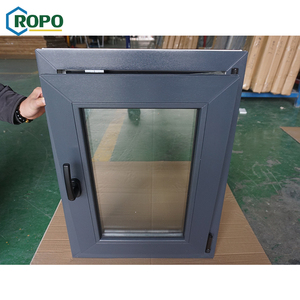
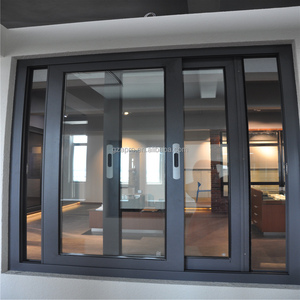
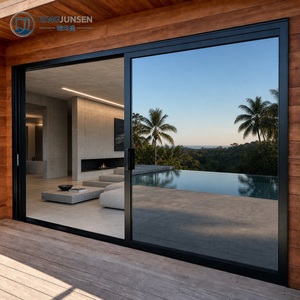
Engineering Excellence in Dual-Action Tilt & Turn Fenestration
Modern commercial and luxury residential envelopes demand fenestration units that eliminate air leakage, offer superior thermal resistance, resist extreme structural wind loads, and guarantee ergonomic ease of use. Originating from German building physics, the Aluminum Tilt and Turn Window System has evolved into the preeminent architectural choice globally. Guangdong Dejiyoupin Doors and Windows Co., Ltd. (DERCHI) operates out of Foshan, China's core architectural aluminum processing center, leading the export sector with high-precision, CNC-machined tilt-and-turn assemblies manufactured to strict international building codes.
The operational superiority of tilt-and-turn engineering lies within its dual-mode kinematic mechanism. By actuating a single perimeter-drive gear handle, the operator transitions between two operational states:
Tilt Mode (Ventilation)
The upper sash tilts inward by 10° to 15°, anchored by heavy-duty bottom stay hinges. This creates chimney-effect convective ventilation while repelling external driving rain, eliminating internal draft turbulence, and preventing mechanical perimeter intrusion.
Turn Mode (Side-Hung)
Rotating the ergonomic handle 90° disengages the tilt scissor scissor-arm, allowing the sash to swing fully inward up to 180°. This mode facilitates safe interior glass cleaning, unrestricted egress pathways, and swift air changes without needing outdoor exterior staging.
Perimeter Gasket Compression
Upon closure, multi-point compression mushroom cams mechanically dock into perimeter steel keeps. This exerts uniform peripheral pressure against continuous multi-barrier EPDM seals, establishing complete airtightness and acoustic decoupling.
Engineering Specifications Matrix & Compliance Standards
DERCHI systems are tested against rigorous international benchmarks, ensuring seamless integration into strict regulatory jurisdictions across North America (AAMA/WDMA), Europe (EN Standards), and Australia (AS2047).
| Performance Metric | Tested Standard | DERCHI Tilt & Turn Rating | Architectural Impact |
|---|---|---|---|
| Thermal Transmittance (U-Factor) | EN ISO 10077-2 / NFRC 100 | 0.79 to 1.35 W/m²·K (0.14 - 0.24 BTU/hr·ft²·°F) | Passive House certified; drastic reduction in building HVAC cooling/heating cycle loads. |
| Air Infiltration & Permeability | ASTM E283 / EN 12207 | Class 4 (< 0.05 cfm/ft² @ 6.24 psf / 300 Pa) | Negligible air leakage; eliminates drafts and moisture condensation along thermal bridges. |
| Water Penetration Resistance | ASTM E331 / EN 12208 | Class 9A / E1200 (1200 Pa driving pressure) | Watertight against extreme monsoon events and continuous, high-velocity coastal squalls. |
| Structural Wind Load Performance | AS 2047 / ASTM E330 / EN 12210 | Class C5 / N6 Serviceability (> 4500 Pa) | Withstands excessive negative pressure deflections on high-rise curtain envelopes. |
| Acoustic Attenuation (Rw / STC) | ISO 717-1 / ASTM E413 | Rw 42 dB – 48 dB (with acoustic laminated IGU) | Effective decibel attenuation for airport corridors, urban central business districts, and rail lines. |
Future Strategic Sourcing & Procurement Trends
Navigating the next decade of architectural envelope sourcing requires understanding raw material optimization, energy legislation, and global logistics changes.
1. Multi-Chamber Polyamide Isolators
Global net-zero mandates are pushing profile systems from standard 14.8mm thermal breaks to complex 34mm-54mm multi-cavity, glass-fiber-reinforced PA66 strips filled with low-density aerogel or polyurethane foam insulation.
2. Low-Carbon Recycled Alloys (CBAM)
With Europe's Carbon Border Adjustment Mechanism (CBAM) and strict global ESG requirements, tier-1 procurement groups prioritize aluminum profiles cast using hydropowered, post-consumer green billets with verifiable carbon documentation.
3. BIM-Driven DFM Fabrication
Direct-from-Model manufacturing has replaced static shop drawing revisions. Automated 5-axis CNC extrusion centers translate IFC and Revit models directly into profile milling, corner crimping, and hardware mounting, cutting production errors to zero.
4. Concealed Hardware Kinematics
Modern luxury architecture demands flush, monolithic sightlines. Buyers are shifting away from visible barrel hinges to completely concealed 180° swing hinge plates rated for heavy triple-glazed sash weights exceeding 200kg to 300kg.
5. Consolidated Container Logistics
Sourcing entire projects—including structural tilt-and-turn windows, ballistic entrance pivot doors, and automatic patio systems—from a single manufacturing center eliminates inter-vendor dimensional mismatches and optimizes shipping volume.
Why Global Builders and Specifiers Partner with DERCHI
Guangdong Dejiyoupin Doors and Windows Co., Ltd. (DERCHI) stands among China's Top 10 fenestration and entrance brands. Headquartered in Foshan, Guangdong, we bridge the gap between competitive Chinese manufacturing capacity and rigorous international standards.
180,000㎡ Production Capacity
Our centralized manufacturing base hosts automated German profile extrusion centers, precision CNC corner crimpers, automated insulating glass units (IGU) lines, and computerized curing chambers, operating at institutional scale.
Over 25 Years of Fenestration Craft
With more than a quarter-century of dedicated research, development, and engineering, our technical teams resolve complex thermal, structural, and acoustic envelope challenges for prestigious hospitality and residential projects.
Verified International Certifications
Our products carry verified CE, ISO9001, AS2047 (Australian N6 maximum load compliance), and UL fire-rated certifications. Full physical laboratory test data is provided upfront for local structural engineer approvals.
100% Bespoke CAD/BIM Detailing
Our in-house technical department generates free, fully articulated CAD shop drawings, connection detail sections, and opening schedules, verifying anchor points, thermal performance, and water discharge paths prior to fabrication.
Full Container Consolidation
Consolidate your entire building schedule—thermal break windows, high-security ballistic entry doors, minimalist sliding systems, and automated garage units—into coordinated container loads to streamline sea freight logistics.
Dedicated Global Support
Our multi-lingual technical project managers align communication with European, North American, and South American business hours, offering remote installation guidance, live video shop floor audits, and quick-turn warranty support.
Frequently Asked Procurement & Technical Questions (FAQ)
Detailed answers to critical engineering, trade, and logistical inquiries from international architects, developers, and commercial procurement officers.
What alloy composition and wall thicknesses are used in DERCHI tilt and turn profiles?
How do aluminum tilt-and-turn systems prevent thermal bridging and interior condensation?
What international hardware brands are integrated into your assemblies?
Can DERCHI tilt and turn windows meet high wind-load and hurricane-impact specifications?
What is your export crating methodology for long-distance maritime transport?
What is the standard lead time for customized, project-specific window schedules?
Launch Your Fenestration Project with Factory-Direct Engineering
Connect directly with DERCHI's architectural engineering team in Foshan. Send your door and window schedule, architectural CAD/BIM elevations, or structural specification sheets for free engineering analysis, shop drawings, and competitive commercial quotes within 24 hours.