Featured Industrial & Architectural Systems
Manufactured to stringent international standards (AS2047, CE, ISO9001, UL) at our integrated 180,000㎡ industrial facility in Foshan, China. Explore standard-setting entry, ventilation, and custom envelope configurations.
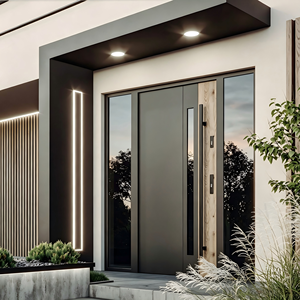
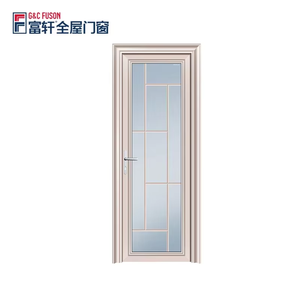
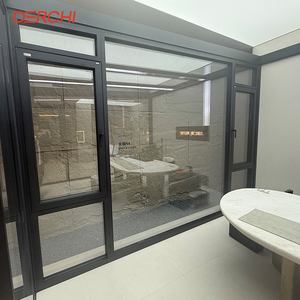
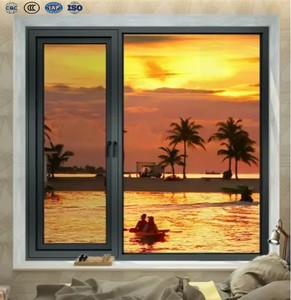
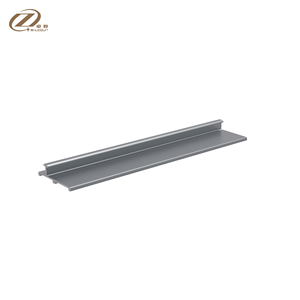
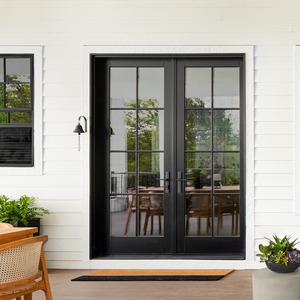
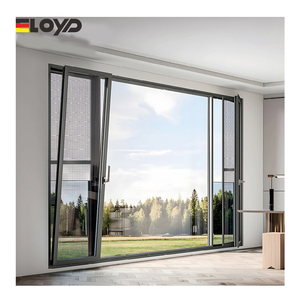
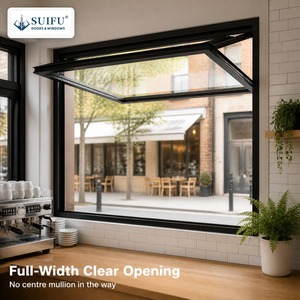
Engineering Louvered Enclosures: Airflow Mechanics & Barrier Integrity
In contemporary commercial architecture, industrial infrastructure, and coastal luxury residential construction, aluminum louvered doors occupy a critical intersection: they must provide structural security and dynamic ventilation while safeguarding interior envelopes from driven rain, cyclone-level wind pressures, and corrosive environments. When specifying high-performance systems from China's premier fenestration clusters, procurement teams and structural engineers must navigate precise metallurgical, kinetic, and thermodynamic variables.
A precision-extruded aluminum louvered assembly utilizes prime billet 6063-T5 or 6063-T6 architectural aluminum alloy. The chemical composition is engineered to optimize tensile yield strength (≥160 MPa for T6 condition) and maintain ductile surface integrity for multi-micron surface conversion treatments. Unlike generic roll-formed steel or lower-tier recyclate-rich aluminum profiles, virgin architectural extrusions offer geometric stability across massive door spans—accommodating heights beyond 3,500 mm in pivot and French configurations without mid-rail deflection or diagonal sag.
Aerodynamic Efficiency vs. Water Penetration Resistance
The core challenge of louver engineering lies in balancing the Free Vent Area (FVA) against the Water Infiltration Threshold under dynamic wind pressures. Conventional single-bank louver blades provide 35% to 45% free area but fail under storm conditions exceeding 50 Pa static pressure. Tier-1 Chinese engineering incorporates dual-stage aerodynamic drainable chevron blades and internal vertical mullion gutters. This geometry forces high-velocity intake air through consecutive directional changes, decelerating moisture droplets and routing centrifugal runoff into integrated threshold weep drains, achieving AMCA 500-L Class A water penetration standards.
Thermal bridge mitigation is another primary advancement in modern exterior louver systems. By inserting polyamide (PA66 GF25) thermal barriers between the interior and exterior extrusion profiles, our factory mitigates conductive energy loss and prevents cold-surface condensation in HVAC enclosures, mechanical plant rooms, and luxury living quarters. Combined with EPDM or santoprene perimeter bulb gaskets, acoustic flanking transmission is dampened by up to 28 dB Rw, decoupling operational equipment drone from inhabited building sections.
Guangdong Dejiyoupin (DERCHI): Foshan's Premier Louver & Fenestration Hub
Headquartered in Shishan Town, Nanhai District, Foshan—the global epicentre of structural aluminum processing—DERCHI combines industrial scale with precision German CNC machining, positioning overseas commercial clients ahead of schedule and under budget.
Technological Innovations Shaping the Future of Aluminum Louver Systems
The architectural louver sector has evolved beyond static stamped vents into intelligent, dynamic envelope technologies. We explore the breakthrough design parameters redefining high-spec commercial and residential installations globally.
Global Sourcing Dynamics: The 2025–2030 Fenestration Supply Outlook
Strategic procurement leaders are redefining how capital projects source building envelopes from China. The shift from unvetted broker networks to verified Tier-1 manufacturing partnerships represents a massive operational evolution.
Procuring exterior systems has transformed. The supply chain disruptions of recent years accelerated a shift toward digital engineering transparency, traceability of recycled alloy ratios, and strict verification of factory direct capacities. International project developers across North America, Australasia, the Middle East, and Latin America are leveraging several major sourcing paradigms:
| Procurement Dimension | Traditional Broker / Sourcing Agent | Tier-1 Factory-Direct (DERCHI Standard) | Strategic Commercial Impact |
|---|---|---|---|
| Direct Cost Structure | 18% to 35% markup via multiple trading intermediaries | Ex-Factory B2B Wholesale Pricing with zero middleman tolling | Direct capex savings deployed toward upgraded thermal coatings or hardware |
| Shop Drawing Turnaround | Relies on third-party draftsmen; 10 to 18 days delay | In-house engineering department; 48-72 hr turnaround | Eliminates critical path clashes on construction site schedules |
| Metallurgical Assurance | Unverified remelt scrap often mixed with primary extrusion | 100% Virgin 6063-T5/T6 billet with batch mill test certificates (MTC) | Guarantees deflection resistance under peak cyclic wind loads |
| Supply Chain Visibility | Static photos; fragmented updates; opaque production status | Digital factory VR walkthroughs, live HD webcam factory audits | Total audit compliance for foreign development funds & institutional investors |
| Packaging & Breakage Risk | Basic pallet wrap with high transit denting & scratch rates | ISPM-15 fumigated multi-layer timber crating with corner armor | Zero-defect delivery after 45+ days of intermodal maritime transit |
Furthermore, Embodied Carbon Accounting (Scope 3 emissions) has become an inescapable requirement for international tenders, notably under BREEAM, LEED v4.1, and Green Star protocols. Leading Chinese extrusion plants now operate closed-loop hydroelectric and photovoltaic smelting streams, dropping the embodied carbon of aluminum extrusions down from 16 kg CO2e/kg to under 4.5 kg CO2e/kg of finished profile. Aligning your bill of quantities with certified Chinese factories ensures compliance with upcoming global carbon border adjustments (CBAM).
Frequently Asked Technical & Sourcing Questions (FAQ)
Exhaustive answers to the operational, technical, and regulatory questions most frequently raised by international civil engineers, facade consultants, and general contractors.
1. What alloy grade and temper do you use for structural louver profiles, and can you provide Mill Test Certificates (MTC)?
2. How do your aluminum louvered doors prevent rain ingress during extreme wind-driven storms?
3. Can your factory build oversized commercial louvered doors, such as 3-meter or 4-meter pivot configurations?
4. What surface finishes are available for marine or industrial salt spray environments?
• Architectural Powder Coating (AAMA 2604 / 2605): AkzoNobel or PPG fluoropolymer powders delivering 15–30 year weatherability warranties.
• PVDF Liquid Fluorocarbon: 3-coat/2-bake system (minimum 35 microns) designed specifically for marine beachfront villas and offshore applications, certified for 4,000 hours of ASTM B117 salt spray.
• Class I Anodizing (ISO 7599): 20 to 25-micron anodic oxide film thickness providing extreme surface hardness and corrosion immunity in abrasive environments.
5. What is the standard production lead time and the CAD engineering submittal process?
6. How are fragile components and finished surfaces protected for long-distance sea container shipping?
7. Can your louvered doors integrate acoustic attenuation features for HVAC and generator plant rooms?
8. What incoterms do you support, and how are customs documentation handoffs handled?
Connect Directly with Our Fenestration Engineering Bureau
Send us your door schedules, project drawings, or tender specifications. Receive complimentary CAD shop drawings, acoustic/aerodynamic calculations, and factory-direct volume quotes within 24 hours.