Featured Architectural Doors & High-Performance Assemblies
Direct factory configurations manufactured to international hurricane, acoustic, and thermal barrier standards, engineered for grand residential and luxury villa developments.
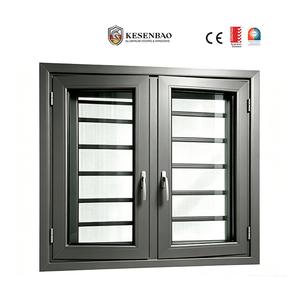
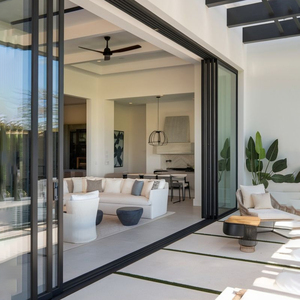
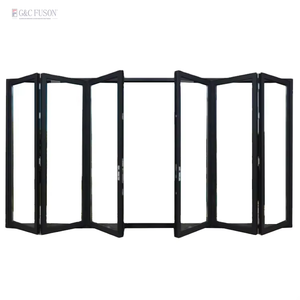
The Architectural Evolution of Aluminum Double Front Doors: Metallurgy, Structural Rigidity, and the Foshan Cluster Advantage
In high-end architectural engineering, the main entrance double door serves as both the thermal envelope boundary and the primary architectural statement of a prestigious building. Modern aluminum double front doors have decisively surpassed traditional solid hardwood and wrought iron assemblies across high-end developments throughout North America, Latin America, Europe, Australia, and the Middle East. While authentic hardwood entrance leaves inevitably suffer from hygroscopic volumetric expansion, transverse checking, splitting, and biological degradation in tropical or marine microclimates, thermal-break aluminum systems engineered from extruded 6063-T6 or 6060 primary billet offer absolute dimensional equilibrium under severe cyclic diurnal thermal fluctuations.
Information Gain: Metallurgy and Alloy Density in Double Entrance Assemblies
Unlike standard interior partitions, exterior architectural double front doors carry continuous structural wind-load pressure and torque along dynamic dual-leaf meeting stiles. Premier Chinese Tier-1 original equipment manufacturers (OEMs) strictly mandate primary electrolytic aluminum billets possessing a minimum tensile strength (Rm) of 215 MPa and a yield strength (Rp0.2) of 160 MPa. Secondary or contaminated remelt scrap alloys—frequently encountered in unregulated low-tier workshops—suffer from interstitial ferric inclusions that compromise anodizing consistency, powder adhesion, and structural deflection under cyclic typhoon-class dynamic gusts.
The manufacturing cluster located in Foshan (Nanhai District, Shishan Town), Guangdong Province, represents the apex of global aluminum fenestration and entrance door engineering. By consolidating aluminum extrusion foundries, precision multi-axis CNC profile machining centers, in-line vertical fluorocarbon (PVDF) electrostatic coating lines, and global hardware supply chains (including direct integration with German hardware institutions such as Siegenia, Roto, and GU), leading Foshan producers such as Guangdong Dejiyoupin Doors and Windows Co., Ltd. (DERCHI) engineer double door assemblies that deliver certified acoustic isolation (up to Sound Transmission Class STC 42), structural deflection resistance complying with AS2047 N6 ratings, and ultra-low thermal transmittance (U-factors below 1.2 W/m²·K).
Structural Engineering of the Dual-Leaf Astragal & Espagnolette Locking Mechanism
The technical vulnerability of any double-leaf swinging system resides along the central vertical convergence where the active leaf engages the inactive slave leaf. Standard retail double doors regularly utilize surface-mounted manual flush bolts that induce localized stress points and leave micro-crevices vulnerable to pressurized air and driving rainwater intrusion. Conversely, high-specification export configurations incorporate an integrated extruded aluminum astragal profile backed by co-extruded cellular EPDM sealing gaskets, supplemented by full-height European multi-point espagnolette drive gear locks. When the architect or homeowner operates the primary handle, high-strength forged steel mushroom cams drive simultaneously into hardened steel keeps embedded along the head, sill, and central astragal, creating a continuous hermetic compression perimeter certified under EN 12207 Class 4 air permeability and EN 12208 Class 9A water tightness protocols.
| Engineering Parameter | Standard Market Aluminum Doors | Commercial Grade (DERCHI Export Specification) | Compliance / Verification Standards |
|---|---|---|---|
| Alloy Composition & Temper | Recycled aluminum scraps / 6063-T4 | Primary Virgin Billet 6063-T6 / 6060-T66 | ASTM B221 / GB/T 5237.1-2017 |
| Profile Wall Thickness | 1.2 mm – 1.4 mm | 2.0 mm – 3.0 mm Reinforced Structural Core | AS/NZS 1866 / EN 12020-2 |
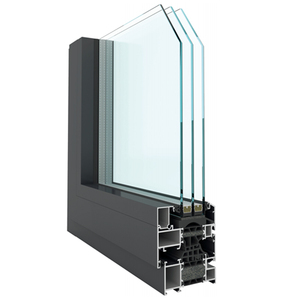
| Thermal Decoupling Barrier | Poured-and-debridged polyurethane resin | Continuous Polyamide PA66 GF25 Insulation Strips | DIN EN 14024 / Passive House PhA |
| Surface Protection System | Standard domestic powder coat (30-45μm) | PVDF Fluorocarbon 3-Coat or AkzoNobel Marine Class | AAMA 2605 / Qualicoat Seaside Class 2 |
| Multi-Leaf Sealing Interface | Single-layer PVC or vulcanized rubber strips | Triple continuous co-extruded EPDM + Santoprene | ASTM E283 / EN 1026 Air Tightness |
| Perimeter Security Hardware | Single-point deadbolt / surface slide bolts | 5 to 7-Point Heavy-Duty Hook & Mushroom Gear | PAS 24 / RC3 Anti-Burglary Class |
Future Procurement Trends in Architectural Entrance Systems (2025–2030)
Critical shifts in global building codes, energy ratings, and biometric architectural integration transforming commercial door procurement.
1. Decarbonized Low-E & Vacuum Glazed Double Portals
Global municipal building codes (such as California Title 24, European EPBD, and Australian NCC Section J) require strict envelope energy budgets. Future double front doors combine insulated cast aluminum or glass-inset leaves utilizing warm-edge spacer IGUs charged with 95% pure Argon, lowering entire system U-values to under 1.1 W/m²·K to prevent interior thermal bleed.
2. Concealed Biometric & Smart Access Integration
Architects are eliminating visible exterior escutcheons in favor of flush-mounted 3D facial recognition scans, biometric semiconductor fingerprint scanners integrated directly into full-length custom pull handles, and wireless motorized mortise gearboxes synchronized with BACnet and Zigbee smart building automation systems.
3. Monolithic Oversized Leaves with Heavy-Duty Pivots
The market is shifting from conventional 2100mm heights toward soaring 3000mm to 3600mm double-leaf entrance portals. Operating such massive leaf weights (up to 450 kg per leaf) requires concealed bottom-weighted stainless steel pivot hardware rated to 500,000 cycles, supported by internal torsion rods that counterbalance wind suction.

Guangdong Dejiyoupin Doors & Windows (DERCHI Brand Authority)
Ranked consistently within the Top 10 High-End Fenestration Brands in China, DERCHI operates an integrated 180,000 square meter industrial park located in Nanhai District, Foshan. Backed by 25+ years of specialized fenestration manufacturing, our facilities provide international developers, general contractors, and trade distributors with true single-source manufacturing reliability.
- Complete In-House Fabrication: Extrusion milling, CNC thermal strip crimping, automated corner crimping, and triple-glazing cleanrooms in one managed facility.
- Precision CAD & BIM Engineering: Complimentary shop drawings provided within 48 hours for local architectural and structural engineer approval.
- Global Code Compliance: Systems tested and certified under CE (EN 14351-1), Australian AS2047, ISO9001:2015, and UL fire classifications.
- Turnkey Containerized Logistics: Customized export fumigated steel-frame crating designed specifically to prevent deflection or sea spray corrosion during ocean voyages.
Qualicoat Seaside PVDF
Surface treatments resistant to intense salt fog exposure (1,000+ hour ASTM B117 salt spray verified) for coastal installations in Florida, the Caribbean, and Latin America.
German CNC Milling
Milled on 5-axis Elumatec machining centers with precision tolerances under 0.05mm, ensuring seamless mortise pockets and factory-calibrated door leaf balance.
AS2047 & CE Certified
Every fenestration assembly undergoes rigorous structural, air infiltration, and water penetration cyclic pressure testing prior to container dispatch.
Direct Port Logistics
Container consolidation direct from Foshan to major global ports: Santos, Callao, San Antonio, Los Angeles, Rotterdam, Sydney, and Dubai on certified CIF terms.
Frequently Asked Questions (FAQ) for Commercial Door Procurement
In-depth answers addressing structural engineering, international customs compliance, and quality verification when sourcing from China.