Casement System
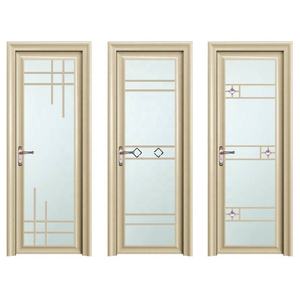
Engineered to withstand extreme environmental parameters—from high-velocity tropical typhoons to sub-zero continental thermal cycles. Browse our featured international standard systems.
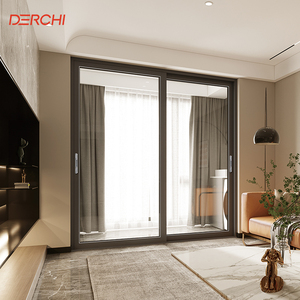
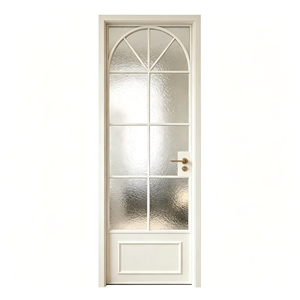
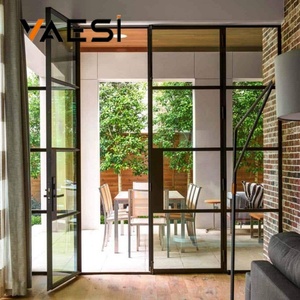
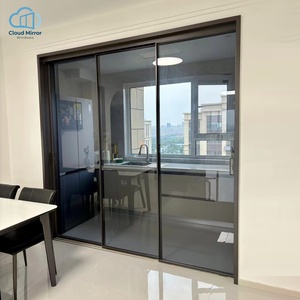
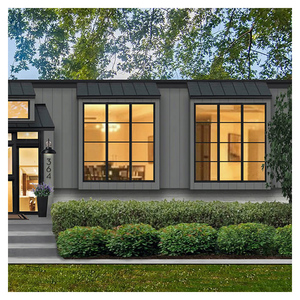
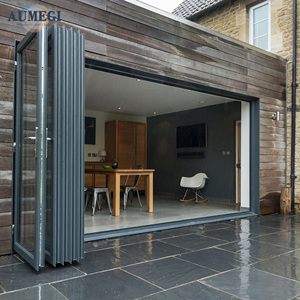
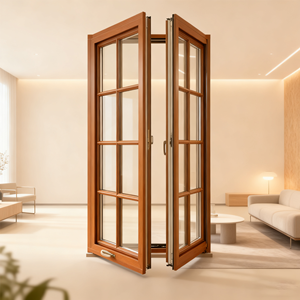
Why Tier-1 developers, commercial general contractors, and overseas facade consultants anchor their global fenestration supply chains in the Foshan manufacturing cluster.
The structural longevity and hurricane-resistance of exterior aluminum alloy windows depend fundamentally on the metallurgical purity of the primary alloy billet. Lower-tier manufacturers frequently utilize secondary scrap-recycled aluminum contaminated with excess iron, causing micro-fissures during high-tonnage extrusion and premature galvanic corrosion under coastal salt-spray exposure.
At our Guangdong Dejiyoupin (DERCHI) smart manufacturing base, all architectural extrusions are manufactured strictly from 100% virgin electrolytic 6063-T5 and T6 aluminum alloy billeting. Extrusions comply with ASTM B221 and EN 755 tolerances, guaranteeing tensile yield strengths exceeding 160 MPa and uniform web thickness exceeding Chinese National GB/T 8478 heavy architectural standards (profile wall thickness ≥ 2.0mm for heavy casements; ≥ 3.0mm for oversized panoramic sliding panels).
Modern fenestration procurement requires rigorous mitigation of building energy dissipation. A standard monolithic aluminum profile acts as a massive thermal bridge, resulting in substantial HVAC cooling loss in equatorial regions and condensation frost damage in sub-arctic winter climates.
Our engineered systems deploy advanced multi-cavity thermal break designs utilizing techno-polymer Polyamide PA66 GF25 barrier struts crimped via CNC knurling and mechanical rolling. This breaks conductive heat pathways, elevating overall frame thermal insulation and delivering whole-window U-factors down to 0.85 W/m²·K (0.15 BTU/h·ft²·°F) when paired with argon-filled, warm-edge triple-pane Low-E insulated glass units (IGU).
Furthermore, precision multi-point European locking hardware (Siegenia, Roto, Hoppe) engineered with mushroom cam pins guarantees perimeter gasket compression of > 3.5mm, creating an airtight, weather-sealed envelope capable of achieving water-penetration resistance up to 700 Pa and cyclic wind load resilience exceeding 4500 Pa (Australia AS 2047 N6 rating).
| Engineering Attribute | Standard Commercial Market Tier | DERCHI / Export-Grade Architectural Spec | Regulatory & Testing Benchmark |
|---|---|---|---|
| Aluminum Billet Purity | Remelted scrap mix, iron > 0.35% | 100% Virgin A00 Aluminum (6063-T5/T6) | ASTM B221 / GB/T 5237.1 |
| Thermal Break Material | Recycled PVC or low-grade nylon | German Technoform PA66 GF25 Polyamide | ISO 14001 / DIN 16941 |
| Surface Coating Spec | Standard polyester (60-80 μm) | PPG Kynar 500 PVDF / AAMA 2605 Fluorocarbon | AAMA 2604 / AAMA 2605 / Qualicoat Class 2 |
| Air & Water Infiltration | Q ≤ 1.5 m³/(m·h), ΔP = 250 Pa | Airtight Class 4, Watertight ≥ 700 Pa | EN 12207 / AS 2047 / ASTM E283 |
| Hardware Cycle Life | 10,000 cycles (Basic zinc alloy) | 100,000 cycles (Stainless 304 / Forged Brass) | EN 13126-8 / BHMA Grade 1 |
Operating from our 180,000㎡ modern manufacturing facility in Foshan, Guangdong Dejiyoupin Doors and Windows Co., Ltd. delivers direct factory engineering, zero-broker markup, and global turnkey supply solutions.
Full-chain vertically integrated production: CNC extrusion cutting, CNC corner crimping, automated glass tempering, multi-cavity IGU robotic sealing, and climate testing chambers on site.
Compliant with international building codes: North American NFRC and UL, Australian AS2047 (N6 cyclone rating), European CE (EN 14351-1), and ISO9001 certified quality management protocols.
Consolidated shipments for multi-unit high-rise apartments, luxury residential villas, and commercial hotels across North America, Latin America, Europe, Australia, and the Middle East.
Our in-house facade engineers supply comprehensive shop drawings, structural wind-deflection calculations, anchor layout schedules, and thermal simulation data within 48 hours.
Custom fumigated A-frame timber crates, EPE protective film wrapping, corner guards, desiccants, and moisture-sealed containers guarantee zero glass breakage across 45-day ocean transit.
Direct manufacturer guarantee covering structural profile integrity, surface coating color fastness, dual-sealed glass moisture immunity, and smooth operation of European hardware.
Anticipate architectural market shifts, stringent net-zero statutory codes, and material transformations driving the future of aluminum alloy windows and facade engineering.
With the European Carbon Border Adjustment Mechanism (CBAM) and green building rating systems (LEED v4.1, BREEAM), procurement mandates are shifting to hydro-powered electrolytic smelting, producing aluminum with a carbon footprint under 4.0 kg CO2e/kg Al.
Global building energy codes demand whole-fenestration U-values approaching ≤ 0.8 W/m²·K. This drives adoption of quad-pane glazing, aerogel-infused profile cavities, warm-edge silicone structural foam spacers, and vacuum-insulated glass (VIG) integrations.
Modern luxury residences demand floor-to-ceiling uninhibited sightlines. Minimalist systems with concealed sash framing (interlocking mullions as narrow as 18mm–21mm) and recessed flush bottom sill drainage channels represent the fastest-growing export segment.
Escalating climate volatility has made hurricane missile-impact certification (Miami-Dade County NOA, ASTM E1886/E1996 Large Missile D, and Australian AS1170.2 cyclonic standards) standard specification requirements for coastal residential and resort hospitality projects.
The integration of concealed low-voltage brushless servomotors, wind-rain environmental sensors, automated trick-ventilation dampers, and electrochromic dynamic smart-tint glass controlled directly via KNX or Zigbee building management systems (BMS).
Procurement teams are moving away from traditional liquid paints toward ultra-weatherable architectural powder coatings (AAMA 2605 specifications), featuring fluoropolymer chemistry that withstands 4,000 hours of continuous UV and salt-fog exposure without chalking.
Authoritative technical answers to common queries raised by international project developers, structural engineers, cost estimators, and overseas importers.
Leading Chinese Tier-1 exporters like DERCHI utilize identical European extruders, German Polyamide thermal strips (Technoform), and genuine European hardware systems (Siegenia, Roto, G-U). Because raw material processing, robotic assembly, and precision CNC fabrication occur within Foshan's hyper-dense industrial cluster, delivered costs are typically 35% to 55% lower than European-fabricated units while delivering identical thermodynamic and structural ratings.
Our standard MOQ is flexible: we support project-based procurement ranging from single bespoke luxury residential orders (50–100 m²) up to full multi-container 40ft HQ shipments (5,000+ m²). Custom engineering shop drawings require 3–5 working days; profile extrusion, powder coating, glazing assembly, and export inspection typically require 25 to 35 calendar days following shop drawing approval.
Prior to manufacturing, our engineering department performs comprehensive structural finite element analysis (FEA) based on your project's specific elevation, terrain roughness category, and design wind pressure (CPE/CPI parameters). Our systems hold active physical laboratory testing certificates for Australian AS2047, North American AAMA/WDMA/CSA 101/I.S.2/A440, and European EN 14351-1 standards.
Every fenestration unit undergoes a five-stage export protection process: (1) Corner shock-absorbers, (2) scratch-resistant protective polyolefin film, (3) waterproof bubble wrap, (4) individual corrugated carton sleeving, and (5) custom heavy-duty IPPC-certified fumigated plywood A-frames or crates strapped with high-tensile steel banding, engineered for forklift offloading and zero-breakage ocean transit.
For high-noise urban environments requiring STC ratings > 42 dB or OITC > 35 dB, we recommend asymmetric insulated glass configurations such as 8mm Toughened Exterior + 16mm Argon Warm-Edge Space + (6mm + 0.76mm acoustic PVB/Saflex interlayer + 6mm Laminated Interior). The asymmetric glass thicknesses interrupt soundwave resonance frequency, mitigating low-frequency traffic rumble.
With each export shipment, we supply an audited export package including: Certified Commercial Invoice, Detailed Packing List with opening numbers corresponding to project site plans, Certificate of Origin (CO / Form E / Form F where applicable), Bill of Lading, Factory QA/QC Mill Test Certificates, Glass IGCC/SGCC/CE test sheets, and structural warranty declarations.
Submit your architectural elevations, door schedules, or tender drawings. Our senior facade engineering team provides complimentary CAD shop drawings, structural wind load analysis, and factory-direct pricing within 24 hours.