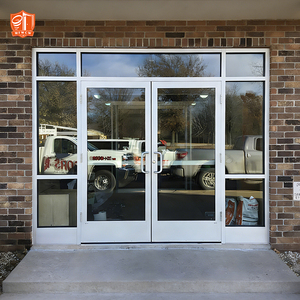
Engineered Aluminium Commercial Door Solutions
Structural integrity meets refined aesthetic performance. Certified shop entry, emergency egress, and high-traffic façade applications tailored for global building codes.
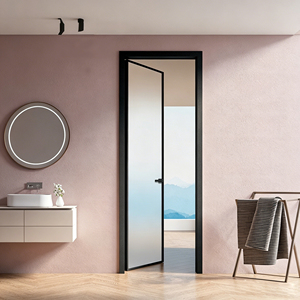
Eloyd Soundproof Double Glass Commercial French Doors
Technical Specs →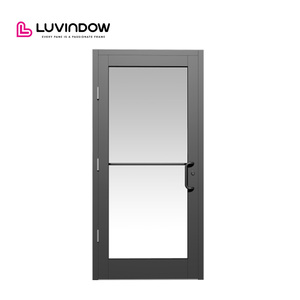
Thermal Break Hurricane Impact Glass Commercial Storefront Door
Technical Specs →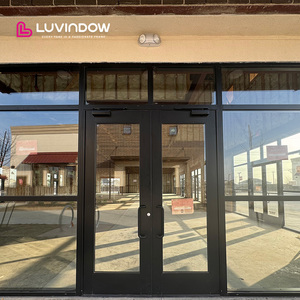
High-Efficiency Commercial Heavy-Duty Aluminium Storefront System
Technical Specs →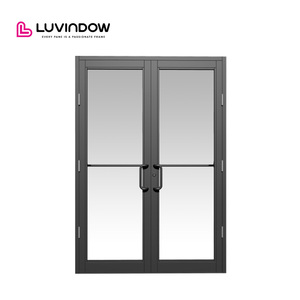
Heavy Commercial Double-Glazed Entrance Security Glass Door
Technical Specs →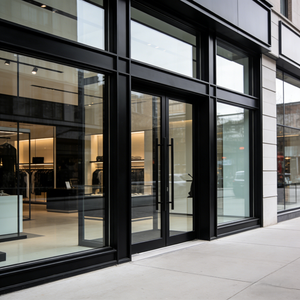
NFRC Certified Soundproof & Windproof Commercial Glass Swing Door
Technical Specs →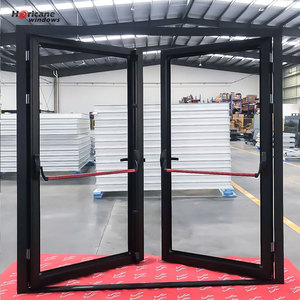
NOA Certified Safety Push-Bar Commercial Emergency Exit Door
Technical Specs →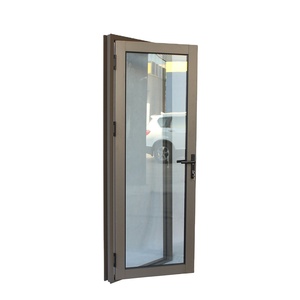
Thermal Efficiency NFRC Commercial Glass Entry Door System
Technical Specs →180,000㎡
Manufacturing Facility
25+
Years Engineering Expertise
600+
Skilled Workforce
100+
Global Patents & Certs
Strategic Sourcing: The Evolution of Aluminium Commercial Façades & Shop Doors
The commercial fenestration and retail entrance sector has transformed from offering basic architectural barriers into delivering advanced structural engineering systems. For global project developers, general contractors, and facade consultants sourcing from China, the modern aluminium shop door represents a convergence of structural durability, energy retention, life-safety compliance, and streamlined brand architecture. As cities increase performance requirements regarding building envelope thermal limits and hurricane-grade structural security, specification professionals can no longer rely on standard residential-grade extrusions for high-density retail environments.
"Structural integrity under dynamic wind cyclic pressures, verified U-factors below 0.32, and continuous cycles exceeding 500,000 operations define the modern procurement standard for export-grade commercial entrances."
Chinese manufacturing leadership in this space is no longer driven solely by competitive raw material processing; it is driven by vertically integrated system extrusion, high-precision automated milling, and rigorous metallurgical processing. High-grade 6063-T5 and 6063-T6 primary aluminium billets are fortified through multi-stage aging ovens to achieve optimal tensile strength and yield behavior. When combined with advanced surface treatments—ranging from Class I anodic coatings (AAMA 611) to multi-coat fluoropolymer PVDF systems (AAMA 2605)—these assemblies withstand rigorous marine salinity, ultra-violet degradation, and relentless commercial cycle abuse.
Engineering & Technological Superiority
An inside look at the structural, thermal, and security mechanics engineered into every factory-direct profile.
Polyamide Iso-Bar Thermal Breaks
Engineered with glass-fiber reinforced PA66 polyamide structural barrier bars, mitigating internal condensation, minimizing conductive envelope loss, and delivering compliant low U-values across stringent HVAC operational profiles.
Structural Dynamic Resistance
Heavy-duty multi-chamber internal web wall geometries engineered specifically to resist positive/negative cyclic wind-loading pressures up to 4500 Pa, satisfying testing standards under AS2047 and regional Hurricane Impact codes.
Precision Hardware Integration
Standardized integration channels supporting high-cycle concealed overhead closers, stainless steel pivot hinges, multipoint panic exit hardware, and commercial electromechanical access automation interfaces.
Future Commercial Procurement Trends
Strategic directions guiding institutional architects, developers, and import distribution networks.
Extreme Energy Decarbonization
Commercial building envelopes are shifting toward triple-glazed, argon-filled low-E configurations to minimize overall embodied carbon, demanding wider thermal breaks in shop entry framing.
Smart Access Ecosystems
Modern entrance systems require native compatibility with cloud-based building access controls, automated magnetic lock systems, and touchless proximity sensors directly routed through profile frames.
Monolithic Ultra-Slim Profiles
Commercial clients prefer structural slim-line systems that maximize visible glass pane area while preserving severe wind-load shear ratings through internal steel reinforcement spines.
Standardized Project Crating
Procurement teams increasingly favor pre-glazed, pre-hung factory assemblies packed in steel-framed ocean crates to dramatically reduce high-cost on-site commercial installation labor.
Enterprise Foundation: Guangdong Dejiyoupin Doors and Windows Co., Ltd. (DERCHI)
Operating from an expansive, vertically integrated 180,000㎡ industrial manufacturing campus in Foshan, Guangdong, DERCHI stands among China's Top 10 premium architectural fenestration manufacturers. Backed by over a quarter-century of continuous engineering and production excellence, the company employs over 600 skilled technicians, CAD draftspersons, structural engineers, and international project managers. Our manufacturing facility combines fully automated CNC multi-axis profile machining centers, robotic glass handling, and clean-room insulated glass sealing units to ensure high dimensional accuracy across thousands of square meters of customized façade assemblies.
DERCHI's international export infrastructure has been carefully aligned with the expectations of commercial builders, property managers, and distributor networks across North America, Australia, Europe, and South America. Rather than operating purely as an extrusion vendor, the factory provides end-to-end technical assurance: initial architectural CAD drafting review, custom structural engineering simulations, comprehensive quality audit documentation (including CE, ISO9001, AS2047, and UL certifications), and sea-worthy steel crate packaging designed to eliminate dynamic transport damage.
Global Procurement Frequently Asked Questions
Critical considerations for importing commercial aluminium doors directly from Chinese manufacturing bases.
How do you verify structural and thermal compliance for overseas building codes?
Every DERCHI commercial door system is engineered with project-specific structural simulations based on local design codes (such as AS/NZS 1170, ASTM wind load protocols, and regional building envelope requirements). We provide comprehensive third-party laboratory test reports validating air infiltration (ASTM E283), water penetration resistance (ASTM E331), structural load deflection (ASTM E330), and thermal transmittances through NFRC/AAMA simulations. Certified shop drawings are submitted for structural review and code approval prior to extrusion cutting.
What alloy compositions and surface finishing treatments are utilized for coastal projects?
For extreme coastal marine environments, we strictly specify primary 6063-T6 or 6061-T6 structural aluminium profiles. Surface treatments receive either a minimum 25-micron Architectural Class I anodizing layer or three-coat PVDF (Polyvinylidene Fluoride) fluorocarbon spray systems meeting or exceeding AAMA 2605 specifications. This ensures continuous resistance against salt spray corrosion exceeding 3,000 hours in neutral salt spray (NSS) testing chambers.
What are your standard export lead times, prototyping, and CAD drafting processes?
Upon receipt of architectural schedules or structural opening dimensions, our in-house engineering team provides detailed 2D CAD cross-sections and 3D installation models within 48 to 72 hours for client sign-off. Standard production cycle times for custom commercial shopfront door assemblies run between 25 and 35 working days post shop-drawing confirmation. Containerized packing in custom-dimensioned fumigated plywood or steel crates ensures immediate offload capability at commercial destination ports.
Can customized locking, automated panic hardware, and access control systems be factory-installed?
Yes. We offer fully integrated, factory-milled hardware preparations for global hardware brands (such as Dormakaba, Yale, Allegion, and Adams Rite) as well as certified proprietary heavy-duty commercial hardware. Panic crash bars, surface or concealed vertical rod assemblies, magnetic lock interfaces, electric strikes, and concealed overhead closers are systematically dry-fitted and cycle-tested at our Foshan facility prior to crating.
How are glass units certified for human impact and international life-safety standards?
All integrated glazing units comply with strict international life-safety and human impact requirements. Depending on project specifications, we supply SGCC (ANSI Z97.1 / 16 CFR 1201) certified tempered glass, Australian AS/NZS 2208 safety glass, or CE EN 12150 / EN 14449 laminated assemblies. For hurricane-rated coastal commercial entrances, high-strength SGP (SentryGlas) or heavy PVB interlayer laminated structural compositions are utilized to ensure anti-spall performance under missile impact protocols.
Ready to Engineer Your Commercial Entrance System?
Connect directly with our export engineering department. Request architectural CAD details, comprehensive system performance testing reports, or a project-specific cost estimation.
Send an Inquiry