High-Performance Architectural Fenestration Systems
Explore our top-tier catalog of precision-extruded aluminum open windows, architectural casement systems, interior doors, and specialized screening integrations manufactured for residential luxury, commercial enclosures, and heavy-duty environments.
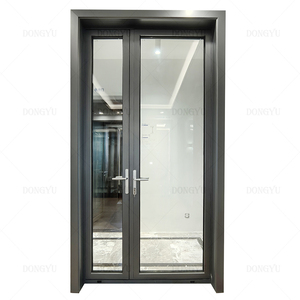
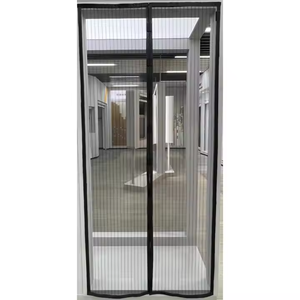
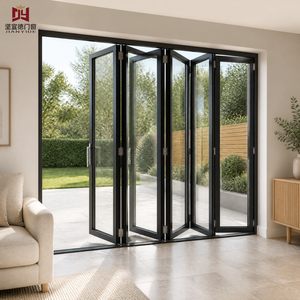
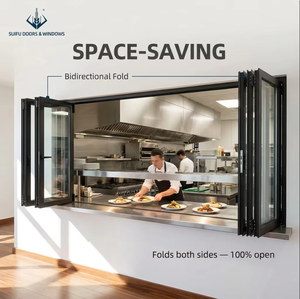
Engineering Authority in Architectural Aluminium Open Windows
As international energy codes tighten and architectural designs demand larger uninterrupted glass vistas, the procurement of high-performance aluminium open window systems has evolved from a simple hardware trade into a complex structural and thermal engineering discipline. Modern architectural casement, tilt-and-turn, awning, and parallel opening windows serve as critical environmental barriers. They directly dictate an entire building's thermal envelope performance, sound transmission class (STC), resistance to cyclical cyclic wind loads, and long-term water tightness under driving precipitation.
Guangdong Dejiyoupin Doors and Windows Co., Ltd. (operating the internationally recognized DERCHI brand) stands at the pinnacle of this industrial evolution in Foshan, Guangdong. Recognized as one of China's Top 10 fenestration enterprises, our operational capacity spans an integrated 180,000 square meter industrial manufacturing base, deploying multi-axis CNC routing equipment, automated corner crimping lines, and strict quality control regimens. When international specifiers evaluate an open window manufacturer in China, technical compliance with standards such as Australian AS2047 (reaching ultimate N6 cyclone-rated levels), American NFRC thermal modeling, European CE marks, and ISO 9001 quality infrastructure serves as the baseline separator between commoditized profile assemblers and truly capable global engineering partners.
Technical Specification Breakdown: DERCHI Architectural Systems vs. Standard Market Solutions
A detailed comparison highlighting core structural metrics, thermal conductivity, air-water-tightness thresholds, and mechanical lifecycles.
| Performance Parameter | DERCHI Open Window Systems (Architectural Grade) | Standard Commercial Chinese Export | Evaluation Standards & Codes |
|---|---|---|---|
| Aluminium Alloy Specification | Primary 6063-T5 / 6063-T6, Wall Thickness ≥ 1.8mm – 3.0mm | Recycled billet, Sub-1.4mm thickness | GB/T 5237, ASTM B221 |
| Thermal Break Barrier | Multi-Chambered PA66 GF25 Polyamide Strips (Technoform grade) | Single chamber PVC or non-reinforced nylon | EN 14024, ISO 10077-2 |
| Thermal Transmittance (U-Value) | 1.1 – 1.6 W/(m²·K) (Triple Glazed / Warm Edge spacer) | 2.8 – 3.8 W/(m²·K) (Uninsulated profile) | NFRC 100/200, ISO 15099 |
| Water Penetration Resistance | Up to 700 Pa Static / Dynamic Pressure | 150 – 250 Pa | AS/NZS 4420.5, ASTM E331 |
| Acoustic Attenuation (Rw / STC) | Rw ≥ 42 dB (with acoustic PVB/SentryGlas laminate) | Rw ≤ 28 dB | ASTM E90, ISO 717-1 |
| Hardware Cycle Life | ≥ 50,000 Open-Close Cycles (Multi-point European groove) | ≤ 10,000 Cycles (Zinc-alloy hinges) | EN 13126-8, AAMA 901 |
Future Procurement Trends in Aluminium Open Windows (2025–2030)
Deep Carbon Accounting & Circular Billets
Global developers are moving toward mandatory Environmental Product Declarations (EPDs). Procuring aluminium open windows formulated with hydro-powered, low-carbon electrolytic aluminum (under 4.0 kg CO2/kg Al) will become a strict qualification criterion for projects targeting LEED Platinum and BREEAM certifications.
Decoupled Supply Chain Pre-Finishing
Bulk facade buyers are turning away from loose field assembly. Procurement trends prioritize unitized and pre-glazed cassette assemblies where weather-stripping, multi-point lock calibers, and motorized concealed actuators are calibrated and tested on the factory floor before crating.
Integrated Micro-Ventilation & Smart Building Links
Next-generation specifications demand passive trickle ventilation integrated directly inside the aluminum profile's dry glazing chamber. This guarantees continuous fresh air exchanges without breaching thermal or acoustic boundaries, coupled with motorized open/tilt actuators connected to central BMS platforms.
Advanced Development Trends: The Evolution of Fenestration Systems
Ultra-Slim Sightline Engineering
Moving toward concealed sash mechanics. Sash framing is hidden behind exterior perimeter jambs, delivering modern glass-to-edge aesthetics while retaining structural windload capacities above 4.5 kPa.
Aerogel & Polyurethane Cavity Infusion
To reach Passive House (Passivhaus) metrics below 0.8 W/(m²·K), multi-cavity thermal break zones are now injected with hydrophobic aerogels and rigid polyurethane foam cores that neutralize convective air currents.
Fluorocarbon & Anodizing Resilience
Developments in PVDF coatings (AAMA 2605 compliant) provide 30-year resistance against aggressive seaside salt spray, extreme UV degradation, and abrasive winds across severe microclimates.
Co-Extruded EPDM Gaskets
Replacing standard vulcanized rubber, triple continuous continuous-loop vulcanized EPDM foam gaskets maintain elasticity over a wide temperature spectrum (-40°C to +120°C) without shrinkage or air leaks.
Guangdong Dejiyoupin (DERCHI): Engineered Advantage
Operating from the global core of architectural extrusion in Foshan, DERCHI provides an integrated, fully verified manufacturing chain that minimizes risks for international procurement teams.


Consolidated Project Shipments
Beyond open windows, our manufacturing infrastructure delivers complete project consolidation: luxury cast aluminium pivot gates, interior soundproof systems, and exterior folding wall installations packed together in coordinated container loads to streamline sea freight and reduce port handling fees.
Free Engineering CAD / BIM Modeling
Our internal design team provides comprehensive CAD shop drawings, connection details, and structural windload calculations at no extra charge before fabrication starts, ensuring seamless coordination with your site conditions and structural openings.
Export-Grade Protective Packaging
Every window and door system undergoes factory-level operational checks before being secured in non-fumigation plywood crates with corner bumpers, vacuum moisture bags, and impact isolation foam to guarantee zero damage during trans-oceanic shipping.
Frequently Asked Questions (FAQ) - Sourcing Windows from China
Addressing key technical, logistical, compliance, and warranty considerations for international architects, commercial contractors, and project developers.
What are the key technical specifications required to satisfy local building codes (e.g., AS2047, NFRC, CE)?
How does DERCHI ensure thermal break stability and prevent condensation in extreme climates?
Can custom sizes, curved configurations, or irregular architectural designs be accommodated?
How are aluminum open windows packed to prevent glass breakage or frame deformation during ocean freight?
What hardware brands and multi-point locking systems are integrated into your casement and tilt-and-turn windows?
What is the standard production lead time and typical ocean transit framework?
Collaborate With China's Leading Fenestration Manufacturer
Whether you require full-scale project estimation, structural window schedules, or third-party test reports for upcoming commercial or residential projects, our engineering teams are ready to assist.