Top China Aluminium Jali Window Manufacturers & Exporters

A B2B Specifier's Technical White Paper on Architectural Laser-Cut Grilles, Security Jali Fenestration, Thermal Integrity, and Global Sourcing Standards.

Executive Fenestration Engineering Report

Engineering Precision: Architectural Aluminium Jali Systems for High-Performance Facades

As contemporary architecture embraces bioclimatic envelope design, solar micro-shading, and heightened intrusion resistance, Aluminium Jali windows and security mesh doors have evolved from traditional decorative craftsmanship into high-tolerance, structural fenestration systems. Foshan-based extrusion clusters, led by Guangdong Dejiyoupin Doors and Windows Co., Ltd. (DERCHI), orchestrate advanced 6063-T6 multi-chamber extrusions, CNC precision laser perforation, and integrated high-tensile 304/316 marine-grade stainless mesh. This white paper outlines product selections, metallurgical standards, dynamic export market trends, and technical procurement criteria for global architects, real estate developers, and commercial building contractors.

Direct Export Fenestration Assemblies

Flagship Tested Fenestration & Jali-Integrated Assemblies

Each product system engineered below complies with rigid mechanical load parameters, international envelope testing standards (NFRC, CE, AS2047), and is fully customizable with integrated aluminium jali security patterns or acoustic multi-point locking profiles.
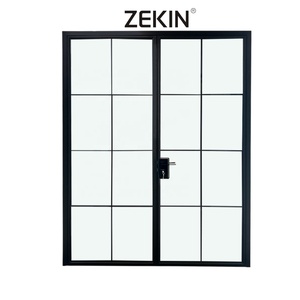
Zekin French Doors NFRC AS2047 Room Partition SDL Swing Doors

Zekin French Doors NFRC AS2047 Partition SDL Swing Doors Tempered Glass Aluminium Grille

Architectural simulated divided lites (SDL) paired with CNC aluminium internal jali grilles. Engineered for sound containment and residential interior-exterior boundaries.
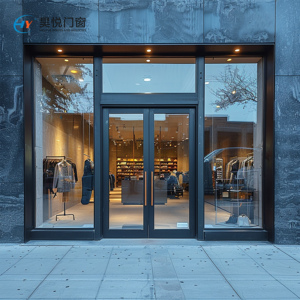
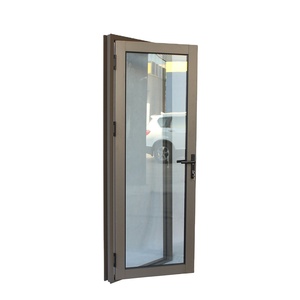
Commercial Glass Entry Doors NFRC Certified Aluminum Frame

Commercial Glass Entry Doors NFRC Certified Aluminum Frame Storefront Entrance Door

Heavy-duty commercial storefront entrance systems compatible with heavy-gauge security mesh and anti-impact perforated aluminium architectural screens.
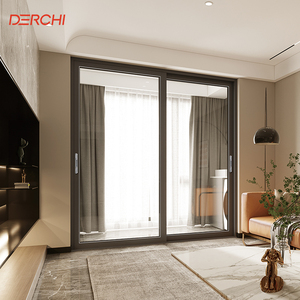
DERCHI Modern Thermal Break Aluminum Sliding Door

DERCHI Modern Thermal Break Aluminum Sliding Door Frameless Interior Modern Doors

Polyamide PA66GF25 thermal insulation barrier sliding assemblies designed with recessed pocket tracks and slide-in insect/security jali screens.
Modern Store Front Double Door Commercial Doors System Aluminum Frame

Commercial Store Front Double Door Factory Price Aluminum Frame Tempered Glass

Double-door traffic configuration tested for institutional environments, equipped with electro-plated security grilles and concealed floor spring hardware.
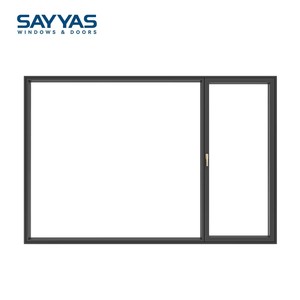
SAYYAS Windows Luxury Aluminum-clad Triple Glazed Soundproof Casement

SAYYAS Windows Luxury Aluminum Heat Insulation Triple Glazed Casement Windows

Acoustic-rated casement framework hosting integrated external micro-perforated jali louvers for diffuse daylighting without compromising STC ratings.
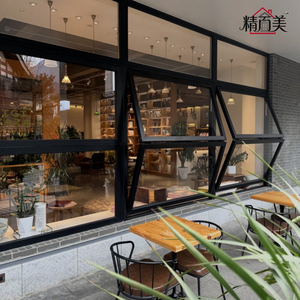
Customized Soundproof Aluminum Glass Vertical Bifold Window

Customized Soundproof Aluminum Glass Vertical Bifold Window Kitchen Bathroom

Space-saving vertical gas-strut bifold mechanics. Features exterior ornamental aluminium jali shading screens to minimize direct solar radiation.
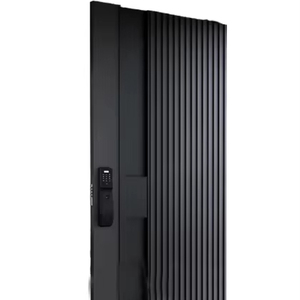
European Modern Luxury Aluminium Security Entrance Doors

European Modern Luxury Aluminium Security Entrance Doors Anti-theft Residential

Multi-point lock armatures encapsulated inside solid 6063-T6 billet alloy plates with CNC-milled jali security grilles and multi-layer structural reinforcement.
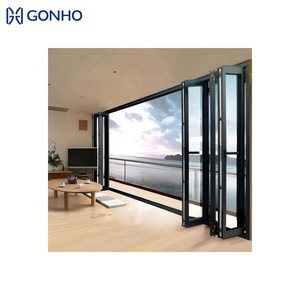
NFRC Soundproof Aluminum Bi-Folding Glass Doors

USA Style NFRC Soundproof Bi-Folding Glass Door Prefabricated Windows & Doors

Multi-panel stacking hardware with integrated magnetic jali blinds or structural security screens for panoramic villas and tropical open-air configurations.
Enterprise Infrastructure & Export Authority

Guangdong Dejiyoupin (DERCHI): Industrial Scale & Foshan Extrusion Mastery

Procuring architectural fenestration and laser-cut aluminium jali systems from China requires deep alignment between metallurgical purity, CNC precision, and strict adherence to Western building envelopes. DERCHI commands an expansive, state-of-the-art intelligent manufacturing hub engineered specifically for high-capacity export projects.

180,000㎡
Integrated Production Base
25+
Years Fenestration Engineering
600+
Skilled Production Specialists
100+
Global Patents & Certifications

Uncompromising Structural & Climatic Adaptability

Harnessing virgin aluminium billets (Al-Mg-Si alloy 6063-T5/T6), our in-house extrusions deliver a tensile strength exceeding 205 MPa and yield strength over 170 MPa. Every aluminium jali window screen, perforated security sash, and framing assembly undergoes multi-stage chemical pretreatment, hexavalent chromium-free passivation, and AkzoNobel or PPG fluoropolymer (PVDF) powder coating. This ensures compliance with AAMA 2605 specifications, defying 4,000+ hours of accelerated salt-spray testing.

  • Automated Fiber-Laser Cutting: Sub-millimeter tolerances (±0.05mm) across complex geometric jali lattices and custom Islamic/Modernist architectural patterns.
  • Polyamide PA66GF25 Thermal Breaks: German technoform thermal isolators reducing overall U-factors down to 1.1 W/(m²·K).
  • Seamless CNC Corner Crimping: Dual-component corner injection sealing prevent air/water ingress up to 700 Pa static pressure.
Get Catalog
DERCHI Manufacturing Base Foshan

Rigorous Certifications

DERCHI systems are verified under international testing frameworks including CE (EN 14351-1), AS2047 (Australia), NFRC (North America), and ISO9001, providing frictionless approvals for tier-1 general contractors.

One-Stop Architectural Envelope

Consolidate your entire fenestration bill of quantities: custom aluminium jali windows, heavy pivot entry doors, curtain wall modules, and interior partitions within single-source containerized shipments.

Bespoke BIM & CAD Engineering

Every commercial or luxury residential opening is mapped by our 30+ dedicated facade engineers, delivering precision shop drawings, wind load calculations, and anchorage stress analysis prior to extrusion milling.

Innovation Vector

Product Development Trends in Aluminium Jali & Security Fenestration

The architectural landscape is moving rapidly away from separate, uninsulated wrought-iron window grilles toward monolithic, multi-functional fenestration envelopes. As carbon neutrality mandates tighten worldwide, Chinese manufacturers are pioneering breakthrough hybrid designs.

Parametric Bioclimatic Shading

Modern jali designs utilize computational algorithms to optimize hole perforation density based on solar azimuth angles. By cutting direct solar heat gain by up to 55% while maintaining daylight autonomy, buildings reduce HVAC loads drastically.

Smart IoT Kinetic Lattices

Motorized vertical and sliding jali panels integrated into building automation systems (BMS). Using micro-linear actuators and solar trackers, screens adjust blade orientations dynamically to compensate for glare and wind shear.

Marine-Grade Mesh Integration

Hybrid co-extrusion profiles featuring high-tensile 0.8mm–1.0mm 316 marine-grade black powder-coated wire screens locked behind decorative CNC aluminium panels, offering anti-knife-shear and RC3 burglary security without cage-like visual clutter.

Fenestration Metallurgy & Structural Performance Matrix

Performance Criterion Standard Commercial Windows DERCHI High-Spec Aluminium Jali Fenestration Test Methodology / Standard
Aluminium Alloy & Temper Recycled / Mixed 6063-T5 Virgin Primary Billet 6063-T6 / 6061-T6 High Tensile ASTM B221 / GB 5237
Profile Wall Thickness 1.2 mm – 1.4 mm 2.0 mm – 3.0 mm Heavy Structural Extrusions EN 12020-2 / AS 2047
Surface Coating Standard Anodized / Ordinary PE (40μm) AkzoNobel Fluorocarbon PVDF (≥3 coats, ≥40μm) or Qualicoat Class 2 AAMA 2605 / 4000h Salt Spray
Thermal Transmittance (U-Value) Uf > 4.5 W/(m²·K) (Non-Thermal) Uf ≤ 1.3 - 1.8 W/(m²·K) with PA66GF25 Insulators ISO 10077-2 / NFRC 100
Acoustic Attenuation Rw 25 - 28 dB Rw 38 - 45 dB (Laminated Double/Triple DGU + Screen) ASTM E90 / ISO 717-1
Forced Entry Resistance Standard Latch (Basic) Multi-Point Hook Locks + 316 Mesh / RC2 & RC3 Level EN 1627 / AS 5039 Security Standards
Strategic Sourcing Analysis

Future Procurement Trends for Global B2B Importers (2025–2030)

International supply chains for architectural metals are navigating shifts in carbon tariffs (CBAM), automated manufacturing protocols, and demands for hyper-customized structural facade assemblies. Sourcing managers must understand these four key vectors:

1. Low-Carbon Hydro-Powered Smelting & CBAM Compliance

Global buyers in Europe, Australia, and North America are facing carbon border adjustment taxes. Tier-1 Chinese exporters are shifting alloy sourcing to renewable-energy smelters (hydropower and solar in Yunnan/Sichuan) to deliver verified Environmental Product Declarations (EPD), slashing embodied carbon metrics for LEED and BREEAM certifications.

2. Direct-to-Factory BIM Digital Twin Integration

Procurement teams are eliminating intermediary brokerage by feeding Revit and IFC models directly into factory ERP systems. CNC five-axis milling centers cut and punch complex jali patterns directly from architectural shop drawings, decreasing lead times from 60 days to 25 days while reducing shop drawing discrepancies to zero.

3. Containerized Pre-Glazed Sub-Assembly Modularization

Rising labor costs across destination markets (North America, Middle East, Western Europe) have made on-site glazing and mesh fitting economically unviable. Procurement trends favor completely pre-assembled, unitized window frames with factory-fitted jali grilles, insulated glass units, and perimeter flashing, ready for immediate crane hoisting.

4. Third-Party Audited Factory Traceability

Risk mitigation strategies now demand high-definition virtual audits and video inspection before crating. Enterprise buyers partner with manufacturers maintaining comprehensive QA logs: spectrometer billet analyses, coating thickness DFT micrometer tests, and helium leak detection for argon-filled insulated glass cavities.

Technical Due Diligence

Frequently Asked Questions: Sourcing Aluminium Jali Fenestration

Detailed answers addressing engineering tolerances, structural calculations, oceanic shipping safeguards, and testing protocols for commercial procurement specialists.

What alloy composition is optimal for laser-cut aluminium jali window screens?
For architectural jali screens that demand intricate laser cutting paired with structural rigidity, Aluminium Alloy 6063-T6 or 5052-H32 is standard. 6063 provides superior surface smoothness for anodizing and architectural powder coatings, whereas 5052 delivers exceptional corrosion resistance for oceanfront exposures. DERCHI utilizes pure virgin ingot extrusions with controlled silicon and magnesium contents, ensuring laser edges remain free of thermal slag and dross before entering electrostatic coating lines.
How do aluminium jali screens affect wind load and structural calculations (ASCE 7 / EN 1991)?
Perforated jali screens change the aerodynamic drag profile of a window opening. The solid-to-void ratio dictates wind load behavior: a 40% open-area jali lattice generally experiences lower vortex-shedding forces than a solid panel, but produces localized drag that must be transferred through the sub-frame mullions. Our Foshan engineering division runs Finite Element Analysis (FEA) and calculates positive/negative wind pressures (reaching up to 4.5 kPa for high-rise installations), ensuring proper gauge thickness and anchor bolt sizing.
Can aluminium jali windows satisfy thermal barrier requirements in cold or tropical zones?
Yes. Modern systems decouple the decorative/security jali from the primary thermal envelope. The jali screen is installed on an external sub-frame track or within a double-skin vented cavity, while the interior sash utilizes a Polyamide PA66GF25 thermal break system paired with argon-filled, warm-edge double or triple glazing. In hot climates, this acts as an exterior bioclimatic shading screen, reducing Solar Heat Gain Coefficients (SHGC) to below 0.24; in cold regions, the thermal-break frame prevents interior condensation and heat transfer.
What finishes are recommended to prevent galvanic and atmospheric corrosion in coastal regions?
For coastal deployments (e.g., Caribbean, Red Sea, Florida, or Southeast Asia), we specify a triple-coat PVDF (Polyvinylidene Fluoride) finish with a minimum film thickness of 40 microns, or architectural hard-coat anodizing exceeding 25 microns (Class I). Furthermore, to prevent galvanic corrosion where stainless steel 304/316 security mesh connects to aluminium sub-frames, DERCHI isolates disparate metals using EPDM gaskets, neoprene liners, and nylon-sleeved fasteners.
What export packaging protocols ensure zero distortion of fragile jali lattices during ocean transit?
To survive ocean shipments with dynamic g-forces, each window unit is wrapped with PE protective film, sealed in closed-cell pearl foam, and enclosed in heat-treated fumigated plywood crates (ISPM 15 certified). Jali screens feature temporary structural brace bars to prevent vibrational deflection. Desiccant packs are inserted to avert moisture condensation during sea voyages passing through varying dew points.
How does DERCHI facilitate shop drawing approvals and site integration for foreign architectural firms?
Upon receipt of architectural door/window schedules and rough opening (R.O.) dimensions, our bilingual technical department prepares complete 2D CAD elevation, plan, and detail sections, along with 3D BIM models. These illustrate perimeter clearance, shim spaces, drainage weep holes, anchorage points, and flashing transitions. Production commences only after the client's facade consultant or architect stamps the shop drawings.
What is the lead time for custom CNC jali tooling and high-volume containerized orders?
Standard CNC laser jali patterns require no custom tooling, enabling initial prototypes within 7 to 10 days. Entire container loads (20GP or 40HQ) comprising custom extruded framing, laser-cut screens, and insulated glass typically ship within 30 to 40 days following drawing approval and deposit receipt. Expedited tracks exist for critical path commercial phases.
Can intelligent motorization or smart home access control be combined with jali security doors?
Yes. Our heavy-duty aluminium entrance systems and oversized sliding jali assemblies easily integrate with motorized concealed multipoint operators, biometric fingerprint sensors, face-recognition hardware, and dry-contact relays compatible with Crestron, Control4, or standard KNX home automation systems.
Partner with China's Premier Fenestration Base

Accelerate Your Next Architectural Project with Certified Engineering

Whether you require bespoke architectural laser-cut aluminium jali screens, cyclone-rated sliding doors, or soundproof casement windows, our team delivers factory-direct engineering, certified documentation, and export-crated shipping directly to your project port.