Curated Architectural Fenestration Portfolios
Direct from Foshan’s tier-1 industrial fenestration cluster, these certified systems deliver high-durability thermal separation, cyclonic load resistance, and acoustic optimization across residential, commercial, and institutional projects.
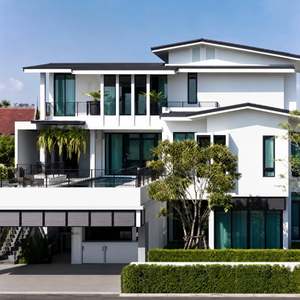
Complete Aluminum Window Door System | Exterior Whole House Glazing Solution
View Specifications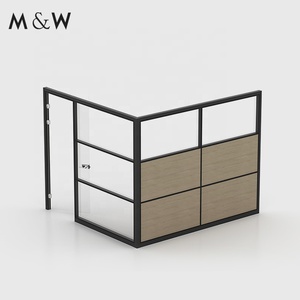
M&W Modern Style Panel Aluminum Glass Soundproof Movable Office Wall Partition
View Specifications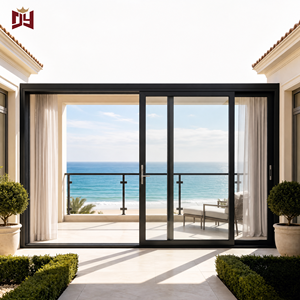
Aluminium Exterior Sliding Doors Heavy Duty Lift and Slide Door CE Certified
View Specifications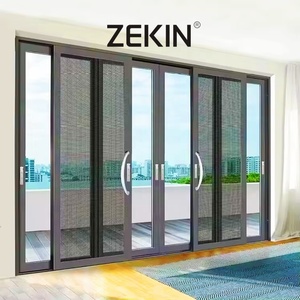
ZEKIN AS2047 NFRC Double Glass Stacker Doors Exterior Sliding System
View Specifications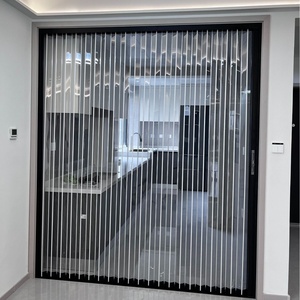
Transparent Acrylic PC Crystal Board Bi Fold Sliding Invisible Telescopic Door
View Specifications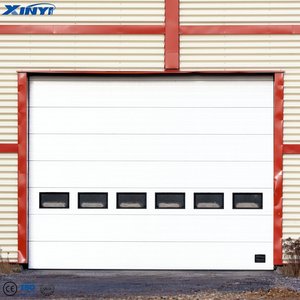
Industrial Roll-Up Doors With High Wind Resistance Sectional Doors
View Specifications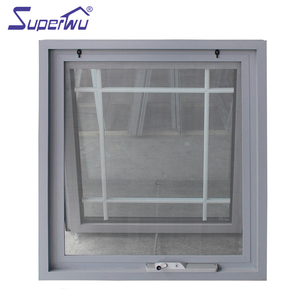
Superhouse Modern Bathroom Awning Aluminium Outward Opening Windows
View Specifications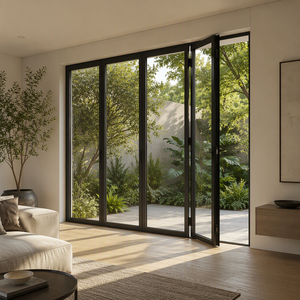
Custom Modern Glass Aluminum Bifold Sliding Folding Patio Partition Door
View SpecificationsThermal Decoupling, Mechanical Stability & Metallurgy
Understanding the thermodynamic and structural advantages of multi-chambered polyamide composite profiles over traditional fenestration extrusions.
Structural Anatomy: Polyamide-Decoupled Extrusions vs. Monolithic Aluminum
In high-performance commercial and residential building envelopes, monolithic architectural aluminum poses a major thermodynamic bottleneck due to its high thermal conductivity (~160–200 W/m·K). Modern aluminium composite windows manufactured by tier-1 Chinese exporters utilize precision-extruded primary 6063-T5 or 6063-T6 architectural grade aluminum alloys separated by low-conductivity thermal barriers. The industry benchmark relies on glass fiber-reinforced polyamide 66 insulating struts (PA66GF25), engineered with 25% transverse glass fiber matrix alignment.
This composite configuration exhibits an optimal linear thermal expansion coefficient matching that of aluminum alloy (2.3 × 10⁻⁵ K⁻¹), eliminating structural shear delamination across severe ambient temperature differentials ranging from -35°C sub-zero environments to +45°C solar radiant surface exposures. The mechanical shear strength of the crimped polyamide joinery typically exceeds 75 N/mm, maintaining airtightness and wind-load integrity under positive and negative cyclonic pressure cycles.
| Engineering Metric | Monolithic Aluminum Window | Standard Thermal Break Alu | High-Spec Alu-Composite System | Alu-Clad Solid Wood Composite |
|---|---|---|---|---|
| Overall U-Factor (W/m²K) | 5.20 – 6.00 | 2.20 – 2.80 | 1.10 – 1.60 (Passive House) | 0.80 – 1.30 |
| Thermal Strip Specification | None (Direct Conduction) | 14.8mm Straight PA66 Bar | 34mm–54mm Multi-Cavity PA66 | Independent Structural Core |
| Acoustic Attenuation (Rw / STC) | 26 – 28 dB | 32 – 35 dB | 42 – 48 dB (with Lami-Acoustic) | 44 – 50 dB |
| Air Permeability (EN 12207) | Class 2 (300 Pa) | Class 3 (600 Pa) | Class 4 (600 Pa airtight seal) | Class 4 (Triple EPDM Gaskets) |
| Water Tightness (EN 12208) | Class 4A (150 Pa) | Class 7A (300 Pa) | Class E900 – E1200 (900–1200 Pa) | Class 9A / E1050 |
| Design Service Life | 15 Years | 25 Years | 50+ Years (Fluorocarbon PVDF) | 40+ Years (Exterior Shielded) |
Technical Note: The incorporation of triple-seal EPDM continuous co-extruded vulco-sponge center gaskets alongside isobaric drainage chambers prevents interior water ingress even under 1200 Pa pressurized torrential spray, qualifying systems for North American AAMA/WDMA/CSA 101/I.S.2/A440-11 and Australian AS2047 N6 cyclonic certification.
Future Procurement Trends for Global B2B Buyers
How evolving carbon mandates, parametric architectural demands, and automated logistics are redefining the procurement equation for international builders and facade consultants.
Low-Carbon & Circular Aluminium Sourcing
Global developers face strict Environmental Product Declarations (EPD) and EU Carbon Border Adjustment Mechanism (CBAM) benchmarks. Progressive Chinese fenestration exporters now source hydro-powered virgin billets and up to 40% certified post-consumer recycled aluminium (PCR-Al), reducing embodied carbon from 18 kg CO₂e/kg to under 4.5 kg CO₂e/kg aluminum without compromising mechanical tensile thresholds (Rm ≥ 205 MPa).
Unitized & Prefabricated Glazing Envelopes
High overseas labor costs are shifting procurement away from knock-down (KD) field-assembled frames toward pre-glazed, factory-assembled unitized modules. Exporters offering complete pre-shimmed perimeter sub-frames, integrated flashing fins, and factory-torqued German SIEGENIA or ROTO multi-point locking gear reduce site installation man-hours by over 65%, driving down net developer expenditures.
Digital BIM Integration & Parametric Drawings
B2B procurement has moved beyond static PDF schedules. Tier-1 exporters now provide integrated building information modeling (BIM) files with embedded thermal U-values, acoustic damping vectors, and structural anchor load reactions compatible with Revit and ArchiCAD. This streamlines municipal plan checks and architectural sign-offs weeks before billet extrusion begins.
Technological Trajectories in Chinese Fenestration
Technological advancements in CNC five-axis machining, dual-component injection sealing, and marine-grade protective finishes.
Dual-Component Injection
Gone are the days of dry-pinned corner cleats. Modern automated corner-crimping centers mechanically join miters, followed by automated high-pressure injection of two-component polyurethane corner-gasket adhesive. This guarantees a leak-proof 90-degree seam capable of withstanding 5500 Pa maximum wind burst pressure without micro-crack propagation.
Fluorocarbon PVDF & Marine Finishing
To combat salt-fog corrosion in coastal jurisdictions across Australasia, the Caribbean, and South America, China’s elite manufacturers implement 3-coat/2-bake PPG/AkzoNobel 70% Kynar 500/PVDF coatings or Qualicoat Seaside certified powder coatings, withstanding over 4,000 hours of continuous ASTM B117 neutral salt spray testing without surface pitting.
Vacuum Insulated Glazing (VIG)
Transitioning from standard double argon-filled IGUs to hybrid Vacuum Insulated Glass units. By achieving a center-of-glass Ug rating down to 0.40 W/m²K within an ultra-slim 8.3mm glass sandwich, VIG eliminates bulky multi-pane profiles, enabling minimalist architectural sightlines while meeting stringent net-zero energy code mandates worldwide.
Concealed Smart Mechatronics
Next-generation composite systems feature internal bus-lines, concealed motorized tilt-and-turn linear actuators, and electrochromic dynamic solar control glass linked to central building management systems (BMS). Micro-sensors embedded directly in the profile rebate monitor perimeter seal compression and mechanical lock engagement in real-time.
Why Global Importers Source Direct from Guangdong Dejiyoupin (DERCHI)
Headquartered in Shishan Town, Foshan—China’s epicenter of aluminum fenestration—Guangdong Dejiyoupin Doors and Windows Co., Ltd. (DERCHI) represents the pinnacle of industrial capacity, certified engineering, and export packaging reliability.
180,000㎡ Mega Production Base
Integrated full-cycle manufacturing: aluminum extrusion, profile powder coating, thermal break crimping, precision IGU glass fabrication, and automated structural assembly under one roof.
Global Tier-1 Compliance
Our fenestration engineering is audited and verified to Australian AS2047, European CE (EN 14351-1), North American NFRC / CSA, ISO9001, and UL Fire-rated standards with full lab test reports.
Parametric CAD & Engineering Support
Over 40 in-house senior structural facade engineers provide free structural wind-load calculations, glass deflection checks, and shop drawings prior to extrusion cutting.
25+ Years Industrial Heritage
Recognized among China’s Top 10 premium architectural window and door brands, with completed villa developments and commercial facade projects across 60+ countries worldwide.
Export-Grade Heavy Timber Crating
Every sash and frame is protected by electrostatic PE protective film, encapsulated in waterproof thermo-shrink wrapping, and seated in reinforced IPPC fumigated solid plywood crates with interior shock absorbers.
Time-Zone Aligned Project Management
Multilingual technical export engineers handle everything from opening schedules and hardware specification matching to remote video installation supervision for your local site team.
Frequently Asked Questions for B2B Importers
Clear, engineering-grounded responses to the most critical technical, compliance, and logistics challenges faced when sourcing custom fenestration systems from China.
What is the exact distinction between standard thermal break aluminum and high-performance aluminum composite windows?
How do Chinese window suppliers guarantee compliance with regional testing standards like AS2047, NFRC, or CE?
What measures are taken to prevent seal failure, glass spontaneous breakage, and condensation during long ocean voyages?
How are custom opening dimensions, rough opening tolerances, and hardware schedules coordinated?
What are the optimal container loading and crating configurations for mixed architectural window and door shipments?
How do you resolve thermal movement discrepancies between the exterior aluminum shield and interior solid wood components?
Accelerate Your Architectural Fenestration Sourcing
Partner directly with Guangdong Dejiyoupin (DERCHI). Access our comprehensive technical portfolio, download CAD engineering libraries, or request a verified factory-direct project quote backed by full compliance testing.