Precision Architectural Windows & Entry Envelopes
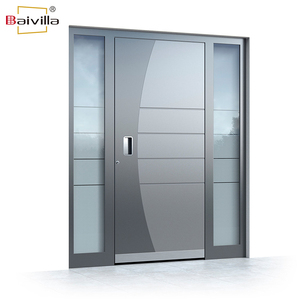
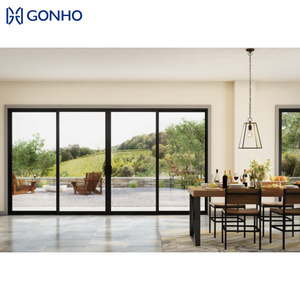
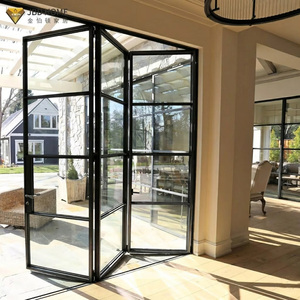
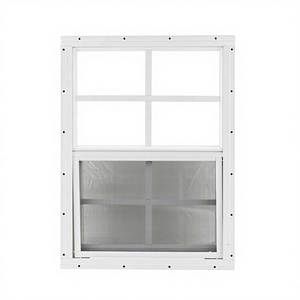
Explore our flagship fenestration systems manufactured from virgin 6063-T5/T6 alloy billets, featuring advanced polyamide thermal breaks, multi-point tamper-proof lock mechanisms, and certified insulated glazing units.
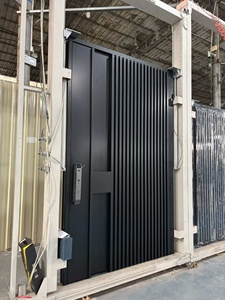
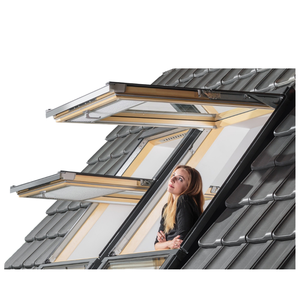
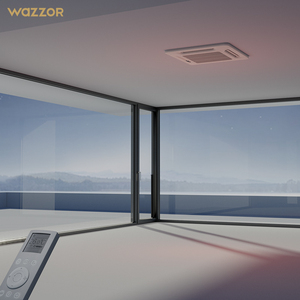
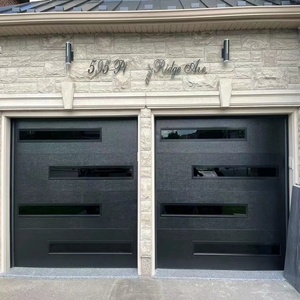
State-of-the-Art Production: China's Fenestration Powerhouse
Headquartered in Foshan, Guangdong—the epicenter of global aluminium extrusion and facade technology—our enterprise (Guangdong Dejiyoupin Doors and Windows Co., Ltd. / DERCHI) commands an expansive 180,000 square meter smart industrial production base. With more than 25 years of engineering experience and over 600 skilled technicians, we bridge the gap between heavy industrial output and delicate bespoke architectural joinery.
As commercial builders, overseas distributors, and general contractors seek resilient supply chains, we provide verified traceability across every phase: from primary metallurgical ingot casting, computerized CNC profile machining, robotic isobaric corner-crimping, to automated double-glazing lines.

System Performance Specifications & Quality Metrics
International building codes demand verifiable structural, thermal, and meteorological envelope capabilities. Compare the engineering tolerances of our flagship thermal break systems against conventional commercial windows.
| Engineering Criteria | Standard Commercial System | DERCHI High-Performance System | International Compliance Standards |
|---|---|---|---|
| Alloy Metallurgy & Purity | Secondary / Recycled scrap aluminium | Virgin 6063-T5 / 6063-T6 primary ingot | ASTM B221 / EN 755 |
| Thermal Barrier Technology | Non-break or PVC extrusion strips | Multi-chamber Polyamide PA66GF25 (25% glass fiber) | DIN EN 14024 |
| Overall System U-Factor (Uw) | 3.2 – 4.5 W/(m²·K) | 0.79 – 1.40 W/(m²·K) (Passive House Capable) | NFRC 100 / EN ISO 10077 |
| Structural Wind Load Resistance | 1.5 kPa – 2.5 kPa | Up to 4.5 – 6.0 kPa (Level N6 Extreme Rating) | AS 2047 / ASTM E330 |
| Water Penetration Resistance | 250 Pa – 300 Pa | 700 Pa – 1050 Pa (Triple EPDM Gaskets) | ASTM E547 / EN 12208 |
| Acoustic Attenuation (Rw / STC) | 28 – 32 dB | 42 – 48 dB (Argon-filled asymmetric acoustic laminate) | ASTM E90 / ISO 717-1 |
| Surface Coating Durability | Standard Polyester 35μm | Fluorocarbon PVDF 3-coat (AAMA 2605) / Anodized 25μm | Qualicoat Class 2 / AAMA 2605 |
Emerging Trends Shaping B2B Aluminium Window Procurement
As commercial developers, institutional builders, and regional importers plan for 2026–2030 building cycles, systemic shifts in carbon policy, smart automation, and weather extremes dictate architectural window procurement.
1. Low-Carbon Aluminum & EPD Transparency
With the rollout of carbon border adjustment mechanisms (EU CBAM) and global LEED v4.1 certification, Tier-1 buyers demand verified Environmental Product Declarations (EPDs). Procuring aluminium windows extruded with hydro-powered or low-carbon smelter billets cuts embodied carbon by up to 65% compared to coal-fired smelting.
2. Smart Building & IoT Hardware Integration
Modern commercial and luxury residential projects have evolved beyond manual latch handles. The standard now requires concealed magnetic contact sensors, motorized chain actuators integrated into Building Management Systems (BMS), and motorized micro-ventilation that triggers automatically based on internal IAQ sensors.
3. Extreme Weather & Coastal Resilience
With intensified tropical cyclone seasons and rising salt spray exposure across North America, the Caribbean, and South America, procurement schedules heavily prioritize ASTM E1886/E1996 missile-impact glass systems and AAMA 2605 10-year salt-spray warranties to prevent catastrophic envelope failure.
4. Ultra-Slim Sightline Minimalist Architecture
Architects demand maximized glazed area with concealed outer frames that recess completely into structural wall cavities. The transition toward high-modulus structural silicone glazing and steel-reinforced intermediate mullions allows 3.5-meter sash heights while maintaining deflection under L/175 limits.
5. Modular Off-Site Unitized Prefabrication
To combat rising jobsite labor wages in Australia, the US, and Europe, developers favor factory-glazed unitized modules. Complete with factory-installed sub-sills, sub-heads, and flashing fins, these systems decrease on-site installation time by up to 70% while guaranteeing airtight perimeter factory seals.
6. Consolidated Whole-House Architectural Packages
Sourcing windows from one factory, pivot doors from another, and garage doors from a third introduces extreme dimensional discrepancy and color mismatches. The dominant trend is single-source consolidation from unified factories capable of supplying matching finishes across all architectural openings.
Technological Innovations in China’s Fenestration Industry
How Chinese aluminium window manufacturing transitioned from low-cost fabrication to an elite global R&D benchmark rivaling historic European systems.

The Evolution from Assembly to System Fenestration
Historically, Chinese window export relied on disparate component sourcing. Over the past decade, leaders like DERCHI pioneered integrated "System Fenestration" (系统门窗). Under this holistic methodology, profile wall thicknesses, thermal barrier polymer geometry, vulcanized EPDM foam gaskets, corner injection glue (corner brackets with anaerobic adhesive), and multi-lock hardware are co-engineered as a unified thermodynamic and structural unit.
Furthermore, the implementation of vacuum insulating glass (VIG) technology, warm-edge silicone structural spacers, and multi-cavity thermal profiles has allowed our systems to reach passive house standards (U-values below 0.8 W/m²·K) even in challenging polar and desert temperature swings.
Factory Direct Strengths & Supply Chain Reliability
Backing your projects with China's top door and window manufacturing infrastructure, international compliance, and technical export execution.
Massive 180,000㎡ Production Footprint
Our mega manufacturing base in Foshan integrates heavy aluminium extrusion, thermal break assembly, robotic powder-coating lines, CNC precision cutting, insulated glass processing, and automated testing rigs. With 600+ factory craftsmen, we handle mega-developments and multi-unit projects without delivery bottlenecks.
Global Testing & Strict Certifications
We eliminate local building inspector friction. DERCHI holds ISO9001, European CE, Australian AS2047 (N6 cyclone rating), and UL fire-rated certifications, supported by more than 100 technology and design patents. We furnish independent NATA and third-party lab performance test certificates with every commercial batch.
100% Tailored Engineering & Free Shop Drawings
Every building opening is unique. Our in-house technical department of 30+ bilingual structural engineers provides complete 2D CAD details, 3D BIM models, profile cross-sections, and structural wind calculations free of charge before production commences—guaranteeing site dimensional accuracy.
One-Stop Consolidated Project Solutions
Streamline freight and maximize container utilization. Source high-performance thermal break casement windows, narrow-frame sliding patio doors, oversized pivot entry doors, and automated glass garage doors from one accountable factory. Everything packs into coordinated 40HQ containers.
Export-Grade Heavy Timber Crating
Trans-oceanic cargo faces severe moisture, turbulence, and handling stress. Our windows are protected by peelable protective film, corner guards, water-resistant shrink packaging, and fully enclosed steel-strapped fumigated plywood crates that withstand ocean freight to Sydney, Santos, Long Beach, or Hamburg.
Aligned Time-Zone Technical Support
Our export project managers operate across extended hours to accommodate North America, South America, Europe, and Australasia. We provide live remote video site walkthroughs, assembly manuals, and comprehensive hardware calibration instructions to guide your local framing and glazing crews.

Frequently Asked Questions on Importing Aluminium Windows
Authoritative technical answers to common questions raised by architects, commercial developers, and procurement officers sourcing from China.
1. Why is 6063-T5 aluminium alloy the international industry gold standard for window frames?
2. How does a thermal break system prevent condensation and reduce HVAC costs?
3. What certifications are critical when importing aluminium windows into North America, Europe, or Australia?
4. Can your factory build completely bespoke window sizes, curved profiles, and custom RAL colors?
5. What glass configurations do you recommend for acoustic sound reduction and solar control?
6. How does your factory handle shipping damage prevention for ocean transit?
7. What is the typical lead time from shop drawing approval to port dispatch?
8. How does DERCHI ensure hardware longevity and air/water tightness over 10+ years?
Ready to Elevate Your Architectural Project?
Whether you are developing a luxury residential villa enclave, specifying high-rise commercial glazing, or establishing a regional fenestration distributorship, our engineering team is standing by with free CAD shop drawings, product catalogs, and factory-direct pricing.