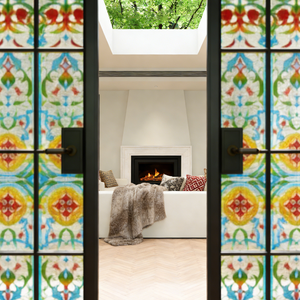
Production Portfolio
Precision Architectural Door & Window Systems
Engineered for high structural stability, acoustic dampening, coastal atmospheric resistance, and seamless architectural integration across luxury villas and commercial venues.
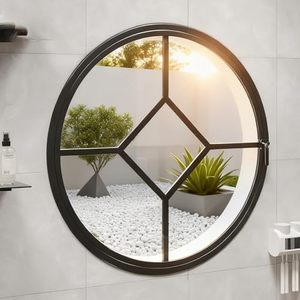
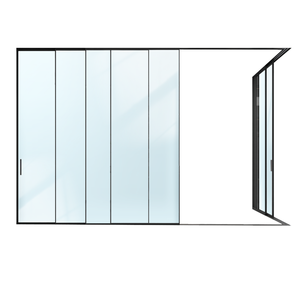
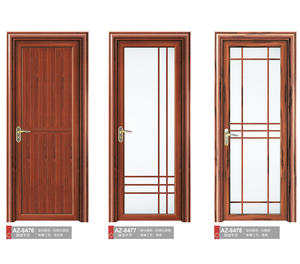
Structural Resiliency & Impact Fenestration Dynamics
A technical assessment of building envelope vulnerability, impact metallurgy, and certification pathways across tropical and storm-prone global markets.
In commercial architecture and luxury residential construction, the building envelope serves as the primary barrier against extreme mechanical forces and catastrophic meteorological phenomena. Among all exterior components, the main entrance aperture represents the most vulnerable thermal and pressure transition zone. As atmospheric disturbances increase in frequency and intensity worldwide—affecting regions from the Atlantic Hurricane Basin and the Caribbean to the cyclone-exposed Pacific margins and storm-swept South American coastlines—the procurement criteria for aluminum front doors have shifted dramatically from mere cosmetic door slabs to heavy-duty, engineered structural systems.
175+
MPH Wind Resistance
+/-90
PSF Design Pressure
2.0-3.0
Wall Thickness (mm)
0.00
Structural Envelope Breach
The functional core of modern aluminum impact front doors relies upon the cohesive interaction between multi-cavity extruded alloy framing, structural glazing interlayers, reinforced corner joinery, and heavy multi-point locking mechanisms. A failure at any single point—whether anchor pullout under negative cyclic suction or glass delamination during missile impact—can lead to total envelope pressurization, often triggering roof loss and overall structural collapse. Consequently, global structural engineers and facade consultants now require verified compliance with ASTM E1886, ASTM E1996, and testing protocols established by the High Velocity Hurricane Zone (HVHZ) under Miami-Dade County Notice of Acceptance (NOA) and Florida Building Code (FBC) standards.
Critical Engineering Takeaway: Aluminum impact doors are dynamic energy dissipation systems. The extruded 6063-T6 or 6005-T5 architectural aluminum profiles absorb and distribute shock loads to concrete anchors, while the PVB (Polyvinyl Butyral) or SentryGlas® (Ionoplast) interlayer retains glass shards upon projectile contact, preventing catastrophic internal pressurization.
1. The Metallurgy and Mechanics of Impact Fenestration
Standard aluminum entry systems typically utilize thin extruded profiles with wall thicknesses under 1.4 mm, which flex excessively under cyclical hurricane pressures. In contrast, heavy-duty impact-rated systems require minimum wall thicknesses ranging from 2.0 mm to 3.0 mm, engineered with internal reinforcing ribs and dedicated screw bosses to handle high torque. The alloy of choice for superior architectural integrity is 6063-T6, offering an ultimate tensile strength of no less than 205 MPa (30,000 psi) and yield strength of 170 MPa (25,000 psi). For monumental oversized entrance assemblies, such as 4-meter pivot doors, high-stress components frequently incorporate 6005A-T6 or 6082-T6 alloys to resist permanent plastic deformation.
Glazing architecture within impact doors represents a complex composite challenge. Laminated architectural glass replaces standard monolithic tempered panes. A typical impact glass cross-section comprises an exterior sacrificial glass lite, a high-tensile polymeric interlayer (0.090” PVB or 0.035”–0.090” Kuraray SentryGlas® Plus), and an interior structural glass lite. During a Category 5 hurricane event, a nominal 9-lb (4.1 kg) 2x4 timber missile propelled at 50 feet per second (34 mph / 55 km/h)—representing ASTM Large Missile Test D—may fracture the outer glass layer; however, the elastomeric shear modulus of the interlayer retains the envelope without puncture, subsequently resisting 9,000 cycles of alternating positive and negative design wind load pressures.
| Performance Parameter | Standard Non-Impact Entry Door | Certified Coastal Impact Door | DERCHI Heavy Architectural Grade |
|---|---|---|---|
| Alloy & Temper | Recycled / 6063-T5 (1.2–1.4mm) | Primary 6063-T6 (1.8–2.0mm) | Virgin Extruded 6063-T6 (2.0–3.0mm) |
| Impact Missile Rating | None (Shatters on debris contact) | ASTM E1996 Missile Level D | TAS 201 Large Missile (9-lb @ 50 ft/s) |
| Design Pressure (DP) | +20 / -20 PSF | +50 / -50 PSF | Up to +90 / -90 PSF (High-Rise Ready) |
| Thermal Core Isolation | Non-thermal / Basic PVC spacer | Standard Polyamide Strip | Technoform Polyamide PA66 GF25 Thermal Break |
| Interlayer Glazing | Single 5mm/6mm Monolithic | 1.52mm (0.060") Clear PVB | 1.52mm–2.28mm SGP (SentryGlas®) / Multi-Laminate |
| Corrosion Resistance | Standard Powder Coat (< 500h Salt Spray) | AAMA 2604 Coating (> 3,000h) | Qualicoat Class 2 / PVDF Fluorocarbon (> 4,000h) |

Advanced Extrusion & Thermal Sealing
The structural vulnerability of large-span entryways is mitigated through deep glass bite configurations (minimum 19mm insertion depth) and structural silicone glazing (SSG) utilizing Dow Corning 983 or 995 two-part silicone. This transfers live wind pressures directly to the extruded perimeter structure.
Furthermore, EPDM continuous co-extruded gaskets combined with concealed multipoint claw latches create an airtight, watertight compression seal that repels horizontal driving rain up to 15 PSF (equivalent to 120 km/h driving storm precipitation).
2. Top 10 Aluminum Impact Front Doors Manufacturers & Factory Benchmark
To guide facade contractors, distributors, and specifiers, our market intelligence desk conducted an empirical review of top international manufacturers. Ranking metrics incorporate production square footage, automated CNC profile routing accuracy, international structural certifications (CE, AS2047, AAMA, NFRC, Miami-Dade), export packing reliability, and custom engineering agility.
DERCHI (Guangdong Dejiyoupin)
Foshan, China · Export LeaderOperating from an expansive 180,000㎡ intelligent production base in Foshan, DERCHI is an established powerhouse in certified aluminum entrance systems, oversized pivot doors, and cast aluminum security assemblies.
- Core Certifications: CE, ISO9001, AS2047 (Pass N6 highest tier), UL Fire-Rated.
- Manufacturing Asset: Automated multi-axis machining centers, in-house fluorocarbon spray lines, and over 100 patents.
- Global Distribution: Full-container shipping to Latin America, the US coastal belts, Australia, and the Middle East.
PGT Innovations
Florida, USA · Residential GiantOne of the pioneering American manufacturers of impact-resistant openings, widely specified in Florida residential developments requiring high Miami-Dade NOA compliance.
- Specialty: Heavy residential swing doors and high-volume sliding systems.
- Interlayer Technology: Extensive use of laminated PVB glass configurations.
- Market Focus: Concentrated largely in North American coastal replacement and new builds.
CGI Windows & Doors
Florida, USA · Architectural CommercialA subsidiary of PGT, CGI specializes in upscale residential and light-commercial impact aluminum doors known for clean sightlines and heavy mechanical corner construction.
- Key Product: Estate Collection heavy-duty aluminum swing and French entrance doors.
- Hardware: Solid brass custom handles and multi-point mortise latches.
- Design Pressure: Up to +/-100 PSF on select hinged configurations.
ESWindows (Tecnoglass)
Barranquilla, Colombia · Glass ExtrusionThe manufacturing branch of Tecnoglass, providing integrated architectural glass tempering, lamination, and aluminum profile extrusion for large-scale multi-family developments.
- Scale: Massive processing capacity serving both South America and North America.
- Strengths: Low-E coated laminated impact glass combinations.
- Profiles: High-traffic commercial storefront doors and curtain wall systems.
Marvin (Coastline)
Minnesota / Florida, USAMarvin's Coastline line (formerly SIW) manufactures heavy-gauge extruded aluminum impact doors tailored for coastal luxury estates needing refined modern finishes.
- Framing: Thick-walled extruded aluminum engineered for salt-spray exposure.
- Design Profile: Modern minimalist entryways with authentic timber aesthetic cladding.
- Compliance: High-velocity hurricane zone certifications throughout coastal regions.
Andersen Coastal
Minnesota, USA · Composite HybridAndersen's Stormwatch series bridges aluminum exterior cladding with engineered structural cores, providing high thermal resistance and certified impact resilience.
- Specialty: Heavy hinged residential doors and coastal architectural series.
- Thermal Performance: Low U-factor profiles compliant with strict energy codes.
- Distribution: Extensive North American retail and pro-dealer footprint.
Fleetwood Doors
California, USA · Luxury MinimalistKnown for monumental sliding and pivot systems. Selected coastal editions incorporate upgraded laminated impact glass assemblies and heavy-gauge stiles.
- Aesthetics: Crisp, ultra-modern lines, concealed hinges, and flush thresholds.
- Pivot Hardware: Custom heavy load-bearing pivot floor boxes.
- Target Sector: Ultra-high-net-worth modern villa projects.
YKK AP America
Georgia, USA / Japan · CommercialA dominant player in heavy commercial fenestration, producing impact-rated thermal aluminum entrance doors for educational, retail, and healthcare institutions.
- Product Line: ProTek® impact resistant commercial entrance systems.
- Engineering: Rigorous cyclical wind loading and blast mitigation capabilities.
- Finishes: Anodized Architectural Class I finishes with robust hardness.
Reynaers Aluminium
Duffel, Belgium · European SystemsEurope's premier aluminum system house. Reynaers designs cutting-edge thermally broken systems that can be fabricated to withstand high wind forces and coastal pressures.
- Thermal Engineering: Advanced multi-chamber polyamide thermal barriers.
- System Versatility: MasterLine 8 platform customized for hurricane zones.
- Global Presence: Strong European, Middle Eastern, and Asian network.
Kolbe Windows & Doors
Wisconsin, USA · Custom ArchitecturalKolbe delivers tailored custom entrance doors combining extruded aluminum exteriors with laminated impact glazing, specified by architectural practices for historic and high-end modern homes.
- Highlight: Ultra Series coastal impact doors with custom matching transoms and sidelites.
- Hardware Customization: Multi-point locking configurations with motorized access integration.
- Finishes: High-performance fluoropolymer exterior coatings meeting AAMA 2605 requirements.
3. Strategic Procurement Trends: 2025–2030 Horizon
The international supply chain for impact doors is experiencing a structural transformation driven by architectural preferences, smart building integrations, and decarbonization pressures. Specifiers and general contractors are optimizing procurement schedules by monitoring three primary market developments:
1. Monolithic Pivot Entrances
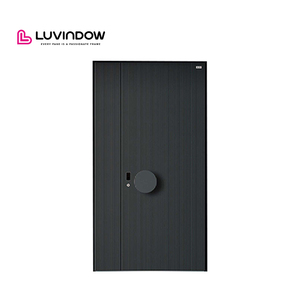
Traditional standard-sized 3-foot entrance doors are increasingly replaced by monumental pivot doors reaching widths of up to 2.4 meters and heights exceeding 4 meters. Engineering these large panels against high wind pressures requires continuous structural steel tube reinforcements concealed inside the 6063-T6 aluminum profiles, coupled with heavy-duty hydraulic floor pivots rated for 500+ kg loads.
2. Smart Biometric Integration
High-security residential gates and entrance doors are phasing out manual key cylinders. Specifiers now demand factory-routed integration of concealed motorized multi-point locksets (e.g., German Siegenia or Winkhaus systems) connected directly to biometric fingerprint readers, 3D face recognition modules, and BACnet/KNX home automation networks without compromising air or water tightness.
3. Decarbonized Low-Carbon Extrusions
With corporate ESG targets tightening across commercial real estate, developers are requiring Environmental Product Declarations (EPDs). Sourcing now prioritizes aluminum billets processed via renewable hydropower, reducing embedded carbon from 16 kg CO2e/kg Al down to under 4 kg CO2e/kg Al, complemented by 25% glass-fiber reinforced recycled polyamide thermal isolators.
Consolidated Containerized Sourcing (One-Stop Factory Direct)
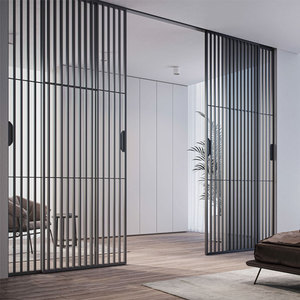
Rather than managing split purchase orders across separate suppliers for impact front doors, interior doors, and perimeter gates, international developers increasingly partner with large integrated manufacturers like DERCHI. Consolidating high-grade aluminum entryways, minimalist Crittall-style partitions, and acoustic doors into custom steel-reinforced export crates maximizes 40HQ container cube utilization, reduces handling damage, and eliminates ocean freight overhead by up to 34%.
4. Enterprise Manufacturing Strengths: The DERCHI Advantage
As documented in global export records, Guangdong Dejiyoupin Doors and Windows Co., Ltd. (DERCHI) represents the gold standard of Chinese precision manufacturing. Situated in Nanhai District, Foshan City—the recognized hub of global aluminum profile extrusion—DERCHI provides global real estate developers, contractors, and distributors with distinct technical advantages:
Massive 180,000㎡ Intelligent Production Base
Supported by a workforce of over 600 skilled technicians, engineers, and quality assurance inspectors, DERCHI manufactures high-performance building envelope systems at monumental scale. Our vertically integrated production workflow houses automatic profile cutting, high-precision 5-axis CNC routing, corner crimping, structural glass silicone curing lines, and complete pre-assembly testing rigs under a single roof.
Every entrance door system is fully assembled and tested for squareness, hinge deflection, locking pin alignment, and weatherseal continuity prior to export packing.


International Testing & Rigorous Compliance
DERCHI holds over 100 design and technical utility patents, as well as authoritative global certifications:
- AS2047 N6 Certification: Successfully tested to Australia’s most rigorous standard for wind resistance, air infiltration, and water penetration.
- CE Mark (EN 14351-1): Full conformity for European commercial and residential installation.
- ISO 9001:2015: Total quality management governing all raw materials, extrusion traceability, and mechanical testing.
- UL Fire-Rated Certifications: Available on specialized cast aluminum and steel composite fire-rated doors.
5. Technical & Procurement FAQ
Direct answers to technical questions raised by structural engineers, facade consultants, and general contractors during the specification of aluminum impact front doors:
What is the structural difference between standard PVB and SentryGlas® (SGP) interlayers?
While standard Polyvinyl Butyral (PVB) performs adequately for residential applications, SentryGlas® (ionoplast interlayer) is five times tougher and up to 100 times stiffer than standard PVB. In the event of glass breakage under missile impact, SentryGlas® maintains its structural standing rigidity rather than sagging or collapsing under subsequent cyclical wind loads. This allows engineers to specify thinner glass compositions or wider un-braced spans for monumental doors while achieving equivalent or superior Design Pressure (DP) ratings.
How does extruded aluminum performance compare to cast aluminum for main entrance gates?
Extruded aluminum (typically 6063-T6 or 6005-T5) is forced through precision dies, resulting in an aligned, dense grain structure ideal for slim-profile framing, thermal-break integration, and structural impact resistance. Cast aluminum, by contrast, involves pouring molten A356 alloy into specialized molds. While heavier and less flexible for slim thermal frames, solid cast aluminum panels provide unparalleled three-dimensional relief aesthetics, maximum ballistic and physical forced-entry defense, and absolute immunity to denting in high-traffic villa entrances. DERCHI combines both methods by integrating cast panels into high-tensile extruded frames.
What surface treatment should be specified for high-salinity coastal environments?
For coastal projects within 3 miles (5 km) of the ocean, standard polyester powder coating will blister and oxidize over time. Specifiers should mandate 70% Polyvinylidene Fluoride (PVDF / Kynar 500®) fluorocarbon wet coating meeting AAMA 2605 specifications, or Qualicoat Class 2 / Class 3 super-durable powder coating. These industrial coatings resist salt-spray corrosion for over 4,000 hours without chalking, color fading, or micro-cracking caused by harsh UV exposure.
Can large oversized pivot doors achieve authentic hurricane and water ratings?
Yes, provided the system is engineered specifically for positive and negative pressure dissipation. Standard residential pivot doors use simplistic perimeter brush seals that leak water under positive wind loads. DERCHI's impact pivot systems incorporate drop-down pneumatic mechanical sill seals, concealed multipoint claw latches extending into vertical jambs, and perimeter interlocking EPDM gaskets. When locked, the door panel is drawn tightly into the frame, withstanding heavy tropical rain and design pressures up to +/-70 PSF.
What technical data is required to produce free CAD shop drawings for custom bids?
To prepare comprehensive architectural shop drawings within 24 to 48 hours, our engineering department requires: (1) Clear rough opening dimensions (width x height x wall thickness); (2) Swing direction or pivot center offset location; (3) Glass specification requirements (e.g., low-E, reflective, tinted, or frosted laminated); (4) Local design pressure or basic wind speed requirements; and (5) Hardware preferences (smart biometric access, pull handle design, or panic exit devices).
How does DERCHI safeguard against transit damage during long-distance ocean freight?
Export shipments to ports like Santos, Callao, San Antonio, Miami, or Rotterdam undergo a strict 5-layer protective packing protocol: (1) Surface-applied protective film; (2) Closed-cell pearl cotton wrapping; (3) Heavy-gauge corner angle protectors; (4) Thick multi-layer corrugated encasement; and (5) Non-fumigation solid plywood export crates reinforced with internal steel banding. This guarantees zero frame scratching, deflection, or glass breakage throughout intermodal transit.