Interior/Exterior
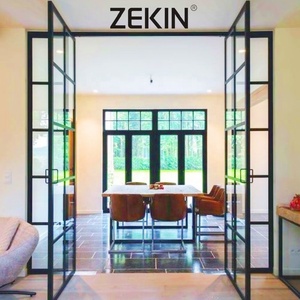
Zekin French Casement Swing Doors
Aluminum tempered glass casement system featuring custom woodgrain sublimation and architectural grid muntin bars.
Send an InquiryIn luxury high-rise construction, passive commercial estates, and bespoke coastal residential developments, fenestration engineering is confronting an architectural paradox: the aesthetic warmth of organic timber versus the structural durability, wind-load resistance, and low-maintenance requirements of metallic alloys. Solid timber casements, while traditionally prized for tactile prestige, suffer inevitable morphological degradation when subjected to tropical humidity, extreme ultraviolet indices, and marine atmospheric salinity. Conversely, utilitarian anodized aluminum frames frequently compromise the biophilic warmth demanded by contemporary interior architecture.
This operational dichotomy has propelled Aluminium Wood Finish (Woodgrain Sublimation and Hybrid Composite) Systems to the pinnacle of architectural specifications. By employing cutting-edge 3D vacuum heat-transfer sublimation, fluorocarbon PVDF grain coatings, and true multi-cavity thermal break extrusions, modern tier-one manufacturing hubs—led by the precision industrial ecosystem of Foshan, Guangdong—have developed hybrid fenestration assemblies that achieve exceptional structural rigidity, structural water tightness (exceeding 700 Pa), and sound reduction indices above 42 dB, all while faithfully emulating natural American Oak, Teak, and Burmese Rosewood textures.
Direct factory procurement specifications supporting custom residential estates, curtain walls, and commercial glazing projects worldwide.
Aluminum tempered glass casement system featuring custom woodgrain sublimation and architectural grid muntin bars.
Send an Inquiry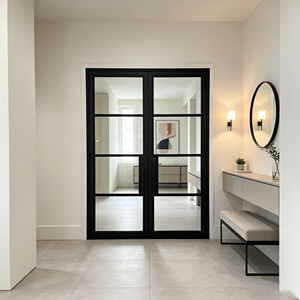
Dual-action stable door mechanism engineered for airtight perimeter sealing and maximum weathering against torrential rains.
Send an Inquiry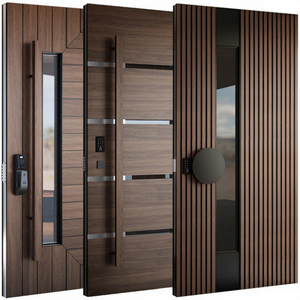
Reinforced steel-aluminum composite core wrapped in luxury wood finishes with concealed high-capacity hydraulic pivots.
Send an Inquiry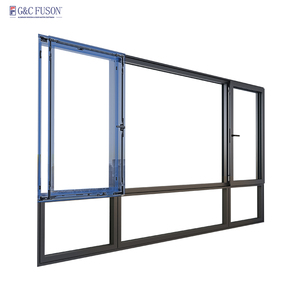
German-style hardware gearing delivering multi-axis ventilation, micrometric compression, and realistic timber grain tactile finishes.
Send an Inquiry
Integrated 304 stainless diamond security screen coupled with thermal break profiles and textured exterior timber sublimation.
Send an Inquiry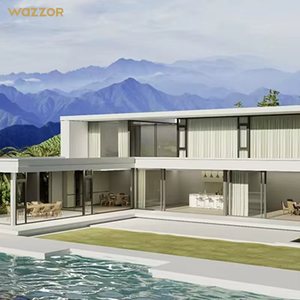
Multi-chambered insulating polyamide (PA66) thermal bridge assembly engineered to suppress urban high-frequency noise up to 45dB.
Send an Inquiry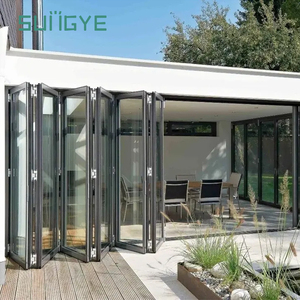
Heavy-duty bottom-rolling stainless steel carriages for multi-panel seamless balcony opening, complete with luxury wood grain cladding.
Send an Inquiry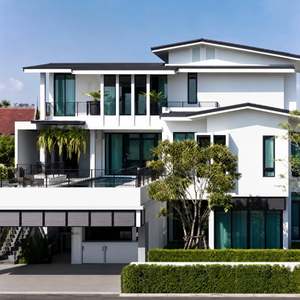
Turnkey residential envelope solutions offering matching wood finish interior surfaces, low-E argon double/triple IGUs, and unified warranties.
Send an InquiryStrategic industry trajectories dictating commercial tenders and luxury residential projects over the next five years.
Regulatory tightening across North American and European codes (including ASHRAE 90.1, Title 24, and EN ISO 10077-2) requires U-values below 0.8 W/(m²·K). Procurement is transitioning toward multi-barrier PA66 GF25 thermal breaks and argon-purged warm-edge triple glazing nested inside wood-clad aluminum assemblies.
First-generation flat printed faux woodgrain is rapidly becoming obsolete. Global developers now mandate textured vacuum sublimation with physical micro-grooves that mimic timber tactile grains. These finishes are backed by Qualicoat Class 2-approved polyester and fluorocarbon matrices resistant to Florida 5-year UV weathering.
Modern architectural trends require expansive uninterrupted sightlines. Demand for ultra-narrow interlocking stiles (down to 20mm) and high-load concealed pivot hinges capable of swinging single panels up to 800 kg has created a major shift toward automated multi-axis wood-aluminum fenestration arrays.
A rigorous empirical comparison between traditional solid wood, standard powder-coated aluminum, and advanced wood-finish aluminum systems.
| Performance Parameter | Solid Hardwood (Oak/Teak) | Standard Powder Aluminum | Wood-Finish Thermal-Break Aluminium |
|---|---|---|---|
| Structural Rigidity / Modulus | Variable (subject to grain orientation) | High (6063-T5 / T6 Aluminum) | Maximum (6063-T6 + Reinforcing Ribs) |
| Thermal Conductivity (U-Factor) | Good (~1.3 - 1.8 W/m²K) | Poor without break (>3.5 W/m²K) | Engineered Superior (<1.0 - 1.4 W/m²K) |
| Moisture / Rot Resistance | Vulnerable (Requires biennial sealing) | Impervious to moisture rot | 100% Rot-proof (Synthetic/Alloy Core) |
| Coastal Saline & UV Degradation | High cracking and warping risk | Moderate (Chalking risk over time) | Qualicoat Class 2 Sublimation (>15 Yrs UV) |
| Maintenance Cycle | Continuous (Sand, stain, seal) | Occasional soap wash | Minimal (Clean rinse only) |
Foshan's preeminent door and window enterprise combining heavy industrial capacity with bespoke architectural engineering.
From high-end wood-finish pivot doors and tilt-turn systems to garage doors and structural glass curtain walls, consolidate an entire building envelope into single-container consignments.
Independently verified testing compliant with CE, ISO9001, AS2047 (Australian N6 high-velocity hurricane pressure), and North American UL fire-rated standards.
Our dedicated engineering department prepares project-specific shop drawings, thermal simulation reports, and wind-load calculations tailored to local building codes prior to manufacturing.
Engineered multi-layer moisture-proof wrapping, corner polymer cushions, and fumigated steel-framed crates tailored for long-distance maritime freight to global deepwater ports.
Clear, engineering-driven answers to standard procurement, testing, and shipping inquiries.
The process uses high-temperature vacuum sublimation. An electrostatic base coat of TGIC-free polyurethane powder is applied to the extruded profile and cured at 200°C. A woodgrain transfer film is wrapped under vacuum, allowing specialized sublimation inks to penetrate directly into the powder-coated matrix. This creates a solid molecular bond that will not peel, chip, or delaminate under harsh tropical UV exposure.
Yes. Our structural systems are tested in accordance with AS2047 and ASTM standards. With heavy 6063-T6 billet extrusions featuring internal web reinforcements and German multipoint gearings, our assemblies handle cyclic design wind pressures up to 4500 Pa (equivalent to Category 5 hurricane conditions).
Every order is supplied with comprehensive mill test certificates (MTC), independent laboratory test reports for air permeability (ASTM E283), water penetration (ASTM E331), and structural load performance (ASTM E330), alongside certified thermal simulation reports and stamped engineering shop drawings.
Standard tooling and stock finishes require 25 to 30 days for production. Custom woodgrain matching, bespoke extrusion dies, and oversized curved or pivot projects typically complete within 35 to 45 days. Ocean transit varies by destination port (e.g., 20-30 days to South American ports like Santos or Callao; 18-25 days to North America).