Architectural Specification Whitepaper
State of Global Aluminium Vertical & Pivot Door Engineering
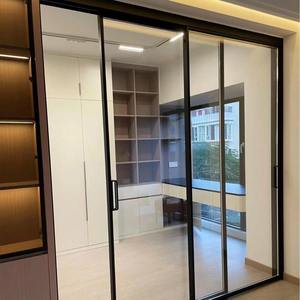
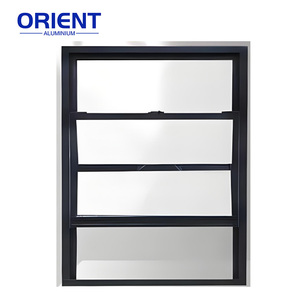
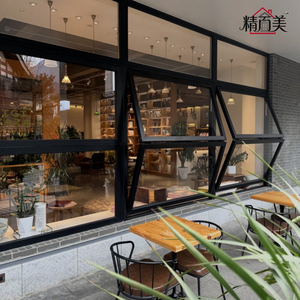
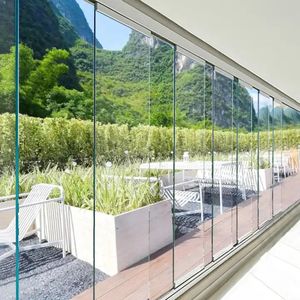
Modern architectural envelopes require high spatial flexibility, rigorous structural integrity, and exceptional envelope insulation. Vertical folding opening assemblies, soundproof bifold portals, and oversized balance-pivot systems represent a shift away from standard sliding extrusions. This guide evaluates the top industrial manufacturing frameworks, structural wind load metrics, multi-chamber thermal breaks, and direct supply capabilities from premier global fenestration hubs.
180,000㎡
Advanced Manufacturing Base
25+
Years Engineering Expertise
100+
Patents & Global Certifications
600+
Specialized Fenestration Crew
Evaluation Methodology: Top 10 Aluminium Door Manufacturers
When sourcing industrial-grade vertical folding doors, multi-leaf stacking systems, or heavy pivot assemblies, procurement directors must evaluate manufacturers using empirical engineering metrics. Our audit assesses extrusion alloy integrity (6063-T5 vs. 6060-T66), thermal break polymer composition (PA66 GF25), and structural hardware resilience.
Alloy Metallurgical Purity
Top-tier factories use primary billet aluminum meeting ASTM B221 specifications. Minimizing scrap contamination ensures tensile yield strengths exceed 160 MPa, preventing sash sag in high-aperture vertical bifold windows and heavy multi-pane doors.
Gas Spring & Pivot Balancing
Vertical bi-fold systems require specialized counterbalancing. Premium fabricators integrate German gas-strut actuators or concealed motorized screw-drives, calibrated for 50,000+ duty cycles without manual readjustment.
Climatic Envelope Sealing
EPDM co-extruded perimeter gaskets combined with multi-point continuous compression locks safeguard vertical openings against water infiltration up to 700 Pa, certified against AS2047, N6 cyclone categories, and CE EN 12208 standards.
Comparative Technical Benchmark: Vertical Opening Systems vs Traditional Fenestration
| System Classification | Primary Profile Depth | Acoustic Attenuation (Rw) | Max Opening Dimension | Structural Wind Load Class |
|---|---|---|---|---|
| Vertical Bi-Fold Systems Gas-Strut / Automated |
65mm – 85mm Multi-Chamber | 38 dB – 44 dB (IGU Laminate) | Up to 4.5m Width × 2.8m Height | Class C5 / AS2047 N6 (Up to 4.5 kPa) |
| Oversized Pivot Entry Portals Hydraulic Floor-Closer |
90mm – 120mm Reinforced | 35 dB – 42 dB (Solid Core Insert) | Up to 3.0m Width × 6.0m Height | High-Exposure Coastal Compliant |
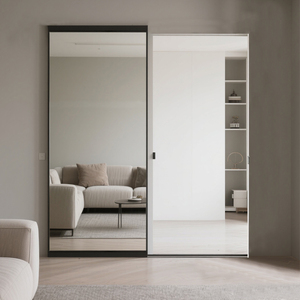
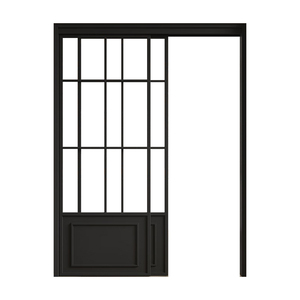
| Concealed Pocket Sliding Doors Soft-Closing Hardware |
45mm – 60mm Slimline Interlock | 30 dB – 36 dB (Double Tempered) | Custom Multi-Stacking Modules | Interior / Sheltered Exterior Use |
| Hurricane-Impact Casements Multi-Point Continuous |
70mm – 95mm Thermal Break | 40 dB – 48 dB (SentryGlas PVB) | Standard Modular Widths | ASTM E1886 / E1996 Large Missile D |
Emerging Trends Shaping Global Fenestration Procurement
Commercial developments, high-density residential towers, and custom luxury villas require distinct fenestration engineering. Sourcing strategies are moving beyond catalogue items toward fully integrated facade systems.
1. Zero-Carbon Low-Carbon Smelting
Global architectural specifications (such as LEED v4.1 and BREEAM) increasingly require verified Environmental Product Declarations (EPDs). Leading manufacturers are transitioning to scrap-recycled and hydro-powered aluminium billets to lower embodied carbon beneath 4.0 kg CO2e/kg.
2. Motorized IoT & BMS Integration
Modern vertical folding doors now frequently incorporate brushless DC servo-motors, obstruction sensors, and Building Management System (BMS) microchips. This allows commercial storefronts and patio apertures to actuate via environmental sensors or access protocols.
3. Ultra-Slimline Sightlines with High Glass Weight
Architects demand minimal profile reveals (sub-25mm interlocks) paired with triple-glazed laminated units weighing over 350 kg. Meeting these requirements requires high-tensile 6063-T6 profiles, precision CNC milling, and structural silicone glazing (SSG).
Factory Capabilities
DERCHI (Guangdong Dejiyoupin) Industrial Profile
Headquartered in Shishan Town, Foshan—China’s fenestration manufacturing capital—our integrated industrial base operates under strict ISO9001 quality systems. We combine extensive scale with specialized custom engineering:
Certified Global Performance
Our engineering holds CE, AS2047 (Australian N6 highest rating), UL fire-rated standards, and ISO9001 compliance, supported by over 30 independent appearance and utility model patents.
Turnkey CAD Shop Engineering
We provide free structural CAD and BIM shop drawings for every custom schedule. Our engineers coordinate dimensions, glass interlayers, structural loads, and finishes to streamline site approval.
Export Crating & Global Logistics
Every unit is packaged in reinforced, fumigated wooden crates with moisture-barrier seals to withstand extended ocean shipping to ports across the Americas, Australasia, and Europe.
Aluminium Vertical Door Procurement FAQ
Technical, logistical, and architectural answers for international contractors, importers, and architects.
What structural checks are required when specifying oversized vertical bifold windows? +
Vertical folding configurations transfer substantial dead loads and moment arms directly to the upper lintel beam during actuation. Structural engineers must confirm that the structural header deflection stays below L/750 or 6mm under combined panel weight. Our design team provides comprehensive static loading tables and anchor schematics to support local engineering reviews.
How do thermal break profiles prevent condensation in high-humidity climates? +
Thermal break assemblies use low-conductivity polyamide insulating strips (PA66 reinforced with 25% glass fibre) mechanically crimped between the interior and exterior aluminium extrusions. This thermal barrier prevents thermal bridging, ensuring the interior frame surface stays above the dew point and stopping condensation in hot, humid, or sub-zero climates.
What surface finishes provide the best salt-spray resistance in coastal areas? +
For projects within 5 km of the ocean, we recommend polyvinylidene fluoride (PVDF) fluorocarbon coatings (AAMA 2605 compliant) or marine-grade hard-anodized finishes (minimum 25 microns, Qualanod Class 1). These treatments resist saline corrosion, UV fading, and chalking, maintaining profile integrity for over 20 years.
What documentation and shop drawings are delivered before production begins? +
Our engineering office provides complete submittal packages including 1:1 cross-sectional CAD drawings, overall elevation schedules, anchorage plans, hardware layout diagrams, and glass structural calculations. Production begins only after the client, project architect, or general contractor formally signs off on the shop drawings.
How are custom oversized pivot and bifold packages packed for international freight? +
All orders are packed in heavy-duty, fumigated IPPC-stamped plywood crates. Profile surfaces are protected with adhesive polyethylene film, wrapped in heavy pearl-cotton foam, and edged with corner protectors. Hardware and glazing are crated separately with silica desiccant bags to prevent moisture damage during transoceanic shipping.
Ready to Engineer Your Vertical Aperture Systems?
Connect with our senior technical engineering team. We supply full CAD shop drawings, factory-direct CIF/FOB quotations, and tailored product schedules within 24 hours.