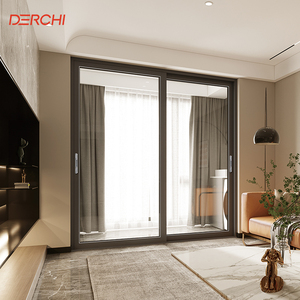
Engineered Architectural Window & Door Systems
Explore high-performance fenestration assemblies engineered for rigorous structural wind loading, low U-factors, and premium acoustic mitigation in luxury developments.
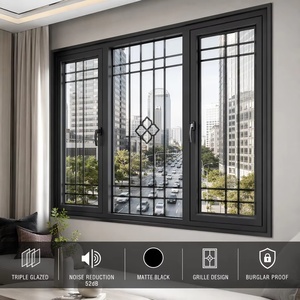
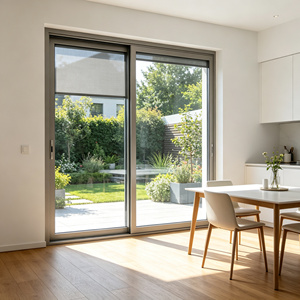
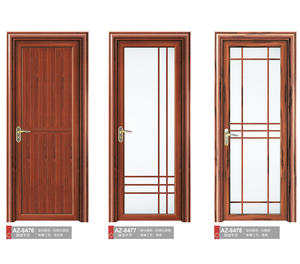
25+
Years Fabrication Experience
180k㎡
Industrial Manufacturing Base
100+
Patents & Global Certifications
600+
Engineers & Production Specialists
Enterprise Manufacturing Authority
Industrial Precision Behind Top-Tier Aluminium Side Windows
DERCHI (Guangdong Dejiyoupin Doors and Windows Co., Ltd.) is ranked among the Top 10 fenestration enterprises in China, operating out of an integrated 180,000㎡ smart production center in Foshan. Designed specifically to resolve overseas logistical and engineering challenges, our factory eliminates intermediate trade friction by delivering certified, project-specific custom door and window schedules under one unified quality system.
- Automated Precision Extrusion: Advanced CNC corner-crimping ensuring 0.1mm joint accuracy and structural air tightness.
- International Compliance: Rigorous compliance testing verifying CE, ISO9001, AS2047, and UL fire classifications.
- Full Project CAD Shop Drawings: In-house structural engineers provide free preliminary wind-load calculations and shop drawings.
- Export Standard Solid Crate Logistics: Anti-moisture foam layering and reinforced plywood crating preventing shipping deflection.

Engineering Evaluation: Top 10 Aluminium Side Windows Factory Matrix
A comprehensive technical analysis for commercial project directors, architects, and international supply chain leaders.
When specifying fenestration envelopes for luxury multi-residential developments, seaside resorts, and high-spec commercial villas, aluminium side windows (incorporating side-hung casements, side-sliding sashes, and vertical awning hybrids) function as pivotal elements for thermal performance, architectural aesthetics, and building envelope safety. Selecting the correct manufacturer among the top global suppliers requires balancing metallurgical integrity, thermal break cavity design, hardware endurance, and export logistics verification.
"Modern architectural envelopes do not fail at the profile midpoint; they fail at uncalibrated corner joints, defective EPDM weather gaskets, and hardware fatigue caused by substandard profile wall thicknesses."
1. Technical Criteria for Evaluating the Top 10 Manufacturers
Top-tier suppliers distinguish themselves not through superficial cosmetic coating, but through strict metallurgical, engineering, and testing parameters:
Metallurgy & Alloy Grade
Premier factories utilize 100% virgin aluminium billets conforming to standard 6063-T5 or 6060-T66. Wall thickness must consistently measure between 1.6mm and 2.0mm for residential side windows and up to 3.0mm for commercial curtain wall side casements, preventing wind-load frame warping.
Polyamide (PA66GF25) Barriers
Superior energy efficiency depends on polyamide nylon thermal strips reinforced with 25% glass fiber (PA66GF25). Cheap PVC strips degrade within 3 to 5 years under intense UV conditions, breaking the thermal envelope and causing severe glass seal condensation.
Corner Assembly & Glue-Injection
Heavy-duty side windows demand mechanical pin corner stakes complemented by high-pressure, two-component corner seal glue-injection (polyurethane matrix). This ensures airtight and watertight integrity under cyclonic rainstorms.
2. Technical Comparison Matrix: Standard vs. Architectural Specification
| Evaluation Metric | Standard Market Grade | DERCHI Architectural Grade (Top Tier) | Impact on Project Lifecycle |
|---|---|---|---|
| Aluminium Profile Alloy | Recycled / Low-spec 6063 | 100% Primary Billet 6063-T5 / T6 | Eliminates structural fatigue and corrosion |
| Corner Jointing Method | Screw corner connection | Reinforced Corner Crimp + Glue Injection | Guarantees 100% watertight joints |
| Thermal Strip System | Standard PVC (12-14mm) | Multi-cavity PA66GF25 (24-34mm) | Cuts HVAC load by up to 38% |
| Glazing Configuration | Single or generic double 5+9A+5 | Triple Glazed / Warm Edge / Low-E / Argon | Acoustic drop up to 42dB, U-factor < 1.4 W/m²K |
| Hardware Cycle Test | 10,000 open-close cycles | 50,000+ European Multi-Point Locking | Eliminates post-handover maintenance callbacks |
3. Global Procurement Trends in Aluminium Side Windows
Procurement departments, architects, and general contractors are adapting to noticeable strategic shifts when sourcing fenestration systems:
A. Transition to Direct Source Single-Factory Consolidations
Developers are avoiding fragmented procurement across multiple workshops. Sourcing the full architectural schedule—entry pivot doors, side casement windows, acoustic interior doors, and sliding exterior envelopes—from a single scalable manufacturer like DERCHI guarantees uniform finish color consistency, identical anodization batches, streamlined customs clearing, and lowered overseas freight tariffs.
B. Demand for Climate-Responsive Metallurgy
Global climate diversity requires custom envelope finishes. Coastal zones (e.g., Caribbean, Coastal South America, Australasia) specify AAMA 2605 fluorocarbon (PVDF) or 25-micron anodized coatings to counteract hyper-saline salt air. Conversely, desert and high-altitude locations emphasize thermal barriers and UV-reflective Low-E coatings to withstand aggressive thermal shock.
C. Integration of Smart Actuation & Automated Building Systems
High-end hospitality and modern villas increasingly specify integrated motorized window actuators. Side-hung and vertical moving side windows are now wired to building management systems (BMS) with wind, rain, and air-quality sensors for automated climate moderation.
4. Structural Evolution & Future Development Trends
Looking into the next decade, the architectural window sector is undergoing major technological evolution:
Ultra-Narrow Sightlines
Concealed sashes and hidden hinges reduce visible frames from 75mm down to 35mm, maximizing uninterrupted glass panoramas without sacrificing structural inertia.
Vacuum Insulated Glazing (VIG)
The upcoming horizon integrates VIG units, delivering R-10+ thermal values inside a slender 8.3mm profile glass thickness, setting new benchmarks for net-zero carbon construction.
Circular Recycled Green Alloys
Low-carbon hydro-powered aluminium processing minimizes upfront embodied carbon footprint, meeting demanding LEED Platinum and BREEAM certifications.
Frequently Asked Questions: Global Window Procurement
Expert answers addressing the technical, financial, and logistical concerns of commercial importers and construction contractors.
How does an overseas factory ensure structural compliance with local building codes?
Reputable manufacturers such as DERCHI test their systems under recognized global standard frameworks, including AS2047 (Australia), CE EN14351-1 (Europe), and ASTM / AAMA standards (North America). Our dedicated structural engineering department calculates profile moment of inertia (Ix, Iy) against your project's specific elevation, building height, and localized basic wind speed pressures to deliver verifiable shop drawings and calculation sheets.
What is the difference between thermal break aluminium and non-thermal aluminium side windows?
Standard aluminium is a conductive metal with high thermal conductivity (approx. 160-200 W/m·K). Without a thermal break, temperature passes directly between the exterior and interior, creating severe condensation, mold, and energy loss. A thermal break profile splits the internal and external aluminium frames with structural polyamide insulating strips (PA66GF25), drastically lowering thermal conductivity and helping the building satisfy modern low-energy building envelope codes.
How are fragile oversized glazed windows protected against damage during ocean container shipping?
Export packing is handled via a 4-tier preservation protocol: First, profiles receive anti-scratch protective adhesive film; second, structural edges are fitted with rigid foam bumpers; third, the entire unit is encased within heat-shrink waterproof plastic sheeting; finally, assemblies are loaded into non-fumigation ISPM 15 certified reinforced plywood crates designed for overhead crane and forklift transit.
Can custom sizes, opening methods, and bespoke finishes be consolidated into a single order?
Yes. Every order handled by DERCHI is custom-engineered from the project schedule. Our 180,000㎡ facility enables concurrent manufacturing of casement windows, vertical sliding guillotine units, entrance pivot doors, and acoustic interior doors, all finished to match exact RAL colors or fluorocarbon metallic coatings, consolidated within dedicated FCL containers.
What documentation is required to receive an accurate, rapid engineering quotation?
To generate shop drawings and an itemized quotation, submit your window & door schedule, preliminary CAD floor plans, elevation sheets, target performance metrics (acoustic dB reduction, U-factor limits, or wind loads), and designated destination port. Our bilingual engineering sales department processes complete bids within 24 to 48 hours.
Direct Factory Partnership
Elevate Your Next Project Envelope with Certified Precision
Connect directly with our engineering division to review your project schedule, obtain CAD shop drawings, and verify custom manufacturing pricing for your architectural development.