High-Performance Aluminium House Window & Glazing Assemblies
Engineered for exacting architectural standards across coastal hurricane belts, extreme thermal differentials, and contemporary urban developments. Each profile configuration undergoes non-negotiable stress simulations, air infiltration resistance audits, and acoustic barrier calibration.
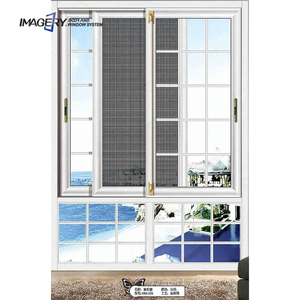
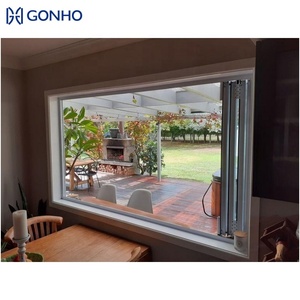
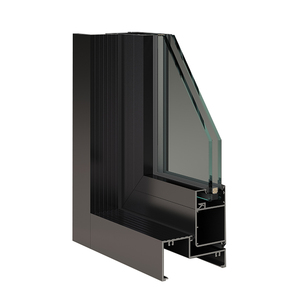
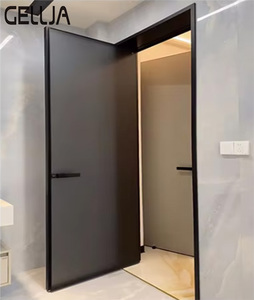
Global Market Benchmark: Top 10 Aluminium House Windows Manufacturers & Exporters
The worldwide transition toward high-envelope insulation, sustainable embodied metallurgy, and stringent building energy codes has positioned aluminium fenestration systems at the epicenter of modern residential and commercial architecture. According to verified industry data, the international architectural aluminium window and door market is expanding at an annualized CAGR exceeding 5.8%, driven by rapid urban densification and aggressive mandates for net-zero carbon building performance.
For institutional developers, general contractors, commercial facade specifiers, and high-volume regional importers, identifying an overseas fenestration partner requires balancing metallurgical profile formulation (such as primary versus secondary aluminium billets), thermal barrier polymers (Technoform PA66 GF25), precision CNC automated processing, and verified certification against rigorous standards including AS 2047 (Australia), Miami-Dade NOA (North American Hurricane Zone), CE EN 14351-1 (Europe), and ISO 9001. Below is a comprehensive engineering and procurement comparison of the top ten tier-one manufacturers dominating global export logistics.
| Manufacturer / Brand | HQ Origin | Primary Export Markets | Core Engineering Strengths | Compliance & Certifications | Typical Commercial Lead Time |
|---|---|---|---|---|---|
| DERCHI (Dejiyoupin Windows) | Foshan, China | North America, Australia, South America, Middle East | Customized high-volume extrusions, integrated timber-clad & impact solutions, 180,000㎡ plant direct economics | AS2047 N6, Miami NOA, CE, ISO9001 | 20 – 30 Days (Production) |
| Schüco International | Bielefeld, Germany | Europe, North America, Global Tier-1 | Proprietary thermal profile geometry, ultra-high-end facade engineering, parametric automation | DIN EN, CE, Passive House PhA, ISO14001 | 8 – 14 Weeks (Fabrication Cycle) |
| Reynaers Aluminium | Duffel, Belgium | Western Europe, UK, Americas, Asia | Slender sightlines (Hi-Finity), circular cradle-to-cradle aluminum extrusions, acoustic dampening | Qualicoat, Minergie, CE, CWCT Tested | 8 – 12 Weeks |
| YKK AP Inc. | Tokyo, Japan | Japan, North America, Southeast Asia | Commercial curtain wall integration, seismic dampening joint mechanics, standardized window suites | JIS, AAMA, NFRC, ISO9001 | 6 – 10 Weeks |
| Alumil Aluminium Industry | Kilkis, Greece | Southern Europe, Middle East, Africa, USA | Supreme architectural sliding minimalism, marine anodizing, thermal break polyamides | IFT Rosenheim, CE, AAMA, Qualanod | 7 – 11 Weeks |
| Kawneer (Arconic) | Norcross, USA | North America, Caribbean, UK | Heavy blast-resistant and hurricane curtain wall frameworks, institutional facade engineering | ASTM, Miami NOA, AAMA 101, CSA | 10 – 16 Weeks |
| Wicona (Hydro Group) | Ulm, Germany | Scandinavia, Central Europe, International | Circal 75R recycled end-of-life aluminium metallurgy, extreme low carbon footprint alloys | Passive House, CE, DIN, ISO50001 | 9 – 13 Weeks |
| JELD-WEN Windows & Doors | Charlotte, USA | North America, Australasia, Europe | Diversified residential tract builder fenestration, turnkey tract subdivision scale | Energy Star, WDMA, NFRC, AAMA | 6 – 10 Weeks |
| LIXIL Corporation | Tokyo, Japan | Asia-Pacific, Latin America, North America | Mass fabrication housing window modules, integrated barrier screen systems, ergonomic hardware | JIS, ISO9001, AS2047 Partnered | 5 – 8 Weeks |
| Ply Gem (Cornerstone) | Cary, USA | North America, Caribbean | High-throughput residential aluminium and hybrid replacement units, multi-family standard lines | NFRC, AAMA, Energy Star Verified | 6 – 9 Weeks |
Information Gain Analysis: While historical Western heritage brands such as Schüco and Reynaers represent supreme architectural prestige, modern procurement dynamics dictate heavy logistical premiums, rigid configuration MOQ friction, and prolonged production lead horizons. Conversely, advanced Tier-1 Chinese mega-scale manufacturers like DERCHI (Guangdong Dejiyoupin) leverage vertical integration—from computerized billet extrusion and dual-component CNC argon gas glass tempering to automated German hardware assembly—enabling direct factory pricing, zero-cost structural CAD shop drawings, and tailored compliance packages (e.g., AS2047 water penetration at 450Pa to 600Pa, Miami NOA cyclic wind blast at +80/-80 PSF) delivered at fractions of European overhead costs.
Future B2B Procurement Trends in Aluminium Windows
Global supply chain volatility, carbon border tariffs, and elevated environmental building regulations are drastically shifting the sourcing strategies of architects, general contractors, and trade importers worldwide.
CBAM & Low-Carbon Metallurgical Billeting
International environmental frameworks like the EU Carbon Border Adjustment Mechanism (CBAM) are compelling fenestration importers to document the carbon footprint of structural alloy billets. Primary electrolytic smelted aluminium powered by hydro-energy or integrated with post-consumer scrap loops is rapidly displacing coal-smelted profiles.
- Transition to certified low-carbon 6063-T6 virgin billets
- Comprehensive third-party EPD (Environmental Product Declaration) reports
- Exclusion of secondary scrap contaminants to preserve structural elongation
Direct-from-Source Factory Container Consolidation
Instead of relying on multi-tier domestic regional jobbers who impose 40% to 70% distribution markups, developers are increasingly consolidating their entire residential envelope—primary entrance pivot doors, soundproof bedroom casements, sliding patio assemblies, and garage doors—within direct FCL (Full Container Load) shipments from single mega-manufacturers.
- Single-point accountability eliminates job-site component misfits
- Custom project labeling mapped directly to architectural floor plans
- Significant reduction in ocean freight tariffs via maximized crate cubic utilization
Pre-Engineering Shop Drawings & BIM Precision
The margin for dimensional variance on large-scale modular builds has compressed to fractions of a millimeter. Specifiers demand fully coordinated BIM (Revit) objects and verified CAD shop drawings reflecting structural jamb shimming, water flashing sills, and thermal bridging offsets before aluminium extrusions enter the CNC cutting table.
- Complimentary engineering sign-offs prior to raw material allotment
- Structural wind load deflection checks based on ASTM E1300 engineering
- Integration of flashing subsills tailored to regional masonry or timber construction
Next-Generation Technology Trends in Aluminium House Windows
Fenestration engineering is transcending simple metal extrusion. Modern residential systems synthesize advanced polymer chemistry, acoustic nanotechnology, and invisible mechatronic hardware.
Hyper-Insulated Thermal Barrier Architectures
Standard crimped aluminum yields severe thermal conductance (Uw > 5.0 W/m²·K). The vanguard of modern export window architecture incorporates multi-chambered, fiberglass-reinforced Polyamide (PA66 GF25) thermal breaks measuring up to 34mm or 54mm in depth. Paired with dual aerogel or polyurethane profile core filling, these systems achieve ultra-low Uw < 0.85 W/m²·K, meeting rigorous Passive House and Net-Zero thermal envelope thresholds.
- Technoform Germany imported polyamides resisting 260°C powder-coat baking
- Complete elimination of condensation sweating in harsh sub-zero continental winters
- Continuous co-extruded EPDM center seals forming triple weather-tight gaskets
Ultra-Minimalist Concealed Sightlines & Coplanar Aesthetics
Architects are driving demand for maximal daylight autonomy. Modern casement and tilt-and-turn units conceal the sash frame behind the exterior outer jamb, presenting an uninterrupted structural glass facade. Heavy-duty German engineered concealed friction stays and hinges support sash weights upward of 300 kg without disrupting planar aesthetics or perimeter thermal barriers.
- Flush interior and exterior coplanar alignments for museum-grade finishes
- Zero-profile embedded threshold drain tracks for seamless patio transitions
- Hidden drainage weeps utilizing magnetic non-return valves against wind back-pressure
Monolithic Laminated Impact & Acoustic Engineering
Climate instability and dense urban noise pollution require robust structural glazing. Modern window export lines are increasingly configured with SentryGlas (Kuraray SGP) structural interlayers. SGP provides five times the tear strength and one hundred times the rigidity of conventional PVB, ensuring that shattered glass remains erect under cyclic Category 5 hurricane wind loads while achieving Sound Transmission Class (STC) ratings up to 45 dB.
- Tested resistance against 9-lb 2x4 lumber projectile impacts at 50 ft/s (Miami NOA)
- Acoustic interlayers attenuating low-frequency urban traffic rumble and aircraft noise
- Warm-edge stainless/composite spacer bars loaded with molecular sieve desiccant
DERCHI: Guangdong Dejiyoupin Doors and Windows Co., Ltd.
Headquartered in Foshan, Guangdong—the epicentral capital of global aluminium innovation—DERCHI has engineered, certified, and exported world-class fenestration systems for more than 25 continuous years. Recognized across China among the Top 10 High-End Architectural Door & Window Brands, our industrial ecosystem represents the apex of structural precision and cross-border project delivery.
Operating an expansive 180,000 square meter production facility staffed by over 600 master craftsmen, structural facade engineers, and dedicated quality assurance auditors, DERCHI bridges the gap between customized European architectural design and high-capacity manufacturing agility.
Standardized Quality & Precision Indexes
*All production units undergo 100% factory pre-assembly, diagonal tolerance calibration within ±1.0mm, and dry-seal chamber leak testing prior to disassembly and marine crate packaging.
Frequently Asked Questions: Global Window Sourcing & Compliance
Direct technical and operational answers to the most critical inquiries raised by professional fenestration distributors, project developers, and architectural procurement managers.
Accelerate Your Project with Certified Engineering Feasibility
Submit your project window schedule, CAD floor plans, or tender specifications. Our technical export engineers provide detailed take-offs, full thermal/acoustic analysis, and guaranteed FOB/CIF container quotes within 24 business hours.