Heavy-Duty Aluminium Systems for High-Impact Facades
Direct from our 180,000㎡ precision manufacturing facility in Foshan: each engineered assembly below integrates high-tensile 6063-T6 aluminum alloy profiles, multi-cavity thermal break polyamide barriers, and heavy-duty load-bearing pivot/hinge architecture tested up to 500,000 cycles.
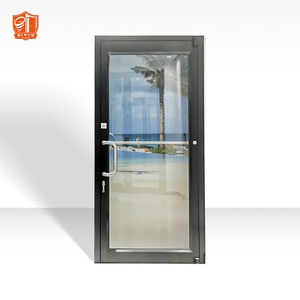
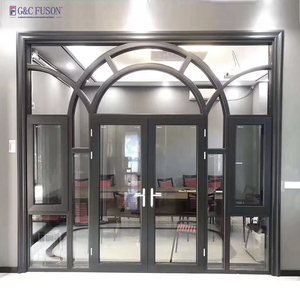
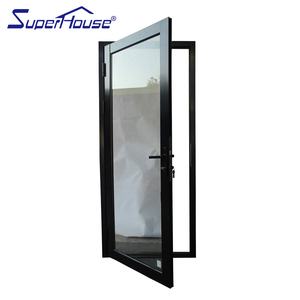
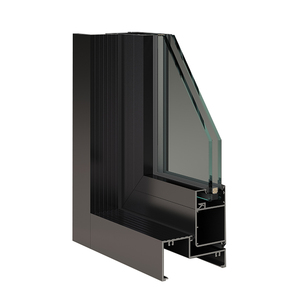
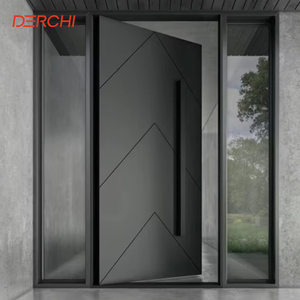
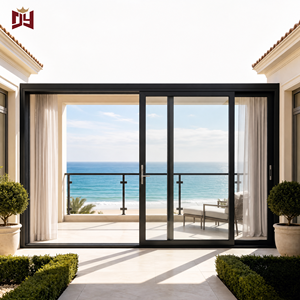
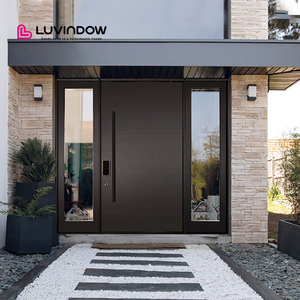
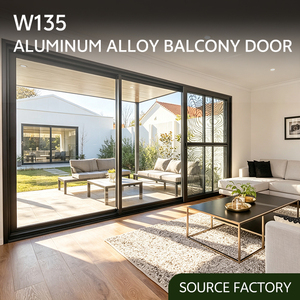
The Engineering Anatomy of Heavy-Duty Aluminium Door Systems
When civil engineers, façade consultants, and general contractors evaluate aluminium heavy door systems, the criteria diverge sharply from ordinary residential joinery. A heavy-duty entrance or monumental pivot assembly is subjected to continuous dynamic loads, differential thermal expansion across interior and exterior leaves, high atmospheric wind pressure, and millions of pedestrian transit cycles throughout its operational lifecycle.
True architectural heavy-duty performance begins with profile chemistry and wall thickness. Standard residential extrusions typically exhibit wall thicknesses between 1.2mm and 1.6mm using 6063-T5 temper alloy. By contrast, industrial-grade heavy commercial storefronts and monumental residential pivot doors engineered by DERCHI leverage high-tensile 6063-T6 or 6061-T6 structural alloy with nominal wall thicknesses spanning 2.5mm to 3.5mm. This structural perimeter eliminates sash deflection under extreme wind loads (up to ±5,000 Pa, satisfying Florida Building Code TAS 201/202/203 and Miami-Dade NOA criteria).
"Specifying aluminium heavy doors without verifying thermal break depth, sheer-pin corner joinery, and hinge load moment calculation is the primary cause of entrance failure in high-traffic commercial envelopes and extreme climate zones." — Architectural Facade Engineering Review
Thermal Barrier Mechanics & Multi-Cavity Extrusion
Aluminium has an inherently high thermal conductivity (approximately 160 W/m·K). Without advanced thermodynamic interruption, heavy entrance doors become monumental thermal bridges, creating massive condensation risks, interior temperature volatility, and HVAC energy loss. High-performance suppliers counteract this through multi-cavity thermal break systems utilizing PA66-GF25 (polyamide reinforced with 25% chopped glass fiber).
Key thermodynamic engineering features include:
- Thermal Break Insertion Depths: Ranging from 24mm to 34mm, creating an effective thermal barrier that depresses total system heat transmittance down to U-factors ≤ 1.35 W/(m²·K).
- Co-Extruded EPDM Gaskets: Triple-continuous perimeter sealing using vulcanized cellular EPDM (ethylene propylene diene monomer) guarantees airtightness satisfying Class 4 (EN 12207) and water tightness under driving dynamic rain up to 600 Pa (EN 12208).
- Isobaric Equalization Chambers: Internal pressure-equalization drain paths ensure that any capillary intrusion during severe storm surges is diverted outward before moisture can degrade interior hardware components.
Kinematic Hardware & Concentrated Point-Load Engineering
A heavy-duty pivot door leaf measuring 2,400mm in width and 4,000mm in height can easily exceed 450kg when fitted with laminated hurricane impact glass (such as 10mm Toughened + 1.52mm SentryGlas + 10mm Toughened). Operating such mass requires precision kinematic engineering:
- Bottom-Bearing Pivot Spindles: Utilizing oil-submerged needle thrust bearings with compressive load capacities exceeding 800kg, transferring mass directly into the structural floor slab rather than stressing the vertical jambs.
- Adjustable Multi-Axis Concealed Hinges: Fabricated from stainless steel SUS304/SUS316 with Teflon-bushed pivot pins, offering three-dimensional alignment micro-adjustability (±3mm horizontal, ±2mm vertical, ±1.5mm compression) to counteract foundational settlement over decades of use.
- Multipoint Mechanical & Motorized Shoot-Bolt Locking: High-security deadbolts engaged at three to five perimeter points prevent sash bowing induced by positive and negative wind pressures or forced physical breach.
Top 10 Global Aluminium Heavy Door Factories & Suppliers
A comprehensive assessment of tier-one manufacturers globally, evaluated on technical extrusion capabilities, certification rigor, custom fabrication agility, and export supply-chain resilience.
DERCHI / Dejiyoupin
Operating from a massive 180,000㎡ intelligent facility with over 25 years of specialized export fabrication. Outstanding custom engineering for monumental pivot doors, Miami NOA impact assemblies, and AS2047 Australian standards. Full in-house CAD/BIM shop drawing support with direct factory pricing.
Schüco International KG
Renowned benchmark for precision German architectural systems. Unrivaled R&D in automated mechatronic locking, Passivhaus-certified thermal insulation, and seamless building automation integration. High capital cost positioning tailored for prestige European and North American commercial towers.
Reynaers Aluminium
European systems powerhouse specializing in sustainable architectural extrusions. Exceptional heavy lift-and-slide doors capable of handling glass loads up to 400kg with slim sightlines. Strong emphasis on Cradle to Cradle circular product lifecycles and recycled alloys.
Kawneer (Arconic Architecture)
A legacy North American commercial glazier giant. Renowned for heavy commercial storefront swing doors, blast-mitigating fenestration, and hurricane-zone certified monumental swing entrances extensively specified in institutional, educational, and high-traffic public infrastructure.
Wicona (Hydro Building Systems)
Engineering leader leveraging Hydro CIRCAL low-carbon aluminium (containing at least 75% post-consumer scrap). Renowned for the WICSTYLE heavy-duty commercial entrance portfolio, delivering exceptional fire-resistant and bullet-resistant aluminium door assemblies.
YKK AP Architectural Products
World-class Japanese precision manufacturing. Celebrated for high-durability anodizing technologies, seismically isolated heavy door frames, and extreme cycle life door closers built specifically to resist severe typhoon winds and tectonic shifting in Pacific Rim territories.
Alumil S.A.
One of the largest extrusion giants in Southeastern Europe. Their SUPREME SD115 pivot systems cater to monumental villa entries with minimal sightlines, carbon fiber cladding integrations, and exceptional anti-distortion bi-metal thermal insulation strips.
Technal Architectural Aluminium
Celebrated for sleek French architectural aesthetics paired with robust commercial engineering. The SOLEAL high-traffic heavy-duty door series offers concealed closers, magnetic hold-open integration, and finger-guard safety profiles for schools and public facilities.
Fleetwood Windows & Doors
Premier American manufacturer of bespoke luxury residential doors. Famous for massive sliding glass panels, thermal-strut engineering, crisp linear profiles, and marine-grade anodized treatments tailored for North American oceanfront estates.
DERCHI Global Enterprise Manufacturing & Project Supply Engine
For international real estate developers, contractors, and fenestration importers seeking the ideal equilibrium of European engineering rigor and highly competitive factory-direct supply, DERCHI represents the premier Chinese manufacturing power. With a verified 180,000㎡ production base, 600+ skilled personnel, fully automated German Elumatec CNC milling lines, and multi-market certifications (Miami NOA, AS2047, CE, UL fire ratings), DERCHI provides end-to-end bespoke fabrication, custom shop engineering drawings, and dedicated ocean export packaging for projects across South America, North America, Oceania, and the Middle East.
Future Sourcing & Procurement Trends (2025–2030)
B2B commercial fenestration purchasing is undergoing structural shifts. Procurement directors must anticipate regulatory, environmental, and technological paradigms when committing to multi-unit facade tenders.
Embodied Carbon & Green Aluminium Mandates
International environmental regulations (including EU CBAM and US Clean Buy standards) are forcing contractors to prioritize low-carbon aluminium. Sourcing shifts heavily toward suppliers utilizing renewable hydroelectric smelting (emitting < 4.0 kg CO2e per kg Al) and certified recycled billet (post-consumer content exceeding 60%), accompanied by third-party verified Environmental Product Declarations (EPD).
Digital Building Integration & Biometric Security
Heavy commercial entrances are evolving into active, smart IoT nodes. Forward-looking procurement programs specify concealed motorized multi-point latches interfaced directly with centralized Building Management Systems (BMS), facial recognition access control, anti-pinch radar detection, and automated magnetic holding systems that respond synchronously to localized fire-alarm triggers.
Extreme Climatological Resilience & NOA Protocols
With accelerated climate disruption and intensified cyclonic weather patterns across coastal zones (Florida, Caribbean, South America, Australian coastlines), general contractors are actively replacing standard heavy doors with assemblies rated for High Velocity Hurricane Zones (HVHZ). Miami-Dade NOA, missile impact testing, and dynamic structural wind thresholds (>5500 Pa) have transitioned from niche options to mandatory tender requirements.
Technological Milestones Reshaping Aluminium Heavy Door Fabrication
The manufacturing technology behind heavy architectural doors has advanced substantially beyond basic mitred extrusions and manually crimped cleats. Modern automated production involves multi-disciplinary metallurgical, polymer, and mechanical innovations:
1. Advanced Anti-Bimetal Thermal Strip Technology
One of the persistent failure points of dark-finished exterior aluminium doors exposed to direct solar radiation is the bimetallic deflection phenomenon. When an exterior leaf heats up to 75°C while the interior face remains air-conditioned at 22°C, differential expansion forces standard door stiles to bow, leading to latch jamming and seal failure. Modern tier-one factories utilize patent-designed split polyamide insulation strips with dynamic longitudinal slip allowances. These composite assemblies absorb expansion differentials while preserving full structural shear resistance.
2. Robotic 5-Axis Milling & Corner Injected Adhesive Cleats
Structural rigidity during repeated wind gusts requires impenetrable corner stability. Leading fabricators have transitioned entirely to CNC-machined heavy-cast aluminium internal corner corner-keys secured with high-grade two-component polyurethane joint sealant (such as OTTOCOLL or Cosmofen). Automated glue injection channels ensure the adhesive fully encapsulates the joint chamber, yielding 100% watertight joinery and absolute resistance to dynamic torsional rack loads.
3. Surface Nanotechnology: Qualicoat Seaside & PVDF Coatings
In aggressive maritime environments (such as coastal Brazil, Peru, Chile, or Florida), standard commercial powder coating degrades within 36 to 48 months due to filiform and pitting corrosion. Advanced manufacturing incorporates multi-stage chrome-free pre-treatment baths followed by fluoropolymer PVDF (polyvinylidene fluoride) triple-bake coatings or Qualicoat Class 2 / Seaside-certified super-durable thermoset powders. These finishes withstand over 3,000 hours of continuous acetic acid salt spray (AASS) testing without blistering or color delta shifting.
DERCHI (Dejiyoupin): Industrial Scalability & Global Trust
Headquartered in Foshan, China's premier architectural metalworking hub, DERCHI operates one of Asia's most sophisticated door and window manufacturing complexes, engineered specifically to serve global architects, developers, and commercial contractors.
180,000㎡ Modern Production Base
Equipped with computerized German CNC machining centers, automated profile cutting saws, and electrostatic coating lines capable of delivering high-volume multi-unit towers without lead-time compromises.
Free Architectural Shop CAD/BIM
Our dedicated engineering team translates your preliminary schedules and elevations into precise, buildable CAD fabrication drawings, load calculations, and section details free of charge before production begins.
Global Time-Zone Project Support
Multilingual technical project managers provide agile communication aligned with your working day across North America, South America, Europe, Australia, and the Middle East, resolving revisions immediately.
Export-Ready Sea Freight Crating
Every heavy door panel is individually protected with custom cellular foam, edge guards, vacuum moisture desiccants, and solid fumigated plywood crating designed to withstand rough ocean freight handling.
Frequently Asked Questions on Aluminium Heavy Door Sourcing
Direct technical answers addressing the critical legal, mechanical, shipping, and architectural questions commercial buyers evaluate prior to issuing a purchase contract.
Ready to Engineer Your Project's Heavy-Duty Entrances?
Whether you require full architectural shop drawings, structural wind-load calculations, or a factory-direct quote for multi-unit commercial or luxury villa fenestration, our senior export engineering team is on standby to assist you.