Precision Fenestration Engineering Systems
Precision-milled aluminum profiles, high-durability white fluorocarbon/powder finishes, and multi-chamber thermal breaks engineered to international standards.
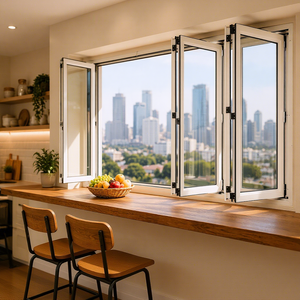
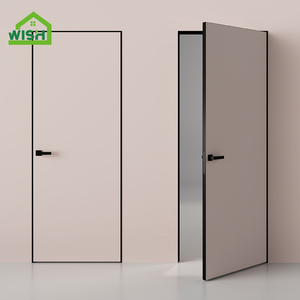
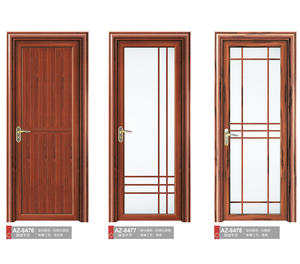
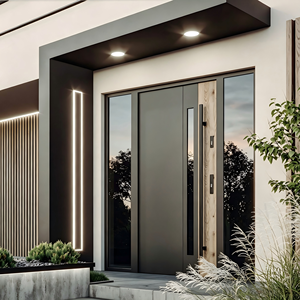
Verified Manufacturing Strengths & Engineering Edge
Why Tier-1 architectural developers, window importers, and construction contractors partner directly with our Foshan fabrication facilities.
Structural Integrity & Strict Code Compliance
Our OEM/ODM white aluminum window assemblies hold international quality accreditations including CE, ISO9001, AS2047, and UL fire-rated standards. Extruded from virgin 6063-T5 or 6063-T6 architectural-grade aluminum alloys, profiles are tested to meet ASTM E283, E330, and E331 parameters for structural performance, forced entry prevention, and extreme wind load deflection.
Advanced Pure-White Surface Passivation
White finishes present severe color-degradation challenges under UV exposure. We integrate multi-stage chemical pretreatment bath systems combined with Qualicoat Class 2 electrostatic polyester powder coatings and premium AAMA 2605-compliant PVDF fluorocarbon finishes, guaranteeing up to 25-year gloss retention, zero chalking, and zero yellowing under intense solar irradiation.
BIM / CAD Custom Specification Engineering
Our dedicated design department comprises over 40 technical draftsmen and structural engineers. Before any die-casting or CNC profile processing begins, we supply free, fully dimensioned shop CAD drawings and BIM models, incorporating your exact wall reveal conditions, anchoring brackets, glass thicknesses, weep hole routings, and structural shim tolerances.
Full-Container Consolidation & Export Crating
Minimizing ocean freight risks, our complete fenestration assemblies are secured with PE protective film, sealed corner guards, moisture-barrier wrapping, and heavy-duty fumigated ISPM-15 plywood crates. We support consolidated ocean shipping (FOB, CIF, DDP) directly from Foshan or Shenzhen ports to major marine terminals globally.
Architectural White Aluminum Systems: Engineering & Procurement Analysis
Structural Thermal Isolation: Polyamide Technoform Barriers (PA66 GF25)
Contemporary building envelopes demand rigorous U-factor minimization. Standard un-insulated aluminum windows exhibit severe thermal bridging due to high alloy conductivity (approx. 160-200 W/m·K). In our premium white aluminum window manufacturing facilities, structural breaks are produced via precision-crimped PA66 GF25 polyamide insulation strips (polyamide 6.6 reinforced with 25% chopped fiberglass strands). This lowers the whole-assembly thermal transmittance to U-values below 1.4 W/m²K, eliminating condensation problems even when indoor relative humidity is high during severe winter climates.
Thermal stress simulation is conducted on all custom-extruded white profiles. Because white external finishes reflect up to 75% of solar radiation compared to dark bronze or charcoal finishes, outer frame thermal expansion is drastically lower. This improves gasket retention and mechanical seal longevity across multi-point locking perimeter hardware.
Surface Coating Chemistry: Combating Chalking and Discoloration
The foremost technical issue confronting procurement managers specifying white aluminum systems is organic degradation caused by short-wavelength ultraviolet radiation (UV-A and UV-B). Substandard polyester formulations degrade at the polymer binder level, yielding loose free-radical titanium dioxide pigments known as "chalking."
To eliminate this failure mode, our finishing lines operate automated horizontal and vertical coating plants using Qualicoat Class 2 super-durable architectural powder coatings and two-coat or three-coat PVDF fluoropolymer systems containing a minimum of 70% Kynar 500 or Hylar 5000 resin. The exceptional bond energy of the Carbon-Fluorine (C-F) chemical bond (approximately 485 kJ/mol) resists chemical oxidation, salt-spray corrosion (exceeding ASTM B117 3000-hour exposure standards), acid rain, and prolonged solar UV index exposures in equatorial, coastal, or high-altitude environments.
High-Performance Glazing Integration & Acoustic Engineering
Our OEM window manufacturing process provides automated gas-filling and dual-seal insulated glass units (IGU). Configured with automated Bystronic insulated glass lines, we provide double-glazed and triple-glazed configurations with thicknesses ranging from 24mm to 48mm. Standard insulated makeups leverage low-emissivity (Low-E) pyrolytic or magnetron sputtered coatings on surface #2 or #3, structural warm-edge stainless steel/composite spacers, and 90% dry Argon gas fills.
For high-density urban developments, airport corridors, and soundproof hospitality designs, we integrate asymmetric laminated glass with acoustic polyvinyl butyral (PVB) or SentryGlas (SGP) interlayers. These assemblies achieve acoustic sound transmission class ratings exceeding STC 42 dB / OITC 36 dB, effectively decoupling low-frequency mechanical and vehicular sound transmission.
Future Sourcing & Procurement Trends (2025–2030)
Strategic structural shifts and material engineering trends dominating international window procurement pipelines.
Ultra-Slim Sightlines & Concealed Hardware
Modern architectural language favors maximal glazing ratios. Future commercial and luxury residential procurement trends demonstrate a shift toward concealed sash engineering where aluminum framing is visually recessed into perimeter building structures, reducing visible profile faces below 45mm without compromising wind load or water drainage performance.
Strict Carbon Accounting & Low-Carbon Aluminum
Cross-border carbon border adjustment mechanisms (such as the EU CBAM) are compelling developers to specify low-carbon virgin aluminum. We source billets processed via renewable hydro-powered smelting facilities, reducing primary carbon emissions to under 4.0 kg CO2 per kg of extruded aluminum alloy, backed by full Environmental Product Declarations (EPD).
Building Automation & Smart-Actuated Fenestration
Large-format white sliding and awning assemblies are increasingly paired with internal DC brushless linear actuators, integrated weather sensors, and direct KNX / BACnet building automation protocols. These smart systems enable automated night-purging and storm-triggered closure cycles in contemporary climate-responsive building envelopes.
Frequently Asked Questions: Global Window Procurement
Direct technical and logistical answers for purchasing managers, quantity surveyors, and international distributors.
What alloy composition and extrusion standards do you use for white windows? +
All structural frame and sash extrusions are produced using 6063-T5 or 6063-T6 virgin aluminum alloy billets in accordance with EN 755 and ASTM B221 specifications. Profile wall thicknesses range strictly from 1.4mm to 2.2mm depending on structural span calculations and required wind load classifications. We do not use recycled scrap aluminum that compromises tensile yield strength and surface finishing uniformity.
How do you ensure white powder-coated or PVDF finishes avoid yellowing or peeling? +
Yellowing and delamination are prevented through an intensive 9-stage automated chemical pre-treatment system involving acid pickling, alkaline degreasing, and titanium-zirconium conversion coating (chromium-free). Finished surfaces receive electrostatically applied Qualicoat Class 2 architectural powder or multi-coat fluoropolymer (PVDF) baked at strictly regulated oven temperatures. This process guarantees salt-spray resistance exceeding 3,000 hours and high-grade delta-E color variance under 1.5 across 10 years of accelerated weathering.
What is your standard production lead time for customized OEM/ODM project schedules? +
Standard lead times for custom-engineered shop orders range from 25 to 35 calendar days following formal CAD shop drawing sign-off and glass spec approval. For orders requiring custom extrusion die tooling, an additional 10 to 14 days are allocated for die fabrication, test extrusions, and mechanical validation samples before full-scale manufacturing runs.
Can you manufacture assemblies directly compliant with local regional building codes? +
Yes. Our engineering department designs and validates assemblies compliant with Australian Standards (AS2047 / AS1288 certified), North American Fenestration Standards (AAMA/WDMA/CSA 101/I.S.2/A440), and European CE EN 14351-1 standards. Certified lab test data covering air infiltration, water penetration resistance (up to 700 Pa), and structural wind pressure capacity (up to 4500 Pa) are supplied for permit submissions.
How are oversized or multi-panel window units packed to eliminate ocean freight damage? +
Every window unit is encapsulated with a transparent peelable polyethylene film protecting all visible white surfaces. High-density EVA protective corner blocks are fitted to every corner. The assemblies are vacuum-wrapped with moisture-barrier film and loaded into heavy-duty, fully enclosed fumigated plywood crates reinforced with interior perimeter shoring and vibration-absorbing cellular base runners.
What hardware systems and locking accessories are integrated into your assemblies? +
We partner with premier global hardware manufacturers such as Siegenia, Roto Frank, Hoppe, Sobinco, and CMECH, as well as high-grade proprietary stainless steel 304 multi-point locking gearings. All locking pins, keepers, mushroom cams, and friction hinges pass a 200-hour salt-fog resistance test and are cycle-tested to exceed 50,000 continuous opening and closing strokes.