Precision Louver & Performance Glazing Systems
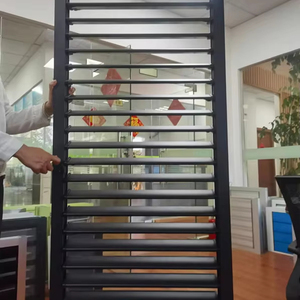
Explore our certified aluminum louver assemblies, engineered with structural extruded alloys, dual-actuation linkages, and modular acoustic or impact weather seals.
Commercial Specifications & Architectural Product Recommendations
Selecting commercial jalousie systems demands precision evaluation of structural deflection under cyclic wind stress, water penetration thresholds, and blade mechanical linkage fatigue.
Severe Tropical & Coastal Belts
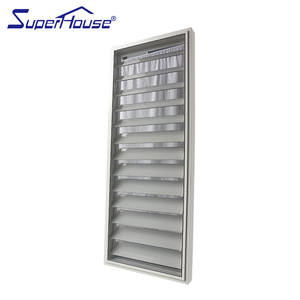
For high-salinity island and coastal installations (e.g., Caribbean, Coastal Australia, Latin America), standard mill finishes fail within 24 months. We recommend our Marine-Grade 6063-T6 Extrusions combined with 25-micron fluorocarbon PVDF coatings or Class 1 anodization. Louver galleries should be coupled with multi-finned co-extruded EPDM marine gaskets and 316 stainless steel drive rods to eliminate galvanic reaction risks entirely.
Hurricane Integrity Zones
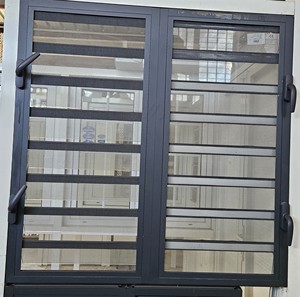
Where architectural envelopes meet cyclical typhoon or hurricane vectors, project specs require compliance with ASTM E1886/E1996 or AS2047 N6 cyclonic testing. Our recommendation relies on Heavy-Duty Reinforced Louvers incorporating reinforced internal structural webbing, heavy-duty cam-action operators, and dual-point locking mechanisms capable of sustaining uniform structural design pressures exceeding 4500 Pa.
Acoustic & Mixed-Use Energy Envelopes
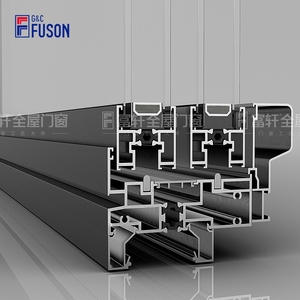
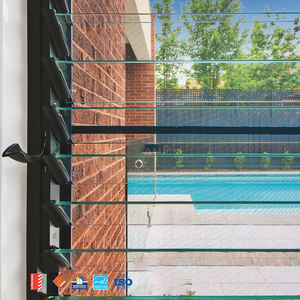
Modern mid-rise residential and commercial high-rises necessitate hybrid ventilation without energy penalties. For these envelopes, specify our Thermal Break Insulated Glazed Louver Systems. Featuring polyamide 66 thermal barrier strips and Argon-filled Low-E double glazing units (DGU), this configuration yields exceptional thermal insulation while achieving rapid natural purge ventilation during off-peak hours.
Technical Perspective: Aerodynamic Louver Blade Geometry vs. Static Infiltration
In standard architectural envelope designs, jalousie windows are often criticized for high air leakage rates and poor water barrier performance during storm events. Our OEM/ODM engineering overcomes this historical trade-off through custom aerofoil blade geometry. By deploying computer-simulated computational fluid dynamics (CFD), the outer lip of each extruded aluminum blade directs cascading water run-off outward away from the pivot axis.
Furthermore, internal drainage channels within the jamb extrusions provide dedicated gravity weep paths. When closed, high-compression dual silicone bulb seals achieve complete physical continuity against the louver blade tips, delivering an air infiltration performance lower than 0.15 L/s·m² at 75 Pa, matching the performance baseline of traditional casement assemblies.
Future Global Procurement Trends for Aluminum Jalousies
How institutional specifiers, tier-1 builders, and international importers are updating tender requirements to address supply chain volatility and global decarbonization.
1. Near-Zero Embedded Carbon Billets
Global procurement teams across North America, Europe, and Australasia are mandating documented Environmental Product Declarations (EPDs). Sourcing is pivoting to factories utilizing renewable hydro-powered secondary smelting, guaranteeing profile embodied carbon thresholds under 4.0 kg CO2e per kg of extruded aluminum.
2. Standardized Modular BIM Integration
Contractors now demand full Level of Development (LOD) 350-400 BIM objects early in the design-assist phase. Factory suppliers capable of natively generating exact Revit families with integrated thermal break tolerances and parametric mullion profiles eliminate expensive shop-drawing revisions and site clashes.
3. Unified Envelope Consolidation
Procuring jalousies in isolation leads to mismatched sightlines, varied anodizing dye lots, and disjointed container stowage. Forward-thinking developers are consolidating facades with integrated entries, curtain wall segments, and garage fenestrations under one single manufacturer to optimize logistics and unified warranties.
4. Rigorous Factory Acceptance Virtualization
With cross-border travel costs scrutinized, international clients are prioritizing manufacturers featuring 360-degree real-time factory verification, automated CNC dimensional laser auditing, and cloud-hosted destructive testing logs for batch-level verification prior to port containerization.
Technological Roadmaps & Jalousie Window Innovation
The transition of architectural jalousie windows from basic passive venting devices into intelligent, dynamic building envelope components.
Automated Actuation & Smart BMS Integration
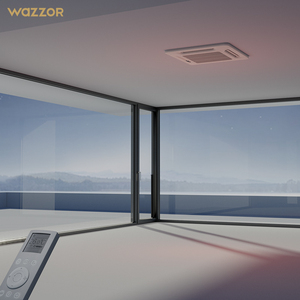
Modern installations are migrating away from purely manual cranks. Next-generation systems feature micro-brushless 24V DC concealed motors tucked invisibly within the head mullions. These systems communicate with central Building Management Systems (BMS) via BACnet, KNX, or Modbus protocols to automatically adjust blade pitch based on indoor CO2 concentration, relative humidity, wind velocity, and ambient solar incidence.
Hybrid PV (BIPV) Louver Assemblies
The envelope surface is evolving into an active power-generating asset. The newest wave of development pairs tempered solar photovoltaic laminates directly onto adjustable louver slats. As blades articulate throughout the diurnal arc to track sun angles for glare rejection and daylighting optimization, they simultaneously collect solar energy to supply auxiliary localized power for smart HVAC loops.
Advanced Micro-Screen Integration
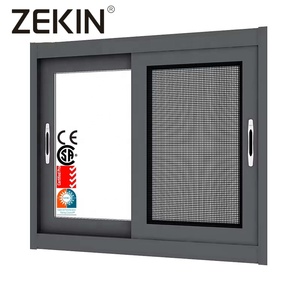
Traditional secondary flyscreens created bulky interior aesthetic profiles and restricted blade rotation radii. Current engineering integrates high-tensile 304/316 marine-grade stainless steel woven wire mesh flush inside the primary framing plane. This delivers a seamless, anti-intruder physical security barrier without impeding 100% blade rotation, offering unimpaired ventilation and insect mitigation in tropical environments.
Why Tier-1 Importers Partner with Our Foshan Industrial Complex
Combining 25+ years of fenestration engineering, massive manufacturing bandwidth, and rigorous international testing protocols.
180,000㎡ Integrated Production Base
Our centralized facility in Shishan Town, Foshan features automated CNC profile extrusion lines, robotic cutting centers, automated surface treatment baths, and sterile insulated glass bonding workshops. Operating at true industrial scale allows us to fulfill large multi-story commercial tenders on fixed lead times without subcontracting quality compromises.
Exhaustive International Certifications
Our export lines meet and exceed rigorous compliance criteria including AS2047, CE, ISO9001, AS1288, and NFRC thermal performance ratings. Every batch undergoes verified factory structural deflection testing, cyclic operation analysis (tested beyond 25,000 cycles without linkage slop), and water tightness diagnostics at maximum air pressure loads.
Export Crating & Complete Logistics Engineering
Transporting precision louver mechanisms across oceans requires specialized packaging. Every order is secured using customized fumigated solid-plywood structural cases, corner shock absorbers, moisture desiccant barriers, and vacuum stretch wraps. All units are labeled per project floor and opening schedules for straightforward site-level staging.
Frequently Asked Questions for Commercial Procurement
Comprehensive technical and logistical answers addressing common challenges faced by specifiers and purchasers.