Precision-Engineered Architectural Door Systems
Manufactured to rigid CE, AS2047, and ISO9001 standards. Discover eight premium modular systems engineered for luxury villas, commercial developments, and high-performance hospitality environments.
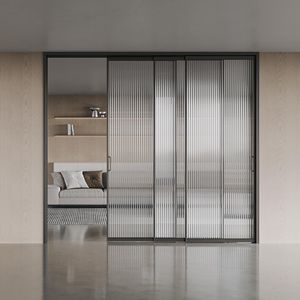
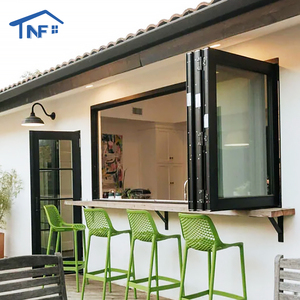
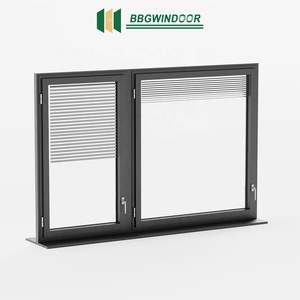
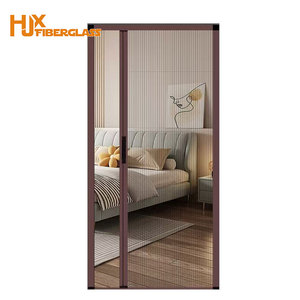
180,000㎡
Integrated Production Base
25+
Years Precision Engineering
600+
Technical Craftsmen & Engineers
100+
International Patents & Testing Passes
OEM/ODM Industrial Scale & High-Tolerance Manufacturing Capabilities
Headquartered in Foshan, Guangdong—the epicentre of global architectural metal fabrication—our industrial campus spans over 180,000 square meters equipped with fully automated CNC machining centers, precision extrusion cutting machinery, advanced electrostatic powder coating lines, and state-of-the-art glass tempering and laminating autoclaves. As an elite manufacturer ranked within China’s Top 10 premium door and window fabricators, our operations satisfy rigorous Tier-1 building code requirements globally.
Our OEM and ODM service infrastructure delivers tailored profile design, thermal-break chamber design, die-mold opening, hardware customization, and multi-layered surface treatments (fluorocarbon PVDF, architectural anodizing, micro-grain sandblasting, and zero-VOC powder coating). We operate with full traceability protocols under ISO9001, CE, AS2047, and UL fire-rated certifications, supporting major property developers, general contractors, and trade wholesalers across North America, South America, Europe, Australia, and the Middle East.
Custom Extrusion Engineering
Primary 6063-T5 and 6063-T6 virgin aluminum alloy billets processed down to dimensional tolerances of ±0.3mm for seamless thermal barrier assemblies.
Specialized Obscuration
Chemical acid-etching, physical ceramic-frit baked enameling, and uniform fine-grit sandblasting to achieve precise light transmittance without fingerprint retention.
Complimentary CAD & BIM
Dedicated architectural engineering office providing shop drawings, wind load deflection calculations, and structural anchoring schematics for engineering approval.
Intermodal Export Logistics
Individual component barcode tracking, reinforced edge guards, multi-layer moisture desiccants, and fumigated steel-braced crates engineered for global ocean transit.
Technology Trajectory: The Evolution of Aluminum Frosted Glazing
The global market for aluminum frosted glass doors is currently navigating a significant paradigm shift driven by urban spatial optimization, net-zero architectural mandates, and evolving biophilic interior design trends. No longer limited to basic utilitarian water closets, frosted glazing assemblies now represent high-performance spatial divides capable of acoustic deadening, privacy reconfiguration, and daylight diffusion.
Ultra-Narrow Bezel Profiles
Advancements in high-tensile architectural alloys allow sightlines to drop below 16mm. Minimalist frames maximize visible light transmittance while safely sustaining tempered dual-glass payloads up to 180kg per panel.
Micro-Cavity Acoustic Barriers
By pairing double-glazed laminated assemblies with heavy-density EPDM co-extruded gaskets and drop-down mechanical bottom seals, modern systems achieve certified sound transmission losses exceeding 38dB (Rw).
Electrochromic & Smart Hybrid
Integration of Polymer Dispersed Liquid Crystal (PDLC) interlayers between chemical frosted outer panes enables instantaneous transition from uniform frosted diffusion to full acoustic obscuration via low-voltage building automation.
B2B Strategic Procurement Trends: 2026–2030 Architecture Directives
For corporate purchasing officers, real estate supply managers, and construction procurement teams, navigating international supply chains requires a thorough understanding of upcoming technical standards. Over the next five years, raw material traceability, Environmental Product Declarations (EPD), and pre-glazed modular drop-in kits will dictate supply chain efficiency.
| Procurement Vector | Legacy Specifications | 2026+ High-Performance Specification | Operational & Cost Impact |
|---|---|---|---|
| Frame Alloy & Temper | Recycled billet 6063-T4 inconsistent wall thickness | Virgin billet 6063-T6 or 6061-T6, uniform wall ≥2.0mm | Prevents frame torsion under wind load; extends structural life to 30+ years |
| Glass Treatment | Topical adhesive frosted films (PET/PVC films) | Deep acid-etched low-iron float glass, fully tempered (SGCC/EN12150) | Zero delamination, zero yellowing under UV, permanent scratch-resistant satin texture |
| Hardware Integration | Zinc alloy surface mounts, basic roller assemblies | Concealed pivot hinges, soft-close dampers (German SUS304 mechanisms) | Eliminates site adjustments; rated for 200,000+ unassisted duty cycles |
| Thermal Separation | Non-thermal unified extrusions | Multi-chamber PA66 nylon thermal break with aerogel infill | Drops thermal conductivity (U-factor ≤1.4 W/m²K); avoids localized condensation |
Strategic volume buyers are progressively migrating away from standard off-the-shelf catalog products toward direct factory OEM platforms. This allows development teams to embed corporate acoustic requirements, proprietary jamb depths for modular drywalls, and customized architectural finishes into one cohesive specification package. This turnkey integration cuts jobsite handling and trim modification times by up to 40%.
Architectural Specifier & Procurement FAQ
Technical assessments and sourcing inquiries compiled from global distributors, property specifiers, and facade engineers.
What is the technical difference between acid-etched glass and sandblasted glass?
How does your manufacturing plant guarantee acoustic attenuation (STC/Rw) in aluminum framed doors?
Can you manufacture oversized pivot and sliding assemblies for high-wind or seismic zones?
What international quality certifications do your doors hold for customs and building inspections?
What parameters are required to generate a binding project quotation and CAD shop drawings?
Connect Directly with Our Engineering & Export Division
Acquire comprehensive architectural CAD details, structural testing reports, bespoke profile design consultations, and full commercial volume price schedules from our Foshan production facility.
Get Catalog