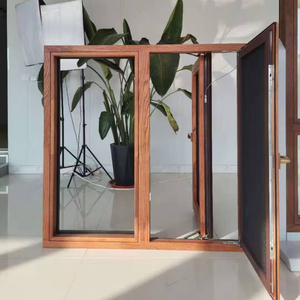
Thermal Performance
Engineered with primary 6063-T5/T6 structural aluminum alloy profiles, electrostatically treated with anodized and fluorocarbon bronze and deep metallic brown coats, rigorously verified for weather, cyclonic, and acoustic loads.
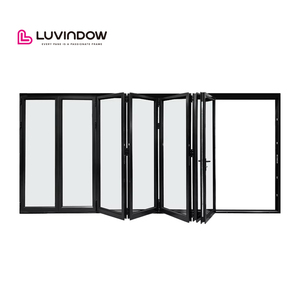
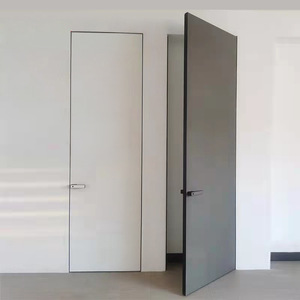
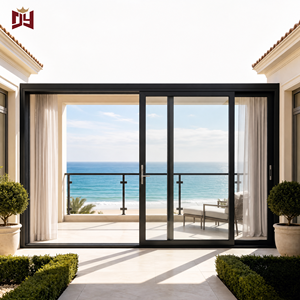
In commercial and luxury residential fenestration, the specification of architectural brown and bronze aluminum profiles demands metallurgical discipline and surface treatment chemistry that exceeds standard powder-coating protocols. High-performance aluminum brown doors are engineered from primary billets of 6063-T5 or 6063-T6 structural alloy. The material delivers superior tensile strength (≥ 205 MPa), yield strength (≥ 170 MPa), and an elongation factor (≥ 8%) engineered to resist cyclonic deflection and torsional stress in oversized pivot doors, heavy-duty bi-folds, and multi-track sliding facades.
Achieving lasting chromatic stability under extreme atmospheric conditions—such as ultraviolet radiation, high-altitude arid cycles, and marine saltwater exposure—requires specialized finishing systems. As a vertically integrated OEM/ODM manufacturing facility, DERCHI implements three distinct surface engineering methodologies for its architectural brown series:
Formulated with 70% Kynar 500 or Hylar 5000 resins, our 3-coat/2-bake PVDF architectural brown coatings conform to AAMA 2605. They deliver unmatched resistance to chalking, gloss erosion, and atmospheric sulfurous breakdown, maintaining delta-E color consistency beyond 20 years.
Through two-step electrolytic deposition using organic cobalt or tin salts, our architectural bronze and deep brown anodized surfaces produce an anodic layer (≥ 18-25 μm) integrated with the underlying metal. This prevents peeling, chipping, or blistering in extreme saline environments.
Eliminating thermal bridging in harsh temperature gradients, our systems incorporate techno-polymer PA66 GF25 (25% glass fiber reinforced polyamide) thermal break strips. This delivers low thermal conductivity (U-values ≤ 1.4 W/m²K) while preventing structural warping under solar gain.
| Performance Vector | Testing Benchmark / Standard | DERCHI Factory Value | Engineering Significance |
|---|---|---|---|
| Structural Wind Load | ASTM E330 / AS2047 (N6 Rated) | Up to ± 4500 Pa Design Pressure | Certified for high-rise commercial facades and hurricane zones. |
| Air Infiltration Resistance | ASTM E283 / EN 12207 (Class 4) | ≤ 0.05 m³/(h·m²) at 100 Pa | Multi-gasket EPDM continuous co-extrusion prevents draft leakages. |
| Water Penetration Barrier | ASTM E547 / EN 12208 (Class 9A) | Static: 700 Pa; Dynamic: 1000 Pa | Multi-tier pressure-equalized cascade drainage chambers. |
| Acoustic Attenuation (Rw/STC) | ISO 10140-2 / ASTM E90 | STC 38 – 46 dB (Config Dependent) | Acoustic laminate interlayers dampen mid-to-high decibel urban noise. |
| Thermal Transmittance (U-Factor) | NFRC 100 / EN ISO 10077-2 | 1.2 – 1.6 W/(m²·K) (System Dependent) | Polyamide PA66 strips minimize interior cooling and heating loads. |
As commercial general contractors, regional distributors, and facade engineers rethink building envelopes, the market for aluminum doors is shifting from standardized commodity units toward engineered, integrated fenestration packages. Global supply chains face rising building efficiency mandates, regional carbon policies, and demand for slim sightlines without structural compromise. B2B buyers must navigate three defining industry trends over the coming procurement cycle:
Procurement mandates across North America, the EU, and Australasia prioritize low-carbon aluminum extruded using renewable hydropower. Future-proof factories must supply verified Environmental Product Declarations (EPDs) demonstrating recycled scrap integration and verified cradle-to-gate carbon footprints.
Standard mortise locksets are rapidly giving way to concealed electromechanical multipoint locking, automated magnetic pivots, and motorized slide operators tied to building management systems (BMS). Architects require factory-routed concealed cable ways, micro-sensors, and flush biometric readers without disrupting thermal barriers.
Contractors increasingly avoid fragmented procurement. Combining exterior entry doors, matching bronze/brown facade curtain walls, slim-profile interior partition systems, and automated garage portals in consolidated FCL ocean containers reduces shipping damage, eliminates site dimensional conflicts, and optimizes project freight margins.
Headquartered in Foshan—the global epicentre of high-precision aluminum extrusion—Guangdong Dejiyoupin Doors and Windows Co., Ltd. (DERCHI) combines massive industrial scale with millimeter-level precision engineering.

Engineer and source your entire schedule—exterior entrance pivot doors, thermal break bi-folds, flush interior doors, and garage access systems—from a single manufacturing origin, consolidated in secure ocean containers to slash demurrage, customs clearance, and freight surcharges.

Our assemblies are laboratory validated to international building codes, holding CE, ISO9001, AS2047, and UL fire-rated certifications. Comprehensive test reports for air, water, cyclic fatigue, and impact loadings are readily provided for municipal and engineering approvals.

Our in-house design office provides full structural calculations, FEA glass analysis, and complimentary parametric CAD shop drawings. Every custom brown finish, mullion intersection, floor pivot detail, and architectural threshold is verified before machine tooling begins.

Our bilingual fenestration project engineers manage your contract with schedules aligned to American, European, and Australasian operating hours. From initial shop-drawing reviews and virtual production audits to detailed video installation guidance, communication is clear and proactive.
Essential guidance covering lead times, alloy verifications, ocean transport logistics, and warranty terms for international commercial buyers.
Send us your door schedules, target performance specs, or project sketches. Our facade engineering team will return comprehensive shop drawings, finish samples, and a project estimate within 24 hours.