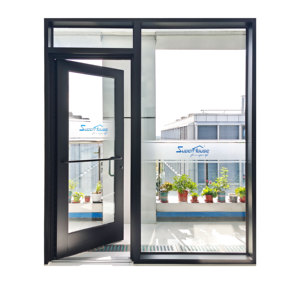
Engineered Aluminium Grille, Casement & High-Security Door Series
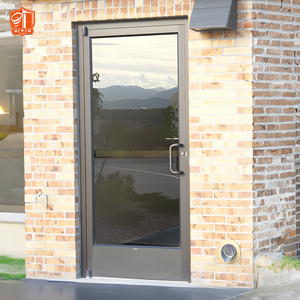
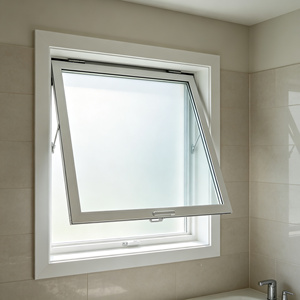
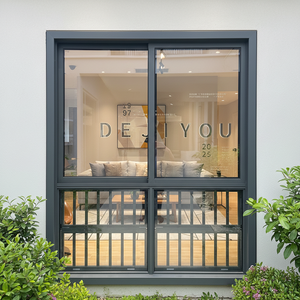
Our custom Fenestration and Door solutions combine structural 6063-T6 architectural aluminium alloys, multipoint anti-jemmy locking mechanisms, and high-tensile 304/316 marine-grade security mesh screens tailored for high-end residential estates, commercial hubs, and cyclone-prone coastal developments.
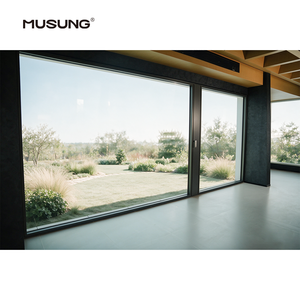
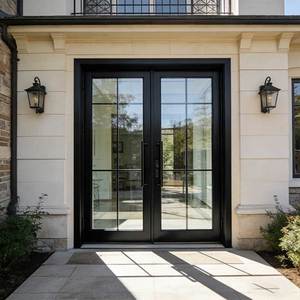
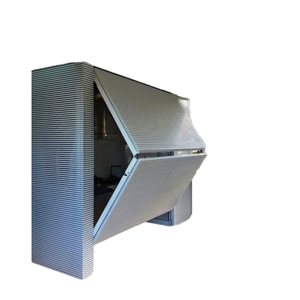
180,000㎡
Smart Manufacturing Footprint
25+
Years Metallurgy & Fenestration Mastery
100+
Global Patents & Verified Certifications
600+
Skilled Craftsmen & Engineers In-House
Engineering Anatomy: Structural Metallurgy & Security Grille Synthesis
In high-specification residential architecture, hospitality resorts, and high-density commercial infrastructure, aluminium grill doors serve as the vital nexus between envelope security, uncompromised natural air convection, and optical transparency.
Alloy Metallurgy: 6063-T5 vs. 6063-T6 Precision Profiles
The structural efficacy of an OEM/ODM aluminium grill door begins at the billet foundry. Guangdong Dejiyoupin Doors and Windows Co., Ltd. (DERCHI) exclusively extrudes prime, non-recycled 6063 architectural aluminium alloy, heat-treated through a regulated quenching and artificial aging regime to reach a T6 temper designation.
This metallurgical discipline yields an ultimate tensile strength exceeding 205 MPa and a yield strength exceeding 170 MPa, with an anodized web thickness ranging from 2.0mm to 3.5mm across primary load-bearing jambs and stiles. Unlike lightweight residential extrusions that buckle under forced mechanical deformation, our profile geometry features internal stiffening ribs designed to dissipate forced-entry lever forces throughout the perimeter frame anchor system.
Anti-Intrusion Grille Meshes: 304/316 Marine Stainless Steel
A high-performance aluminium grill door requires screening materials that withstand dynamic impacts without impairing line-of-sight. We integrate genuine high-tensile 304 and marine-grade 316 stainless steel woven wire mesh, engineered with wire diameters of 0.80mm to 1.0mm in a dense 11x11 or 12x12 mesh per square inch weave.
Every wire is treated via black architectural-grade thermoset powder coating that complies with AS 5041 knife shear and dynamic impact benchmarks. When pressed into the extruded profile rebate via proprietary concealed mechanical clamping jaws—eliminating external screw fasteners—the screen functions as an impenetrable physical barrier against knife punctures, crowbar attacks, flying storm debris, and coastal salt spray corrosion.
Multi-Point Kinematics & Hardware Interlocking
A door leaf is only as reliable as its hardware lock points. DERCHI grill door systems incorporate high-load mortise lock gear assemblies featuring European and Australian multi-point locking standards. Operating via twin or triple mushroom cam deadbolts with anti-lift hooks, the gear activates up to 5 individual locking engagement points along the vertical stile.
Concealed continuous architectural hinges or heavy-duty 3D adjustable pivot systems with hardened 304 stainless steel axis pins support sash capacities up to 450 kg without sag or hinge-bind over hundreds of thousands of duty cycles.
| Performance Characteristic | Commercial Grade (DERCHI Pro-Spec) | Standard Market Alternative | Engineering Benefit & Information Gain |
|---|---|---|---|
| Primary Alloy Formulation | Virgin 6063-T6 / 6061-T6 Extrusion | Recycled / Secondary Scrap Aluminium | Eliminates micro-voids; prevents stress-cracking under heavy wind-load cycles. |
| Wall Profile Thickness | 2.0mm – 3.2mm Structural Webbing | 1.0mm – 1.2mm Thin Gauge | Meets AS2047 ultimate limit state wind pressures without permanent frame deflection. |
| Infill Screen Type | 0.9mm 316 Marine Stainless Steel (900 MPa) | 0.5mm 201 Stainless / Coated Aluminium Wire | Sustains category-5 impact energy (50 Joules dynamic test); corrosion-free in coastal salt fog. |
| Surface Protection | PVDF Fluorocarbon (3-Coat AkzoNobel/PPG) | Single-Coat Standard Liquid Paint | Exceeds 3,000 hrs AAMA 2605 accelerated salt spray testing; zero chalking or UV yellowing. |
| Thermal Insulation | Polyamide PA66 GF25 Thermal Breaks | Solid Cold-Bridge Metal Profile | Drastically lowers U-values to < 1.8 W/m²K, eliminating condensation across temperature deltas. |
Global Procurement & Architectural Sourcing Trends (2025–2030)
Procurement directors, commercial project developers, and tier-1 facade contractors must adapt to major shifts driving next-generation building envelope specifications. Sourcing OEM/ODM aluminium grill doors now requires evaluating whole-life cycle durability, energy conservation ratings, and IoT connectivity.
1. High-Performance Thermal Barriers
Stringent building envelope regulations—including Title 24 (California), NCC (Australia), and European EPBD mandates—are transforming security doors from simple metal grilles into thermally broken insulating systems. The integration of 25% glass fiber reinforced polyamide (PA66 GF25) thermal barrier strips directly into the extruded stiles breaks the conduction path.
Developers sourcing for luxury villas in climates from the Middle East to South America now demand multi-cavity barrier profiles that achieve thermal continuity without sacrificing the high tensile resistance of anti-jemmy security door reveals.
2. Concealed Biometric & Smart Building IoT
The modern architectural market is moving away from visible surface-mounted padlocks and oversized key cylinders. Leading OEM/ODM buyers are standardizing on integrated electronic access mechanisms: concealed 3D face recognition modules, integrated semiconductor biometric fingerprint scanners inside ergonomic pull handles, and automated motor-driven deadbolt retractors.
DERCHI's engineering department integrates concealed cable tracks and magnetic induction contacts within the structural frame rebate, allowing direct integration into RS485 or Zigbee home automation protocols.
3. Circular Metallurgy & Low-Carbon Billets
With environmental criteria and LEED/BREEAM scoring directly shaping commercial tenders, real estate developers prioritize verified Environmental Product Declarations (EPD). Aluminium grill door manufacturers are transitioning to hydroelectric-smelted low-carbon aluminium billets, producing less than 4.0 kg CO2 per kg of aluminium extruded.
Combined with VOC-free electrostatic powder coating lines and 100% recyclable alloy profiles, selecting an export manufacturer with verifiable green certifications provides a direct competitive edge in government and premium commercial bids.
Guangdong Dejiyoupin Doors & Windows Co., Ltd. (DERCHI)
Operating from Foshan, China—the global capital of architectural aluminium manufacturing—DERCHI represents the industrial benchmark in end-to-end fenestration and heavy-duty entrance engineering for worldwide export.
180,000㎡ Production Base
Spanning an ultra-modern 180,000 square meter integrated facility, our intelligent CNC machining centers, automated electrostatic powder coating lines, and specialized assembly bays handle multi-container project schedules without lead-time bottlenecks.
Verified Global Compliance
Every design profile undergoes rigorous third-party auditing, verified under CE, ISO9001, Australian AS2047, and UL fire-rated certifications. Our technical reports provide verifiable wind pressure, water tightness, and structural deflection compliance data for building authorities worldwide.
Free CAD & BIM Engineering
We eliminate installation discrepancies before fabrication begins. Our 50+ in-house engineering team provides full architectural shop drawings, structural wind-load calculations, and 3D BIM models free of charge for approved project orders.
Heavy-Duty Export Crating
Ocean freight conditions require rugged packaging. DERCHI uses a 5-layer protective packing system: scratch-resistant peelable protective tape, pearl cotton bubble wrapping, corner edge protectors, and steel-reinforced fumigated non-coniferous plywood crates ready for open-top or high-cube container transit.
Climate-Engineered Door Formulations for Demanding Environments
A door system engineered solely for mild inland conditions will fail prematurely when deployed in corrosive coastal salt fog or tropical monsoon belts. We customize finishes, alloys, and drainage kinematics to your specific job-site coordinates.
Marine Coastal & Salt Fog Zones
Target Regions: Coastal Australia, Caribbean Basin, Coastal Brazil, Peru, Chile, Southeast Asia.
Salt-laden maritime air attacks inferior alloys, resulting in filiform corrosion, surface pitting, and lock seizure. We apply high-spec pretreatment with chrome-free passivation followed by a minimum 80-micron fluorocarbon PVDF coating (complying with AAMA 2605). All hardware components, assembly screws, internal transmission bars, and screen fixings are fabricated from passivated 316-grade stainless steel to eliminate galvanic corrosion.
Tropical Monsoons & High Humidity Belts
Target Regions: Colombia, Northern Brazil, Philippines, Equatorial Africa.
Continuous relative humidity above 90% combined with sudden downpours exposes weak frame joins to water ingress and internal mold growth. DERCHI door frames incorporate double-sealed multi-cavity vulcanized EPDM rubber gaskets (resistant to thermal hardening) and integrated concealed weep-hole drainage flutes with non-return silicone baffles, preventing wind-driven rain penetration under high cyclic pressure.
High Altitude, Arid & Intense UV Regions
Target Regions: Andean Plateau, Middle Eastern Deserts, High-Plains Continental Interiors.
Extreme day-to-night temperature swings (thermal shock exceeding 45°C deltas) cause severe differential expansion between exterior and interior aluminium facings. Our multi-point systems use slip-joint floating thermal connectors and super-durable architectural powder finishes that resist ultraviolet color shifting, surface chalking, and micro-cracking across decades of direct desert solar radiation.
Frequently Asked Questions: B2B Aluminium Grill Door Procurement
Comprehensive engineering, logistics, and manufacturing answers addressing the core questions raised by international distributors, facade consultants, and general contractors.
What metallurgical difference makes 6063-T6 aluminium alloy superior for security grill doors compared to 6063-T5?
The difference lies in artificial aging and heat treatment parameters. While 6063-T5 is cooled from an elevated temperature shaping process and artificially aged to achieve a Webster hardness of approximately 8-10 HW, 6063-T6 undergoes solution heat treatment followed by precision artificial aging. This elevates Webster hardness to 12-14 HW, increasing yield strength by nearly 35% (from ~130 MPa to >170 MPa) and ultimate tensile strength to over 205 MPa.
For an architectural grill door, this increased tensile strength prevents frame twisting when exposed to mechanical leverage attacks (such as crowbars), prevents corner joint deflection under heavy glass/grille weight, and provides solid screw-thread retention for heavy hardware mortises.
How do DERCHI OEM/ODM aluminium grill doors meet international anti-jemmy and knife shear security standards?
Our grill systems adhere to international security testing protocols, including Australian standards AS 5039 (security screen doors), AS 5041 (knife shear and dynamic impact tests), and European EN 1627 RC2/RC3 resistance classes. The door assembly is subjected to three primary physical tests:
1. Knife Shear Test: An industrial machine applies a constant 350N downward force while drawing a specialized surgical steel blade three times across the 316-grade stainless steel mesh without creating a breach exceeding 150mm.
2. Dynamic Impact Test: A 40 kg articulated impactor delivers repeated 100-Joule blows directly at the center of the grille infill and frame perimeter without dislodging the screen from the retaining rebate.
3. Anti-Jemmy Lever Test: Heavy mechanical chisels apply lateral and twisting forces up to 4.0 kN against hinges, deadbolts, and profile corners to verify the frame resists forced entry.
Can you manufacture oversized pivot aluminium grill doors for luxury villas and hotel entranceways?
Yes. DERCHI specializes in custom, oversized architectural entrance assemblies. Utilizing heavy-duty German or custom-engineered hydraulic pivot box systems embedded into the finished floor, we manufacture pivot doors up to 3.0 meters wide by 6.0 meters high per sash, with total leaf capacities up to 600 kg.
Our engineering team performs Finite Element Analysis (FEA) on every oversized shop drawing to calculate wind deflection limits, thermal camber, and corner weld reinforcement, integrating hidden steel tie-rods within the outer stiles to ensure plumb alignment throughout seasonal shifts.
What surface coating specification should be selected for high-salinity marine environments?
For installations located within 500 meters of a salt ocean or open bay, we strongly advise against standard polyester powder coating. Instead, we specify a 3-coat or 4-coat PVDF (Polyvinylidene Fluoride) fluorocarbon resin coating system containing a minimum of 70% Kynar 500 or Hylar 5000 resins, complying with the AAMA 2605 performance standard.
This process includes alkaline cleaning, acid deoxidation, and chrome-free zirconium conversion pretreatment, followed by an epoxy primer, color coat, and clear protective barrier coat (dry film thickness > 45 microns). This coating withstands over 3,000 hours of continuous ASTM B117 salt spray exposure without blistering, peeling, or gloss degradation.
What is your standard production lead time and minimum order quantity (MOQ) for custom project schedules?
Because DERCHI operates a 180,000 square meter manufacturing infrastructure with internal profile storage, extrusion access, and automated CNC lines, our project turnaround is among the fastest in the export industry:
• CAD Approval & Engineering Phase: 3 to 5 business days upon receiving structural architectural drawings.
• Production Cycle: 25 to 35 calendar days depending on custom color requirements (anodized, fluorocarbon, or custom RAL powder colors).
• Flexible MOQ: We support custom architectural projects ranging from bespoke residential villa packages (MOQ starting at 10-20 square meters) up to full commercial shipping containers (20GP / 40HQ) with mixed fenestration product types.
How does DERCHI ensure container consolidation safety during long ocean freight transits?
Ocean freight often involves 30 to 50 days of maritime transit with high humidity, rolling waves, and port crane operations. We safeguard your investment with export-grade packaging. First, finished doors are fully wrapped with custom protective film and cushioned with pearl cotton along the entire frame profile.
Corners receive triple-layer corrugated hardboard guards. Units are then secured within custom-built, fully enclosed plywood crates (fumigation-exempt) reinforced with internal timber braces and steel strapping to eliminate shifting inside the container. We also place industrial desiccant bags within every crate to absorb moisture during tropical ocean voyages.
Can our engineering team integrate custom smart home access automation and motorization?
Yes. As an OEM/ODM provider, our engineers regularly design profile internal cavities to route hidden low-voltage wiring, magnetic door status switches, and concealed electronic strike releases. We collaborate with major hardware ecosystems including dormakaba, ASSA ABLOY, Hopo, and GU.
Whether you require electric motor drives for sliding patio grill stackers or electronic pivot latches triggered by biometric fingerprint or home automation relays, we provide pre-machined, pre-wired wire passages for plug-and-play on-site electrical connection.
What installation and post-delivery technical support is provided to overseas contractors?
Every shipment is delivered with comprehensive opening-by-opening labeling corresponding to the approved architectural door schedule. Included with each order are step-by-step structural installation manuals, exploded hardware assembly diagrams, and perimeter sealing instructions.
Furthermore, our bilingual export engineering team schedules real-time video installation reviews aligned with your local job-site time zone (across North America, South America, Oceania, and Europe) to resolve technical questions and verify proper alignment during rough-opening installation.
Start Your Custom Door Project with DERCHI
Submit your door schedules, project elevation drawings, or custom OEM/ODM fenestration requirements. Our engineering team prepares free CAD shop drawings, comprehensive wind load checks, and export quotes within 24 hours.
Get Catalog