Acoustic & Thermal
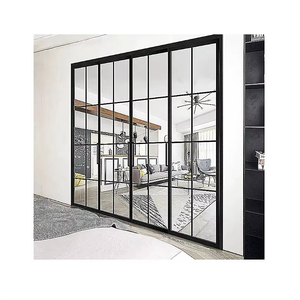
Explore our export-certified fenestration systems developed in compliance with AS2047, CE, and North American NFRC benchmarks for commercial envelopes and luxury residential developments.
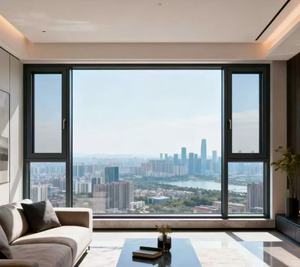
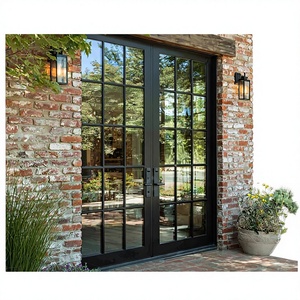
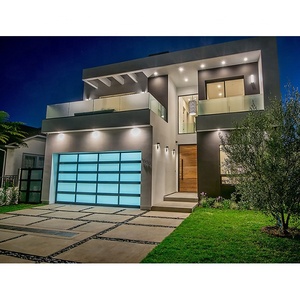
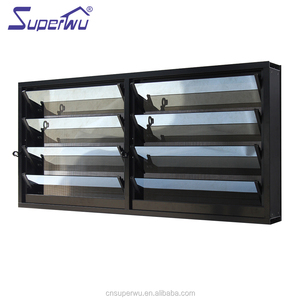
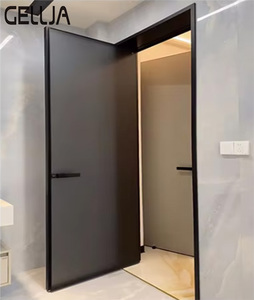
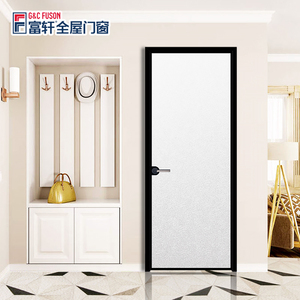
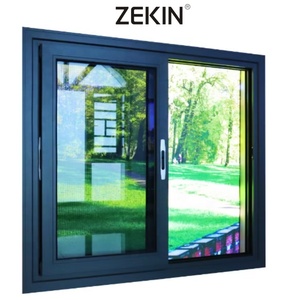

Operated by Guangdong Dejiyoupin Doors and Windows Co., Ltd. (DERCHI), our facility serves as an international epicenter for custom fenestration engineering. We deploy state-of-the-art German CNC machining centers, automated electrostatic powder coating lines, and computerized composite bonding systems to produce high-specification aluminium clad windows and doors.
A rigorous engineering benchmark for fenestration specifiers, facade consultants, and general contractors comparing core profile constructions.
| Performance Indicator | Aluminium Clad Timber | Standard Thermal Break Aluminum | Commercial Steel Fenestration | uPVC Multi-Chamber |
|---|---|---|---|---|
| Frame U-Value (Uf) | 0.85 – 1.20 W/(m²·K) | 1.30 – 1.80 W/(m²·K) | 2.20 – 3.10 W/(m²·K) | 1.10 – 1.50 W/(m²·K) |
| Structural Wind Load (Pa) | Class 5 (≥ 4500 Pa) | Class 5 (≥ 4500 Pa) | Class 5+ (≥ 5500 Pa) | Class 3 (≤ 3000 Pa) |
| Acoustic Isolation (Rw) | Up to 46 dB (Composite Core) | Up to 40 dB | Up to 38 dB | Up to 36 dB |
| Exterior Weatherability | Superior (PVDF/AAMA 2605 Aluminum) | Superior (PVDF/Anodized) | Moderate (Prone to joint rust) | Moderate (UV yellowing risks) |
| Thermal Expansion (mm/m) | Extremely Low (Balanced system) | 1.2 mm/m | 0.7 mm/m | 2.4 mm/m (High creep) |
Strategic analysis for enterprise importers, facade engineers, and builders navigating supply chain shifts and carbon neutrality mandates over the 2025–2030 cycle.
Global building energy regulations (such as EU EPBD and Title 24 in North America) are compelling commercial developers to adopt triple-glazed, krypton-filled fenestration with entire-window Uw ≤ 0.8 W/(m²·K). Clad aluminum systems excel here by combining interior natural thermal mass with exterior weather shields.
Modern luxury architecture demands maximum daylight penetration. Procurement trends reveal an 80% surge in demand for concealed hinges, flush sashes, and floor-to-ceiling sliding assemblies supporting individual panel weights up to 800 kg without frame sagging.
Tier-1 general contractors are shifting away from fragmented sourcing. By procuring unified exterior envelopes—combining aluminium clad windows, heavy-duty pivot entry doors, and automated glazed garage systems—contractors eliminate jobsite mismatch and significantly reduce sea-freight overhead.
Projects located in harsh marine environments (such as coastal South America, Florida, and Southeast Asia) require surface engineering capable of resisting high chloride concentrations and relentless UV exposure. Our custom OEM anodizing and fluorocarbon PVDF systems guarantee zero chalking or peeling for 20+ years.
The convergence of fenestration with smart building automation (BACS) is accelerating. OEM configurations now feature concealed motorized actuators, magnetic status sensors, and biometric multi-point locking compatible with KNX, Zigbee, and Control4 building management platforms.
Combining rigorous structural engineering, validated international certifications, and specialized containerized export logistics.
Certified against Australian AS 2047 (N6 cyclical test), European CE EN 14351-1, and UL fire ratings. Complete structural wind pressure, water penetration, and air infiltration test reports are provided directly to consulting engineers.
Eliminate on-site installation discrepancies. Our senior facade engineering team produces complete shop drawing sets, cross-sectional connection details, and anchor point calculations for structural sign-off prior to production.
Long-distance intermodal transit requires robust protection. Every window unit features corner impact protectors, vacuum shrink protection, and is packed into fully enclosed fumigated plywood crates with silica desiccant systems.
Critical answers addressing material science, testing data, logistics, and quality assurance for commercial fenestration buyers.
Aluminium clad timber incorporates a solid interior structural wood core (such as engineered European Oak, Pine, or Larch) protected externally by a back-vented aluminum extrusion shell attached via sliding nylon clips. This design decouples differential thermal expansion while optimizing interior thermal retention. Thermally broken aluminum relies on multi-chambered 6063-T6 aluminum profiles joined structurally by polyamide (PA66 GF25) thermal barriers.
Aluminum and timber exhibit vastly different thermal expansion coefficients. Our OEM design utilizes dynamic nylon-clip fastening mechanisms that allow the exterior aluminum cladding to expand and contract freely along the horizontal plane without transferring shear forces to the structural interior timber frame, preventing warping, seal degradation, and internal frame cracking.
For custom OEM/ODM architectural profiles with existing extrusion tooling, the standard production lead time is 25 to 35 calendar days following shop drawing approval. For bespoke architectural extrusions requiring custom die fabrication, an additional 15 days is required. We maintain a flexible project MOQ policy, supporting project quantities from individual luxury villa packages (approx. 50 m²) up to multi-container commercial shipments.
Yes. All test certificates—including AS2047 N6 testing by accredited laboratories (such as Azuma Design in Australia), CE EN 14351-1 declarations, and UL fire-rating reports—are accompanied by verifiable lab accreditation numbers, original test specimen dimensions, and test apparatus logs that can be submitted to local municipal building authorities.
Profiles are treated using AkzoNobel or PPG fluoropolymer (PVDF) powder systems compliant with AAMA 2605 specifications, providing 10,000 hours of continuous salt-spray resistance. For anodized architectural selections, we apply Class I architectural oxide coatings (minimum 18-micron thickness) to deliver lifetime protection against coastal UV and maritime saline air.
All fenestration systems are warranted for 10 years on frame integrity and 5 years on active hardware mechanisms (Siegenia, GU, Hopo, or Sobinco). In the rare event of transit or installation issues, express replacement hardware components are dispatched via DHL/FedEx air freight within 48 hours, supported by detailed video replacement procedures.
Send your door and window schedules, architectural elevations, or structural specifications. Our senior engineering estimating team will provide an initial commercial quotation and technical feasibility review within 24 hours.