Engineered Architectural Window & Door Series
Rigid testing, certified impact ratings, and custom brown/bronze surface engineering tailored for commercial storefronts, residential developments, and high-wind coastal envelopes.
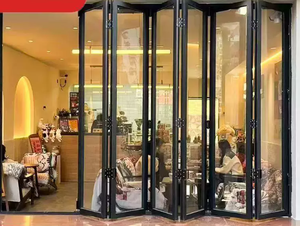
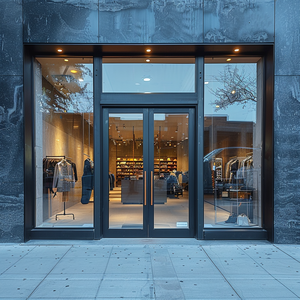
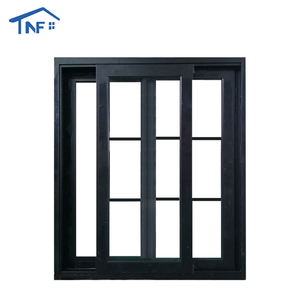
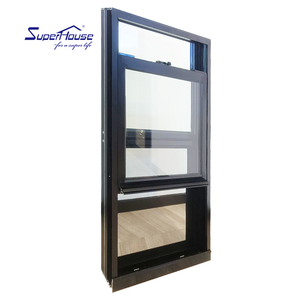
Material Metallurgy & Surface Science of Architectural Brown Aluminium
In modern architectural fenestration, the specification of OEM/ODM Aluminium Brown Windows has transitioned from a purely cosmetic tint to a rigorous material science discipline. For architects, structural engineers, and institutional procurement directors, the designation "brown" represents a sophisticated spectrum encompassing champagne bronze, dark bronze, matte umber, deep chestnut, and dark anodized metallic tones. Achieving color fastness, resistance to saline degradation, and structural stability across large spans requires deep metallurgical control at the billet extrusion level.
Our manufacturing foundation utilizes virgin primary aluminium billets conforming strictly to 6063-T5 and 6063-T6 alloy specifications. Unlike secondary recycled scrap that introduces excess iron, silicon, and copper impurities, our extrusions maintain an ultra-clean crystal lattice. This structural purity eliminates blistering, micro-porosity, and localized galvanic corrosion when exposed to fluctuating temperature cycles and harsh maritime atmospheres.
Surface Coating Methodologies: Anodized Bronze vs. Fluorocarbon PVDF
Depending on the climatic zone and environmental exposure of the project, commercial developers must specify the optimal finishing chemistry to prevent UV chalking, peeling, and chemical erosion:
Electrolytic Color Anodizing
Class 1 anodizing (minimum 15–25 micron oxide layer) utilizes two-step electrolytic deposition with inorganic metal salts (tin/nickel). The brown coloration is permanently embedded inside the open sub-micron pores before nickel acetate thermal sealing, providing supreme scratch resilience and metallic luminescence that never delaminates.
Fluorocarbon (PVDF) 3-Coat
Conforming to AAMA 2605 specifications, our multi-coat fluoropolymer applications utilize a minimum of 70% Kynar 500 / Hylar 5000 resin base. PVDF offers supreme resistance to extreme UV radiation, coastal salt-fog atmospheric acids, and thermal shock across 30+ year lifecycle operations without fading beyond Delta-E 5.0 units.
Super-Durable Powder Coating
Certified under Qualicoat Class 2 standards, architectural polyester powder formulations deliver a uniform textured or matte bronze surface with exceptional impact resistance. Engineered for high-traffic commercial facades, residential estates, and mountain resorts seeking earth-toned cohesion with surrounding timber and masonry.
Technical Engineering & Benchmark Performance Matrix
To eliminate ambiguity in project bidding and engineering submittals, the following table details the baseline physical, mechanical, and thermal metrics maintained across our standard and heavy-duty OEM/ODM brown fenestration systems:
| Engineering Property | Standard Commercial Grade | Architectural Villa Grade | Coastal Hurricane / Ballistic Grade | Compliance Verification |
|---|---|---|---|---|
| Aluminium Alloy / Temper | 6063-T5 (Yield >110 MPa) | 6063-T6 (Yield >160 MPa) | 6061-T6 / 6063-T6 Reinforced | ASTM B221 / EN 755 |
| Thermal Break System | None / 14.8mm PA66 | 24mm – 34mm PA66 GF25 | Multi-Chamber Structural Insulated | DIN 16941 / ISO 10077 |
| U-Factor (Thermal Performance) | 2.6 – 3.2 W/m²·K | 1.3 – 1.8 W/m²·K | 0.85 – 1.2 W/m²·K (Triple Low-E) | NFRC 100 / EN ISO 10077-2 |
| Structural Wind Load | 2,000 Pa (Design Pressure) | 3,500 Pa (Deflection L/250) | 4,500 – 6,000 Pa (Category 5 Wind) | AS 2047 / ASTM E330 |
| Water Penetration Resistance | 300 Pa Static | 450 Pa Cyclic Pressure | 700 – 1,000 Pa Extreme Pressure | ASTM E547 / EN 12208 |
| Acoustic Attenuation (Rw) | 28 – 32 dB | 36 – 40 dB | 42 – 48 dB (Acoustic Interlayer) | ISO 10140 / ASTM E90 |
| Surface Coating Warranty | 10 Years (Architectural) | 15 – 20 Years (AAMA 2604) | 25 – 30 Years (AAMA 2605 / Qualimarine) | Qualicoat / GSB International |
Future Procurement Trends in Architectural Fenestration
The global sourcing landscape for commercial facades and residential window systems is undergoing transformative shifts driven by environmental sustainability mandates, geopolitical supply chain resilience, and digital specification workflows. Procurement officers, real estate syndicates, and general contractors are pivoting their strategies based on several decisive macro trends:
1. Decarbonization Mandates and Low-Carbon Aluminium Extrusions
With cross-border carbon adjustment mechanisms (such as the EU's CBAM) gaining momentum and green building benchmarks (LEED v4.1, BREEAM) demanding rigorous Environmental Product Declarations (EPDs), institutional developers can no longer procure standard high-emission profiles. Sourcing demands have shifted towards hydro-powered smelting profiles with verifiable Scope 1 and Scope 2 carbon intensity below 4.0 kg CO₂e per kg of aluminium. Forward-looking OEM/ODM partners integrate full cradle-to-gate lifecycle transparency directly into product schedules.
2. Single-Source Full Envelope Consolidation
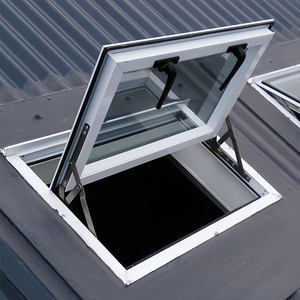
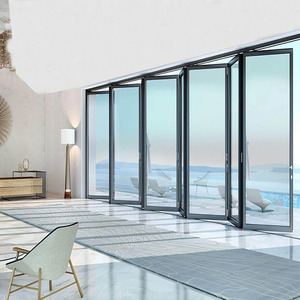
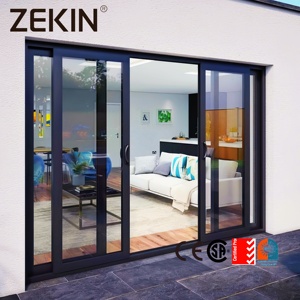
Fragmented procurement—ordering windows from one fabricator, sliding patio systems from another, and heavy entrance pivots from a third—introduces catastrophic on-site coordination errors, mismatching finish anodizing tolerances, and divided warranty liabilities. Leading developers now insist on turnkey consolidation: engaging a single factory capable of engineering matching brown-finish thermal-break sliding units, motorized skylights, hurricane-proof bifold doors, and monumental entrance doors in unified sea-freight containers.
3. BIM-Driven CAD Shop Drawing Pre-Production Approvals
Site adjustments on complex building envelopes are prohibitively expensive. Modern international buyers require direct BIM (Building Information Modeling) parametric object files (.rfa, .ifc) and full 1:1 scale cross-sectional shop drawings reflecting exact jamb expansions, anchor structural loads, and sub-sill weep drainage details prior to extrusion die commitment. This end-to-end digital validation mitigates field fitting disputes.
Architectural Innovation: Narrow Sightlines, Passive House & Smart Tech
As contemporary architectural language embraces biophilic design, large glass openings, and organic earth palettes, brown and bronze aluminium profiles are taking center stage in high-profile residences and institutional spaces. Modern window fabrication is defined by three high-performance engineering frontiers:
Ultra-Slim Sightlines (Interlock < 20mm)
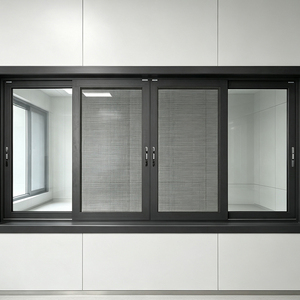
By leveraging high-tensile 6063-T6 alloy with internal stainless steel structural stiffening fins, our minimalist sliding systems achieve vertical interlocking sightlines as narrow as 16mm to 20mm. This delivers up to 94% glass surface ratio while maintaining resistance against deflection under severe cyclonic wind loads.
Multi-Chamber Polyamide Thermal Barriers
Modern fenestration isolates interior room climates via PA66 GF25 (polyamide with 25% short glass fiber reinforcement) thermal breaks. Incorporating aerogel cavities and multi-lip EPDM compression co-extrusions, these systems easily fulfill stringent Passive House standards (Uw ≤ 0.8 W/m²K).
Smart Home Actuation & Concealed Concealment
From concealed chain winders in motorized brown skylights to motorized magnetic-levitation sliding sash drives, our OEM platforms integrate seamlessly with KNX, Zigbee, and Crestron protocols. Integrated wind, rain, and optical sensors automate window ventilation cycles silently.
Enterprise Advantage: Foshan Mega-Campus & Global Export Architecture
Headquartered in Foshan, Guangdong—the worldwide epicenter of precision architectural aluminium manufacturing—our production operations stand on over 25 years of specialized fenestration craftsmanship. Operating within a state-of-the-art 180,000 square meter integrated industrial base staffed by over 600 engineering, technical, and quality control professionals, we deliver industrial scale matched with fine bespoke precision.
Verified Compliance Across Regulated International Markets
Our OEM/ODM manufacturing protocols operate in rigid adherence to ISO9001 certified quality control regimens. Every profile batch, glass laminate assembly, and finished window sash undergoes strict multi-stage mechanical testing before crating:
- Australian AS 2047 & AS 1288 Certification: Attained the top-tier N6 wind classification, successfully validating air infiltration, water penetration resistance, and structural deflection under extreme cyclonic test regimes.
- North American NFRC & AAMA Standards: Thermal simulation models and physical testing verifying Solar Heat Gain Coefficients (SHGC), U-factors, and condensation resistance indices for US and Canadian building codes.
- European CE & EN 14351-1 Directives: Full compliance covering acoustic reduction, load-bearing capacity of safety devices, and air permeability classifications (Class 4).
- Global Patent Portfolio: More than 100 invention, utility, and aesthetic design patents backing our innovative corner crimping joints, continuous gasket corners, and concealed drainage sub-sill structures.
Export-Grade Heavy-Duty Packaging & Global Logistics Execution
Ocean freight incurs dynamic racking stresses, high humidity, and vibration loads. Our export logistics regimen guarantees pristine jobsite delivery through an engineered multi-layer packing protocol: (1) Protective electro-static film over all brown finished aluminium surfaces, (2) Corner shock absorbers and multi-ply honeycomb corrugated wrapping, (3) Vacuum moisture desiccant bags, and (4) Heavy-duty fumigated solid plywood enclosed crates strapped with steel tension bands. We offer complete DDP, CIF, and FOB terms to major global ports across North America, South America, Australia, the Middle East, and Europe.
Frequently Asked Questions for B2B Sourcing
Essential technical, commercial, and logistical clarifications for project specifiers, developers, and commercial window importers.
What are the exact RAL color standards and surface options available for Brown Windows?
+
How do you prevent thermal bridge condensation on aluminium brown profiles in cold climates?
+
What is your Minimum Order Quantity (MOQ) and production lead time for custom OEM/ODM projects?
+
Can your engineering team provide project-specific CAD shop drawings and wind load calculations?
+
How do you ensure coastal corrosion resistance for brown windows installed in oceanfront environments?
+
What certifications accompany your glass and window assemblies for overseas customs clearance?
+
Initiate Your OEM/ODM Fenestration Specification
Send your architectural door/window schedule, elevation drawings, or bill of quantities. Our senior façade engineers will deliver a comprehensive project quotation, thermal calculation, and CAD detail breakdown within 24 hours.