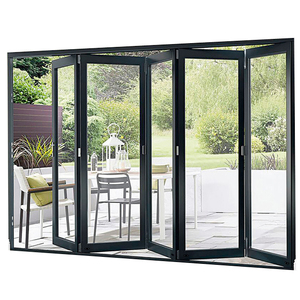
Interior / Partition
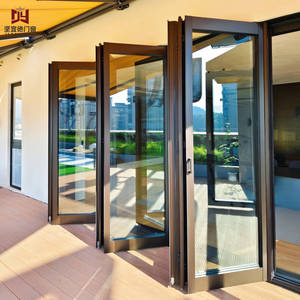
Explore our high-performance thermal break assemblies, panoramic folding partitions, commercial garage systems, and architectural shopfront entrance configurations designed to meet rigorous international building codes.
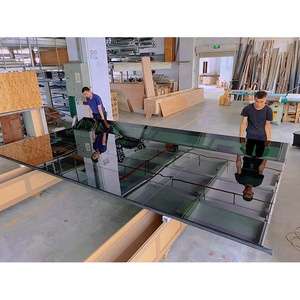
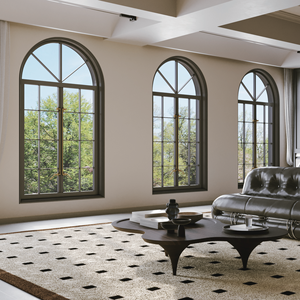
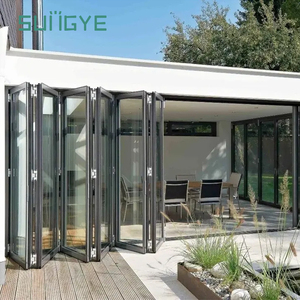
A technical review of mechanical performance, extrusion alloys, thermal transmission, and export-grade structural envelope design.
Commercial storefront entrance systems undergo cyclical dynamic loads, severe pressure differentials, and continuous physical operation. As an established custom OEM manufacturer and exporter, Guangdong Dejiyoupin Doors and Windows Co., Ltd. (DERCHI) engineers its shopfront assemblies using primary-billet 6063-T5 architectural-grade aluminum alloy profiles, calibrated to web thicknesses between 2.0mm and 3.5mm. This profile geometry delivers tensile strength exceeding 160 MPa, structural yield strength above 110 MPa, and superior anodizing responsiveness compared to secondary scrap-extruded alternatives commonly found in lower-tier supply chains.
Where structural spans require higher moment of inertia (such as expansive curtain wall mullions or oversized center-hung commercial pivot entries exceeding 4 meters in height), our structural engineering division incorporates internal steel stiffeners (Q235 galvanized reinforcement cores) or upgrades vertical components to high-tensile 6061-T6 alloy. This eliminates unassisted panel deflection when subjected to wind loads exceeding 3.0 kPa (compliant with AS2047 N6 and ASTM E330 standards).
Uninsulated aluminum assemblies introduce pronounced thermal bridges that compromise interior HVAC efficiencies and cause condensation along the interior profile face in coastal or extreme climates. DERCHI integrates reinforced polyamide nylon strips (PA66 GF25 with 25% chopped fiberglass reinforcement) mechanically rolled into extrusion pockets. This thermal break creates an uninterrupted barrier, driving whole-assembly U-values below 1.6 W/(m²·K) when paired with argon-filled, warm-edge double or triple Insulated Glazing Units (IGU).
For urban retail venues, financial institutions, and hospitality projects where ambient exterior noise must be managed, our laminated safety glass layouts—combining multi-layer polyvinyl butyral (PVB) or acoustic SentryGlas (SGP) interlayers—achieve Sound Transmission Class (STC) ratings upward of 42 dB. This structural-acoustic decoupling ensures that commercial shopfronts deliver both thermal regulation and acoustic comfort under intensive high-traffic conditions.
The operational lifespan of an exterior storefront door in high-salinity marine environments (e.g., coastal Latin American ports such as Santos, Callao, and Valparaíso) depends on surface chemical stability. DERCHI provides factory-applied PVDF fluorocarbon coatings (containing a minimum of 70% Kynar 500 / Hylar 5000 resin systems) tested to AAMA 2605 criteria. These coatings withstand 4,000 hours of continuous salt spray without pitting, chalking, or color fading across 20-year exposure horizons. For metallic finishes, Class I architectural anodizing (minimum film thickness of 18 microns) provides surface hardness exceeding 8 on the Mohs scale, protecting high-traffic threshold frames against abrasive contact.
How global architectural standards, environmental legislation, and automation are reshaping procurement specifications for commercial entrance systems through 2030.
Global architecture and construction procurement are shifting toward verifiable environmental disclosures. Enterprise developers and general contractors now routinely mandate Environmental Product Declarations (EPDs) with specific Embodied Carbon caps. Aluminum shopfronts produced via hydro-powered smelting—yielding less than 4.0 kg CO2e per kg of primary metal—are rapidly replacing coal-fired alternatives. Procurement teams prioritize suppliers capable of delivering transparent third-party life-cycle assessments (LCAs).
Stand-alone storefront mechanical locks are quickly giving way to concealed electromechanical multipoint locks, electrified pivot hinges, and built-in access control sensors. Commercial buyers require seamless factory pre-routing for electric strikes, magnetic latch monitors, and motorized concealed overhead closers compatible with BACnet, Modbus, or KNX automation frameworks. Pre-milling and factory bench-testing eliminate on-site wiring failures during field commissioning.
Changing weather patterns and rising security requirements have driven stricter envelope mandates. Retail storefronts in storm-prone regions must withstand TAS 201, 202, and 203 large-missile impact testing, alongside stringent air and water penetration metrics. Concurrently, high-value commercial retailers specify EN 1627 RC3 / RC4 forced-entry resistance profiles. Fabricators must engineered reinforced internal locking pockets and hardened alloy strike plates into their standard extrusion dies.
Combining heavy manufacturing capacity, rigorous quality engineering, and deep export logistics experience from Foshan to international ports worldwide.
Operated by Guangdong Dejiyoupin Doors and Windows Co., Ltd. in Foshan, our production footprint includes CNC automated profile centers, automated glass cutting and tempering lines, structural silicone curing halls, and dynamic cycle testing stations. With over 600 skilled technicians, we deliver consistent shopfront quality for high-volume commercial schedules.
Every commercial door system is engineered to pass rigorous international standards. Our products hold CE, ISO9001, AS2047 (tested to the highest N6 design pressure rating), and UL fire-rated certifications. Comprehensive physical test data—covering structural wind load, air infiltration, and water resistance—is available for engineering review and municipal building permit filings.
We eliminate on-site fitting discrepancies by offering full engineering support. Our in-house technical team provides detailed 2D CAD shop drawings, structural calculations, thermal finite element models, and IFC-compatible 3D BIM objects. Architectural revisions are updated and verified for opening tolerances before profile extrusion and fabrication begin.
Transoceanic freight demands robust protection. We pack all storefront elements in fully enclosed, IPPC-certified fumigated plywood crates, with edge-cushioning and moisture-desiccant packaging. Importers can combine entry doors, storefront framing, garage systems, and interior partitions in a single container, lowering freight costs, port handling fees, and customs overhead.
Detailed technical answers addressing custom profile development, international testing data, structural glazing requirements, and export container logistics.
Connect with our technical fenestration specialists. Receive detailed CAD shop drawings, glass wind-load calculations, structural thermal break analysis, and direct FOB/CIF container price estimates within 24 hours.