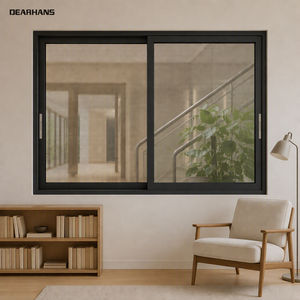
Exterior Aluminum Sliding Window Double Glazing Soundproof Good Air Tightness
Glazing: 5mm+12A+5mm Tempered IGU
Acoustic Attenuation: Rw ≥ 38 dB | Multi-point EPDM
Manufactured from structural 6063-T5/T6 aviation-grade aluminum billets, incorporating polyamide thermal barriers and certified insulating glass units (IGU) for rigorous global climates.
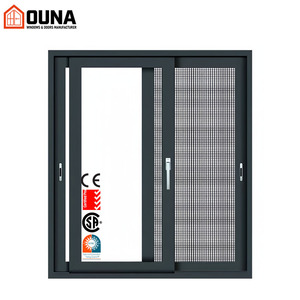
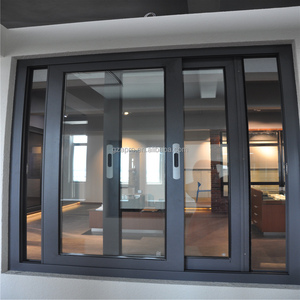
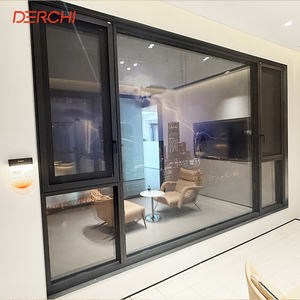
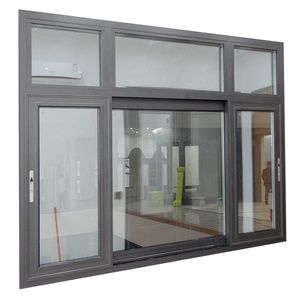
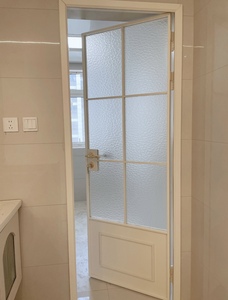
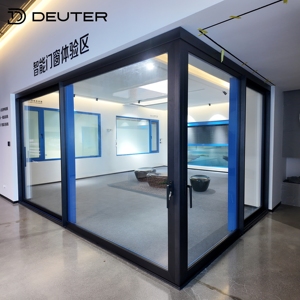
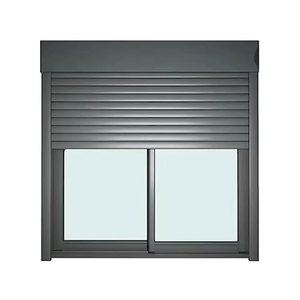
In modern high-performance building envelopes, windows serve as the critical transition zone between controlled internal environments and external climate forces. As an established OEM factory and global exporter, our architectural aluminum double glazed window systems solve the inherent thermal conductivity of metals through precision-crimped Polyamide PA66 GF25 thermal breaks. This composite barrier divides the interior and exterior aluminum profiles, effectively decoupling thermal bridging and reducing whole-window U-factors down to 1.4 W/(m²·K).
Extruded strictly from virgin 6063-T5 and 6063-T6 aluminum alloys, our window profiles maintain a minimum structural wall thickness ranging from 1.6 mm for standard residential installations up to 3.0 mm for heavy-duty commercial curtain walls and hurricane-impact coastal zones. Our Insulated Glass Units (IGU) feature dual-seal perimeter technology utilizing polyisobutylene (PIB) primary barriers paired with structural silicone secondary seals. In combination with 95% pure Argon gas fills and high-performance magnetron-sputtered Low-E coatings, our assemblies deliver superior Solar Heat Gain Coefficients (SHGC) tailored for tropical heat resistance or cold-climate thermal retention.
| Performance Parameter | Test Standard / Protocol | DERCHI High-Spec Rating | Architectural Benefits |
|---|---|---|---|
| Structural Wind Load | AS 2047 (N6) / ASTM E330 | Serviceability: 3000 Pa | Ultimate: 4500+ Pa | Engineered for high-rise facades and severe coastal hurricane corridors. |
| Water Penetration Resistance | EN 12208 / AAMA 501.1 | Static: 700 Pa (Class E700) | Multi-cavity pressure-equalized drainage stops driven rain intrusion. |
| Air Infiltration Rating | ASTM E283 / EN 12207 | ≤ 0.1 m³/(h·m²) (Class 4) | Minimizes involuntary HVAC loss; critical for Net-Zero building ratings. |
| Acoustic Decibel Reduction | ISO 10140-2 / ASTM E90 | Rw = 38 dB – 44 dB (STC up to 43) | Attenuates low-frequency urban traffic, airport, and railway noise. |
| Surface Finish Durability | AAMA 2604 / AAMA 2605 (PVDF) | Fluorocarbon ≥ 40μm / Powder 60–80μm | Salt-spray tested past 3000 hours without chalking, pitting, or fading. |
Strategic sourcing shifts reshaping how developers, contractors, and building product distributors procure architectural windows internationally.
Global architectural specifications increasingly require Environmental Product Declarations (EPDs). Sourcing is shifting toward low-carbon billet smelting powered by renewable energy, combined with post-consumer recycled alloy recovery chains.
To reduce escalating on-site labor overhead in North America, Europe, and Australasia, developers demand factory-glazed, fully pre-hung unitized window pods that integrate seamlessly into rapid offsite modular construction methods.
Extreme storm cycles have triggered tighter building envelope codes outside traditional hurricane zones. Procurement contracts now demand certified cycle-deflection performance, ballistic glass integrations, and elevated water static thresholds.
Distributors are abandoning fragmented multi-vendor purchasing. Sourcing full project schedules—thermal windows, entry doors, folding systems, and interior architectural glass—within single 40HQ export containers reduces customs clearance friction.
How next-generation thermal breaks, intelligent glass stacks, and robotic extrusion processing are redefining modern building envelope performance.
Beyond traditional polyamide strips, our research introduces hydrophobic silica aerogel matrices and low-density insulating foams directly injected into multi-chamber profile cavities. This reduces internal convective currents, enabling passive-house compliance without excessive frame bulk.
The convergence of glass technology with micro-electronics permits smart windows to dynamically modulate tint levels via Building Management Systems (BMS). Simultaneously, transparent photovoltaic coatings convert solar exposure into clean building energy without sacrificing clarity.
Structural frame integrity depends on mechanical junction strength. By utilizing 4-head automated German corner-crimping equipment with dual-component anaerobic adhesives, corner strength exceeds conventional screw joints by 300%, eliminating moisture leakage at miters.

Operating under Guangdong Dejiyoupin Doors and Windows Co., Ltd. (DERCHI), our automated facilities combine over 25 years of extrusion, powder coating, and insulating glass fabrication under one roof. Benchmark tested by long-term partners of German Schüco standards, our products represent the pinnacle of Chinese industrial precision.
Essential guidance for architects, general contractors, real estate developers, and fenestration import distributors.
Submit your window schedules, CAD architectural drawings, or tender specifications. Our technical engineering sales team provides detailed structural estimates, thermal calculations, and factory-direct FOB/CIF pricing within 24 hours.