High-Performance Architectural Systems & Engineered Envelopes
Explore our export-certified thermal-break fenestration, heavy-duty architectural entrance doors, and structural sliding systems engineered to meet international structural and acoustic building codes.
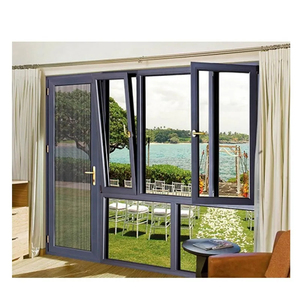
Fuson Architectural Aluminum Casement Screen Door & Window Grill Combo
- 304 Stainless Steel Micro-Mesh
- Multi-Point Tamper-Proof Locking
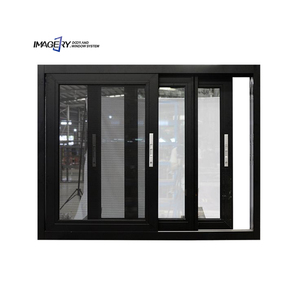
Modern 3-Track Heavy Acoustic Triple-Glazed Sliding Door & Window System
- Polyamide PA66 Thermal Break
- Sound Attenuation: Rw 42 dB
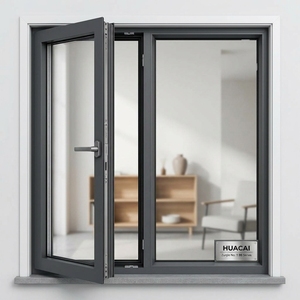
HUACAI Heavy-Duty 1.8mm Flush Seamless Architectural System
- 6063-T6 Primary Billet Alloy
- European Standard Hardware Groove
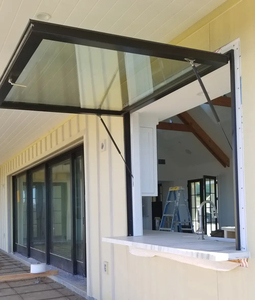
Sunnysky Commercial Minimalist Super-Narrow Frame Flip-Out Transom System
- 88% Maximum Daylighting Ratio
- Friction-Stay Friction Hinges
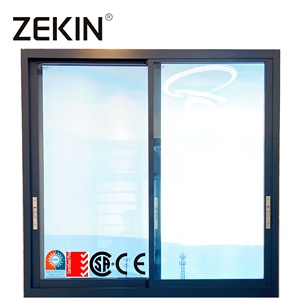
Hurricane Impact Proof Thermal Break Structural Sliding Door & Window
- SentryGlas® Laminated Glass Core
- Wind Load Rating: N6 (4500 Pa)
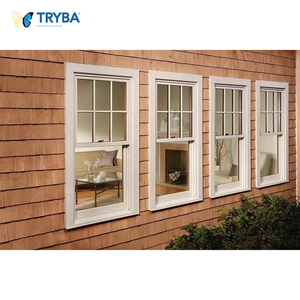
Impact-Resistant Architectural Double Hung Structural Sash Window
- Constant-Force Spiral Balancer
- Tilt-to-Clean Interior Access
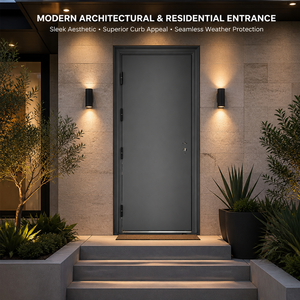
Luxurious Soundproof Aluminum Entry Door with Multi-Tier Gasket Cavity
- Aerospace Honeycomb Aluminum Core
- Biometric Motorized Lock System
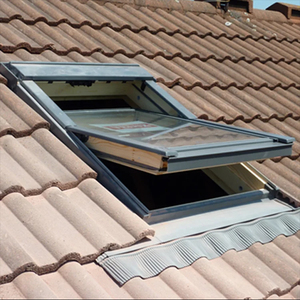
Automated Double-Glazed Architectural Roof Skylight & Smoke Vent System
- Rain & Wind Sensor Automation
- Low-E Argon Infused Dual Glass
Structural Metallurgy, Thermal Decoupling & Wood-Clad Physics
A rigorous B2B technical guide for façade engineers, general contractors, and procurement executives evaluating high-performance aluminum-clad architectural door assemblies.
The Hybrid Advantage: Outer Armor Meets Interior Biophilic Warmth
Modern commercial and ultra-luxury residential projects demand building envelopes that reconcile two fundamentally opposing criteria: extreme exterior weather resilience and sophisticated interior spatial tactility. Aluminum-clad door systems resolve this architectural dichotomy through an engineered composite structure. The exterior sash utilizes an independently mounted 6063-T5/T6 structural aluminum exoskeleton designed to resist corrosive coastal chlorides, intense solar ultraviolet irradiance, and driving cyclone-induced wind loads.
Unlike conventional solid wood doors that suffer moisture swell, dimensional warping, and finish degradation under tropical and maritime conditions, our aluminum cladding utilizes a floating nylon clip mechanism (PA66-GF25) that accommodates thermal expansion differentials between the alloy exterior and the internal laminated timber core. This decoupled assembly ensures zero mechanical stress transfer across internal glue lines, preventing frame deflection and maintaining airtightness across 60°C temperature deltas.
Internally, clients specify FSC-certified North American white oak, Burmese teak, black walnut, or engineered vertical-grain pine. Kiln-dried to strict 8%-12% equilibrium moisture content, timber members undergo vacuum pressure impregnation with water-based micro-porous breathable coatings, shielding interiors against mold and ambient indoor humidity while contributing positive biophilic value.
Technical Performance Benchmarking
Comparison of custom OEM aluminum clad door systems versus traditional fenestration specifications.
| Performance Parameter | DERCHI OEM Aluminum Clad Doors | Standard Thermally Broken Aluminum | Traditional Solid Hardwood |
|---|---|---|---|
| Thermal Transmittance (U-Value) | 0.78 – 1.25 W/m²·K (Passivhaus Capable) | 1.60 – 2.40 W/m²·K | 1.85 – 2.90 W/m²·K |
| Acoustic Attenuation (STC / Rw) | Rw 42 – 48 dB (Triple Laminated Glass) | Rw 32 – 36 dB | Rw 28 – 34 dB |
| Structural Wind Load (AS2047 / ASTM E330) | Class N6 Serviceable (≥4500 Pa) | Class N4 (2500 Pa) | Class N3 (<1800 Pa) |
| Air Permeability & Water Ingress | Air Class 4 (600 Pa) / Water E1050 (1050 Pa) | Air Class 3 / Water 450 Pa | Air Class 2 / Water 300 Pa |
| Maintenance Interval & Recoating | 20+ Year Exterior Durability (Qualicoat Class 2) | 10 – 15 Years | 2 – 3 Years (Frequent sanding & varnish) |
| Dimensional Stability under Climate Shock | Zero deflection; floating composite anchor | High expansion coefficient | Prone to swelling, rot, and perimeter warpage |
Future Procurement Trends in Architectural Clad Fenestration
How global trade shifts, carbon compliance, smart automation, and prefabrication schedules are reshaping window and door procurement for tier-1 general contractors.
1. Unitized Prefabrication & Sub-Frame Consolidation
General contractors are systematically moving away from site-glazed stick assemblies toward fully assembled, unitized clad door systems with pre-installed sub-frame anchors. Sourcing doors pre-calibrated from the factory with sub-frames cuts jobsite installation labor by up to 60%, eliminates glazing contamination errors, and reduces perimeter waterproofing warranty claims.
Procurement Efficiency +60%2. Decoupled Supply Chains: Single-Source Container Optimization
Importers and project developers are shifting from multi-vendor models toward turnkey single-source manufacturers capable of consolidating heavy pivot entrance doors, interior timber doors, sliding patio portals, and skylights into unified ocean freight containers. This mitigates port handling charges, optimizes container cubic volume, and ensures identical hardware finishes across the building.
Freight & Handling Cost -28%3. Embodied Carbon Metrics & EPD Transparency
Tendering specifications across the European Union, Australia, and North America increasingly demand Environmental Product Declarations (EPD). Modern aluminum clad systems rely heavily on recycled billets processed using hydroelectric smelting, reducing profile-embodied carbon below 4.0 kg CO₂e/kg aluminum, combined with verified chain-of-custody timber certification.
LEED v4 & BREEAM Compliant4. Smart Home & Mechatronic Concealed Automation
Luxury villa and penthouse architecture now specifies concealed motorization within aluminum-clad pivot and sliding systems. Electromagnetic latching, micro-drive automatic opening gear, and perimeter reed switches for building management integration (KNX / BACnet) are engineered directly into the thermal break cavities during factory extrusion fabrication.
BMS & IoT Ready Systems5. Digital Twin & BIM Level 3 Integration
Procurement teams require detailed 3D BIM (Revit/ArchiCAD) parametric families before issuing purchase orders. Verified geometric clearance, acoustic values, and finite element wind deflection calculations are embedded into the shop drawing phase, eradicating discrepancy between architectural intent and factory CNC cutting lists.
Zero-Rework Engineering6. Extreme Climate Resilience: Impact & Salt Spray
With changing weather patterns in the Caribbean, Florida, South America, and coastal Asia-Pacific, procurement mandates Qualicoat Seaside Class or fluorocarbon PVDF finishes with over 3,000 hours of neutral salt spray testing (ASTM B117), combined with SentryGlas® interlayer laminate configurations that maintain structural integrity post-impact.
Severe Storm Rated: ASTM E1886/1996Why Tier-1 Importers Partner with DERCHI
Operating from Foshan, China's world-renowned aluminum fenestration hub, Guangdong Dejiyoupin Doors and Windows Co., Ltd. delivers direct factory engineering rigor and end-to-end export support.
180,000㎡ Mega Facility
Equipped with high-precision 5-axis German CNC profile centers, automated glass tempering lines, and dust-free robotic coating lines ensuring strict component tolerances.
25+ Years Proven Authority
Ranked among China's Top 10 Door & Window Brands, backed by over 600 skilled technicians, engineers, and quality assurance inspectors operating under ISO9001 systems.
Free CAD & BIM Engineering
Our dedicated drafting team turns architectural concept schematics into compliant shop drawings, elevation details, and structural anchoring calculations free of charge.
Ocean-Ready Export Packaging
Fully enclosed fumigated plywood crates with protective foam buffering and moisture-absorbing silica prevent saltwater corrosion and transit vibration damage during ocean transit.
Frequently Asked Questions for Project Buyers
Key technical and logistical inquiries from general contractors, fenestration importers, and real estate developers.
What are the key technical differences between aluminum clad doors and standard aluminum systems? ▼
Which international testing certifications do your export door systems comply with? ▼
Can you engineer custom oversize dimensions, pivot hardware, and specific RAL colors? ▼
How does the factory prevent timber warping in tropical or high-humidity regions? ▼
What are the typical lead times and minimum order quantities (MOQ) for international shipments? ▼
What technical documentation is provided to assist on-site installation and inspection? ▼
Ready to Specify Custom OEM Aluminum Clad Doors for Your Next Development?
Connect directly with our fenestration engineering department. Submit your architectural schedules, elevation plans, or opening dimensions to receive a comprehensive technical proposal, acoustic calculations, and factory-direct price quotation within 24 hours.