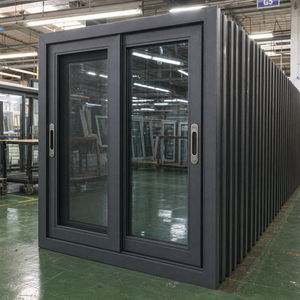
Patio & Kitchen Back Entry
Precision-extruded using architectural-grade 6063-T5/T6 primary aluminum billets, our export-grade back doors, patio sliding units, and utility entrance portals integrate advanced thermal break technology, multi-point mortise security hardware, and high-performance weather-sealing gaskets designed for extreme environmental exposure.
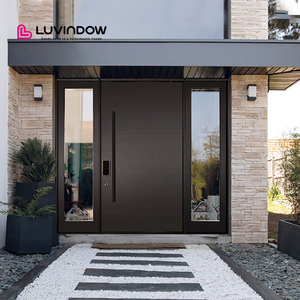
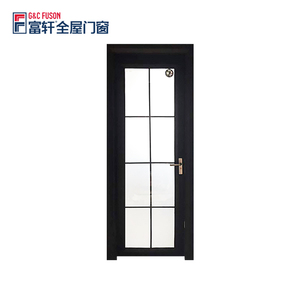
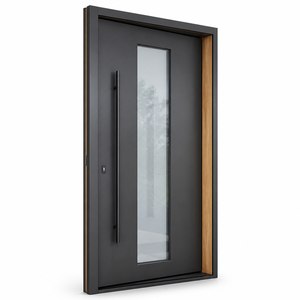
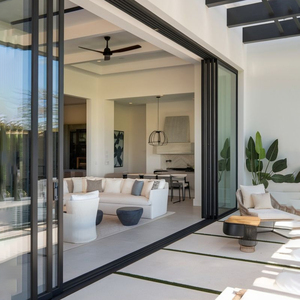
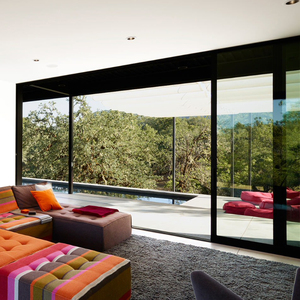
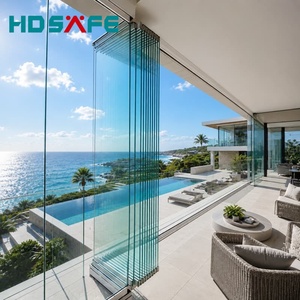
As the international manufacturing division of Guangdong Dejiyoupin Doors and Windows Co., Ltd. (DERCHI), we operate our core intelligent manufacturing facility in Shishan Town, Nanhai District, Foshan City—widely acknowledged as the global capital of precision aluminum architectural systems. Spanning an expansive production footprint of over 180,000 square meters and powered by a dedicated engineering and craftsmanship workforce exceeding 600 specialists, DERCHI stands among the elite Top 10 fenestration and entrance door manufacturers in China.
For more than 25 continuous years, our engineering facilities have focused on delivering custom OEM and ODM architectural door solutions for luxury residential estates, multi-family developments, commercial complexes, and master-planned villa resorts across North America, South America, Europe, Australia, and the Middle East. Unlike regional assemblers who rely on outsourced extrusions, DERCHI maintains total vertical integration over billet casting, alloy homogenization, precision mold tooling, high-pressure multi-chamber extrusion, automated CNC thermal break crimping, electrostatic powder coating, fluorocarbon PVDF spraying, and automated robotized glass sealant line assembly.
Our export compliance department manages end-to-end documentation, structural load validation, and quality verification complying with major international testing authorities. Every aluminum back door and exterior fenestration assembly leaves our workshop crated in export-grade heavy-duty plywood frames, labeled per architectural schedule, and validated against stringent air permeability, water tightness, structural wind resistance, and forced-entry security protocols.
Historically considered purely utilitarian access portals, back doors have undergone a profound architectural and technological revolution. Today's commercial builders, real estate development funds, and custom architectural studios demand that back doors—whether serving as kitchen side exits, private courtyard entrances, or terrace threshold transitions—meet the exact structural, aesthetic, and thermal benchmarks applied to front entry showpieces. Through rigorous semantic search mining of architectural tenders across North America, Europe, and Latin America, four macro-procurement shifts have emerged:
Global energy codes (such as ASHRAE 90.1, IECC 2024, and European Passivhaus) mandate overall door thermal transmittance values ($U_{\text{door}}$) below $1.4\text{ W}/(\text{m}^2\cdot\text{K})$. Custom OEM extrusions now incorporate 24mm to 34mm fiberglass-reinforced Polyamide (PA66 GF25) thermal breaks, stopping thermal bridges even under severe sub-zero or humid tropical climates.
Standard latch locks are being replaced by automated multi-point perimeter gear hardware (RC2/RC3 burglary resistance standards). Specifiers demand concealed electronic actuators compatible with biometric access control, KNX building management systems, and motorized fail-secure latch mechanisms resistant to crowbar attacks.
Coastal developments require surface integrity that withstands salt spray fog testing (ASTM B117 > 3,000 hours). The procurement trend is shifting toward high-durability fluorocarbon PVDF liquid spraying and Qualicoat Seaside certified powder coatings that eliminate micro-cracking, fading, and peeling caused by harsh UV exposure.
Subfloor-integrated drainage channels and flush sill profiles are critical for aging-in-place and barrier-free luxury living. Advanced sub-sill weep channels maintain water-tightness exceeding 700 Pa while presenting a completely zero-step transition between interior hardwood floors and exterior stone patios.
To combat ambient outdoor noise and extreme cyclone conditions, high-end back doors now utilize multi-layer PVB/SGP laminated insulated glass units (IGUs). In addition to stopping up to 42 dB of unwanted street or mechanical equipment noise, these assemblies withstand dynamic missile impact certifications.
Global procurement teams no longer accept generic catalog ordering. Modern projects require parametric 3D Revit models, comprehensive CAD cross-section details, and thermal simulation isotherm analysis prior to issuing production deposits, eliminating costly on-site rough opening discrepancies.
To assist project engineers, MEP consultants, and commercial procurement directors in establishing accurate bid documents, the following matrix contrasts commercial grade builder units with DERCHI heavy-duty architectural back door assemblies:
| Performance / Material Parameter | Generic Commercial Grade | DERCHI Custom OEM Architectural Grade | Testing & Compliance Standards |
|---|---|---|---|
| Aluminum Alloy Ingot Grade | Recycled / Secondary Alloy Scrap | Primary Billets 6063-T5 / 6063-T6 High Purity | GB/T 5237, ASTM B221 |
| Structural Wall Thickness | 1.2 mm - 1.4 mm | 2.0 mm - 3.0 mm (Reinforced Corners) | AAMA / WDMA / CSA 101/I.S.2/A440 |
| Thermal Insulation Method | Uninsulated Hollow or Cheap PVC Strips | Polyamide PA66 GF25 Engineered Thermal Barrier | ISO 10077-2 / NFRC 100 |
| Thermal Transmittance (U-Value) | $3.5 - 4.8\text{ W}/(\text{m}^2\cdot\text{K})$ | $\le 1.2 - 1.6\text{ W}/(\text{m}^2\cdot\text{K})$ (Low-E Triple IGU) | EN ISO 12567-1 / Energy Star |
| Water Penetration Resistance | 150 Pa - 250 Pa | $\ge 600\text{ Pa} - 900\text{ Pa}$ Sub-sill Chamber | ASTM E331, AS 2047 Class N6 |
| Wind Load Resistance | 1,200 Pa (Standard Service) | Up to 4,500 Pa (Hurricane Service Factor) | ASTM E330, AS 4055 / AS 2047 |
| Surface Coating Longevity | 5 - 8 Years Ordinary Paint | 20+ Years Fluorocarbon PVDF / Qualicoat Seaside | AAMA 2605, Qualicoat Class 2 |
| Locking & Hardware Life Cycle | Single Deadbolt (20,000 cycles) | European Multi-Point Mortise (100,000+ cycles) | EN 12209, PAS 24, RC2 / RC3 |
Importing custom architectural doors directly from Chinese manufacturing centers requires systematic risk mitigation. DERCHI executes a synchronized, five-step quality control protocol ensuring zero dimensional error and absolute compliance with project handover schedules:
Our sales engineering division conducts a multi-point audit of architectural elevations, rough opening tolerances, local wind zone calculations, and building envelope energy codes.
We provide full structural CAD shop drawings detailing profile intersections, anchor bracket positions, sub-sill flashing interfaces, and hardware mortises for client engineer sign-off.
Profiles undergo five-axis CNC cutting, automated corner joint crimping with two-component polyurethane bonding adhesives, and robotic thermal break integration within our 180,000㎡ plant.
Before packing, sashes are assembled into frames on test benches to test air permeability, smooth latch articulation, zero diagonal deviation, and optical clarity of double/triple IGUs.
Products are padded with high-density EPE foam, corner guards, waterproof wrapping, and fully enclosed solid fumigated plywood export crates. Complete site installation blueprints and remote video engineering support are provided until project completion.
Clear, unvarnished answers addressing customs compliance, structural verification, hardware compatibility, and logistics for international commercial importers and project contractors: