Featured OEM Fenestration & Glazing Assemblies
Each sliding and architectural window unit is extruded from premium 6063-T5/T6 alloy billets, integrating European polyamide thermal break bars, heavy-duty tandem bogie rollers, and multi-point security hardware.
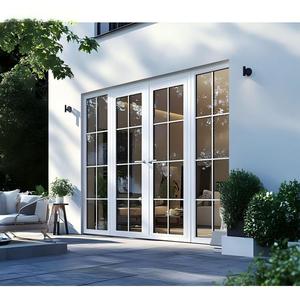
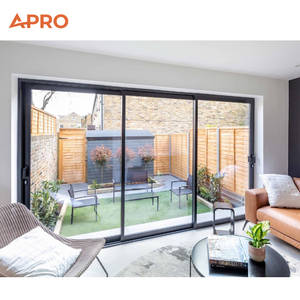
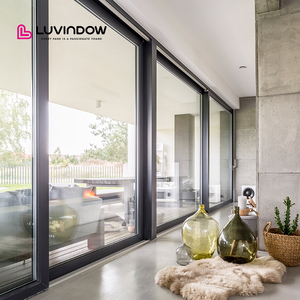
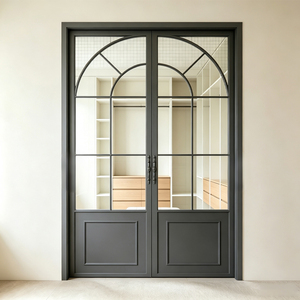
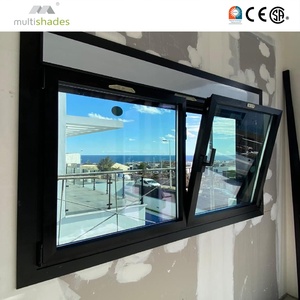
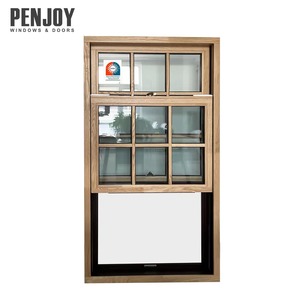
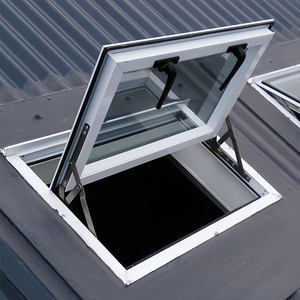
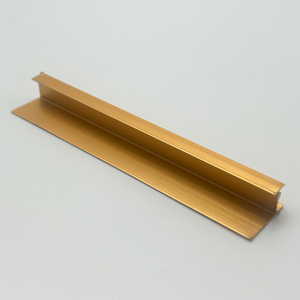
Foshan Global Manufacturing Base: 180,000㎡ Scale
Operating under Guangdong Dejiyoupin Doors and Windows Co., Ltd. (DERCHI Brand), our vertically integrated fabrication facility in Foshan produces high-performance fenestration systems certified to international building codes across 60+ countries.
For international tier-1 developers, commercial contractors, and facade consultants, securing a reliable China-based OEM aluminum sliding window partner requires structural verification, tight extrusion tolerances, and audited metallurgical composition. We maintain complete traceability over billet alloy composition, polyamide crimping pull-off resistance, and gasket vulcanization.
Our production facilities in Shishan Town, Foshan, house automated 4-axis and 5-axis CNC machining centers, automated electrostatic powder coating lines certified by Qualicoat Seaside, and continuous argon-gas-injected insulated glass unit (IGU) lines. We eliminate intermediary markups and fabrication inconsistencies, delivering turnkey exterior envelope systems built strictly to your project specifications.
- ✓ Certified Compliance: Tested rigorously against AS2047 (N6 Cyclonic Rating), CE (EN 14351-1), NFRC, CSA, and ISO9001 quality systems.
- ✓ Complimentary Shop Drawings: Dedicated BIM/CAD drafting teams generating comprehensive shop drawings, structural anchor calculations, and drainage schematics within 48 hours.
- ✓ Consolidated Export Logistics: Heavy-duty non-fumigation plywood crating with vacuum desiccant packs, engineered for harsh sea freight to North America, South America, Australia, and Europe.
Quality Assurance Protocols for Sliding Systems
Material Science: Structural Integrity & Energy Dynamics
Specifying architectural aluminum sliding windows requires reconciling large glass expanses with strict U-value thermal thresholds, structural deflection constraints, and long-term acoustic isolation.
6063-T6 Structural Profile Metallurgy
We utilize primary 6063-T5 and high-tensile 6063-T6 aluminum alloys exclusively, completely avoiding scrap-contaminated remelt billets. Profile wall thicknesses range from 1.6mm for standard residential spans to 3.0mm heavy-duty structural mullions engineered to sustain structural moments of inertia ($I_x$) required for multi-story wind shear load conditions.
PA66 GF25 Polyamide Thermal Barriers
To halt thermal conduction across the frame envelope, our profiles incorporate 24mm to 35mm multi-cavity polyamide (PA66) thermal break bars reinforced with 25% fiberglass. Unlike cheap poured-and-debridged polyurethane bridges, high-precision mechanically knurled and crimped PA66 resists thermal expansion, maintaining structural shear strength across -30°C to +80°C.
Acoustic & Low-E Glazing Enclosures
Double and triple-glazed configurations are built using tempered Saint-Gobain or CSG glass with warm-edge composite spacers and 95% argon gas filling. Acoustic laminates incorporating 0.76mm to 1.52mm Sound-Acoustic PVB or SentryGlas (SGP) achieve weighted sound reduction indexes of $R_w + C_{tr} \ge 38 \text{ dB}$, ideal for highway and flight corridor developments.
Global Procurement & Product Evolution Trends (2025–2030)
Procurement directors and commercial real estate developers must align their supply chains with escalating municipal energy mandates, carbon tariffs, and shifting architectural preferences.
With the rollout of the EU Carbon Border Adjustment Mechanism (CBAM) and US LEED v4.1 mandates, developers increasingly demand EPD (Environmental Product Declaration) certificates and billets cast using certified renewable hydropower with low embodied carbon (<4.0 kg CO₂/kg Al).
Interlocking meeting stiles have contracted from conventional 55mm widths down to 18mm–24mm structural vertical profiles. Sub-sills and head jambs are designed for complete pocket concealment within building finishes, maximizing visible glass area without structural deflection compromises.
Automated sliding sashes with concealed linear magnetic drives and brushless DC motors are rapidly becoming standard in high-end projects. Modern OEM units integrate seamlessly into centralized KNX, Crestron, or Zigbee building management networks with integrated rain/wind sensor overrides.
Extreme weather events require resilient glazing. Developments in coastal storm regions specify continuous structural dry-glazing EPDM gaskets, multi-point lock interlocks with anti-lift cams, and SGP structural interlayer glass capable of withstanding large missile impacts without breach.
OEM System Specification & Performance Matrix
Review structural performance indices across our custom manufactured sliding fenestration series to determine the optimal configuration for your project's environmental conditions.
| Performance Characteristic | Commercial Non-Thermal Series | Architectural Thermal Break 120 | Severe Impact & Passive Series 150 |
|---|---|---|---|
| Primary Aluminum Alloy | 6063-T5 (1.4mm - 1.8mm) | 6063-T6 (2.0mm - 2.5mm) | 6063-T6 Architectural (2.5mm - 3.2mm) |
| Thermal Break Configuration | None (Monolithic Extrusion) | 24mm Multi-Chamber PA66 GF25 | 35mm Continuous Technoform Polyamide |
| Thermal Transmittance ($U_w$) | 3.8 - 4.5 W/(m²·K) | 1.6 - 2.1 W/(m²·K) | 0.9 - 1.3 W/(m²·K) (Triple Glazed Low-E) |
| Acoustic Attenuation ($R_w$) | 28 - 32 dB | 35 - 39 dB | 42 - 46 dB (Laminated Acoustic Glass) |
| Design Wind Pressure Rating | 1500 Pa (Serviceability) | 3000 Pa (Safety / Cyclonic) | 4500 Pa (Severe Hurricane / AS2047 N6) |
| Water Tightness Threshold | 250 Pa (Static Chamber) | 450 Pa (Sub-Sill Reservoir) | 700 Pa (Cyclic Cascading Drain) |
| Max Sash Dimension & Load | 1500 × 2400mm / 160 kg | 2200 × 3200mm / 300 kg | 3000 × 4000mm / 500 kg (Motorized Option) |
Frequently Answered Sourcing Inquiries
Critical operational, quality, testing, and logistical insights for procurement managers and general contractors importing from China.
Request Engineering Consultation & System Catalog
Connect directly with our Foshan engineering and international export team. Submit your architectural window schedule, elevation plans, or CAD cross-sections for immediate DFM (Design for Manufacturing) review and factory-direct quotation.