Factory-Engineered Aluminium Utility & Laundry Door Assemblies
Constructed from primary billet alloys to eliminate micro-corrosion in detergent-dense and high-humidity environments. Fully customizable by profile depth, glass build-up, and acoustic sealing.
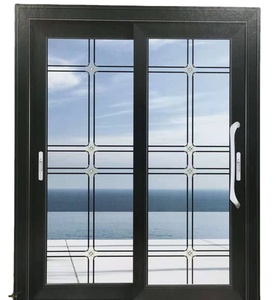
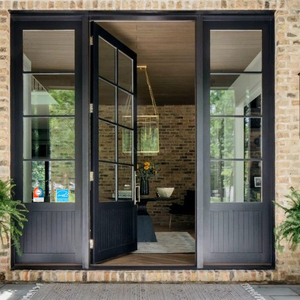
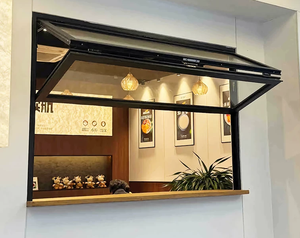
Material Metallurgy & Dynamic Performance in Laundry Architecture
Specifying interior and exterior laundry room doors requires addressing micro-climatic stress: high cyclical humidity, detergent surfactant vapors, severe spin-cycle acoustic vibrations, and space-constrained architectural envelopes.
In residential multi-family housing, hospitality design, and private villa architecture, laundry utility zones represent one of the most chemically aggressive and structurally demanding interior environments. High humidity levels ranging between 75% and 98% RH, paired with airborne lint particles and volatile alkaline detergent vapors, rapidly degrade conventional timber millwork, leading to core delamination, swollen hinge stiles, fungal colonization, and surface warping. Hollow-core vinyl (uPVC) alternatives frequently suffer from torsional deflection under thermal expansion caused by unvented heat-pump dryer exhausts. To eliminate warranty callbacks and post-handover liabilities, modern architectural specifications mandate custom OEM extruded aluminium door systems engineered from primary 6063-T5 or 6063-T6 metallurgical billets.
Aluminium extrusions provide the mechanical rigidity required to support expansive glass apertures—such as translucent fluted (Moru) or reeded laminated safety panels—while maintaining structural tolerances within ±0.5 mm across production batches. Furthermore, by incorporating polyamide thermal breaks (PA66 GF25 reinforced with 25% structural glass fiber) and multi-fin cellular EPDM perimeter gaskets, an engineered aluminium laundry door provides high-performance acoustic isolation that mitigates the 1,400–1,600 RPM spin-cycle noise produced by contemporary washing machinery.
Alloy Metallurgy & Finishes
Utilizing pure 6063-T5/T6 alloy profiles with anodizing layer thickness ≥15μm (Class AA15) or Qualicoat Class 2 fluorocarbon PVDF powder coatings, providing absolute resistance against caustic detergent splashes, chlorine bleaching agents, and continuous moisture condensation.
Acoustic Decoupling (Rw 36dB)
Precision-engineered multi-chamber profiles decoupled by acoustic polyamide strips and paired with automated drop-down floor seals that engage silently on closing. Effectively dampens low-frequency spin resonances and mechanical relay clicks.
Controlled Micro-Ventilation
Concealed micro-louver venting channels integrate seamlessly into the bottom rail or vertical stiles, facilitating continuous volumetric air exchange (15–25 m³/h) to starve mold growth without leaking unwanted utility sound into adjoining living quarters.
Specification Comparison: Laundry Door Substrates
Empirical testing metrics comparing commercial timber, hollow-core vinyl (uPVC), and custom OEM structural aluminium utility door systems under continuous 85% RH exposure cycles.
| Performance Parameter | Commercial Solid Wood / HDF | Standard uPVC Profile | DERCHI OEM Aluminium Door |
|---|---|---|---|
| Dimensional Swelling (85% RH, 30 Days) | +4.5% to +7.8% (Sticking frames) | ±1.2% (Linear thermal elongation) | < 0.02% (Imperceptible expansion) |
| Acoustic Isolation Rating (Rw / STC) | Rw 26 dB (Perimeter leakage common) | Rw 28 dB (Lightweight core resonance) | Rw 34–38 dB (Double-gasket compression) |
| Chemical / Detergent Splatter Resistance | Varnish blushes; veneer bubbles | Yellowing from surfactant vapors | Class 0 ASTM D3359 Adhesion (Unaffected) |
| Structural Stile Width (Minimalist Sightline) | Minimum 85mm–110mm | Minimum 70mm–90mm | Ultra-Slim 16mm–25mm Visible Face |
| Mold / Fungal Resistance (ASTM G21) | Zero resistance; requires biocide | Resistant; prone to silicone mold | Zero Nutrient Rating (Antimicrobial) |
| Service Life Cycle Expectancy | 5–7 Years in laundry zones | 8–12 Years (Embrittlement risk) | 30+ Years with Zero Maintenance |
Global Procurement Trends: Aluminum Laundry Architecture (2025–2030)
How tier-one general contractors, modular volumetric pod manufacturers, and multi-family developers are redefining utility access systems worldwide.
Prefabricated DfMA Pod Integration
Developers are adopting off-site modular bathroom and laundry pods. OEM factories now supply pre-glazed, pre-hung aluminium pocket systems equipped with snap-in architectural reveal trims, slashing jobsite installation times by 75%.
Architectural Fluted & Reeded Glazing
Opaque solid panels are rapidly yielding to 8mm–10mm tempered Moru, fluted, or satin acid-etched architectural glass infills. These diffuse natural ambient daylight while maintaining visual privacy over washing units, dryers, and utility piping.
Antimicrobial Fluorocarbon Finishes
Surfacing technology has advanced to include silver-ion active biocidal topcoats. These factory-applied coatings neutralize 99.9% of bacteria and black mold spores (Aspergillus niger) common in warm, humid laundry alcoves.
Flush Threshold Concealed Tracks
Universal accessibility compliance (ADA / AS 1428.1) mandates zero-barrier floor transitions. Emerging designs leverage top-hung concealed sliding mechanisms with recessed stainless lint-trapping drainage channels that eliminate tripping hazards entirely.
Guangdong Dejiyoupin (DERCHI): Foshan's Premier OEM Door Factory
Operating from our expansive 180,000 square meter industrial manufacturing base in Shishan Town, Foshan, Guangdong Dejiyoupin Doors and Windows Co., Ltd. (DERCHI) stands as an engineering powerhouse in the architectural metal systems sector. Backed by more than 25 years of specialized fabrication experience, our facility integrates heavy extrusion CNC machining, dual-head automated miter-saw stations, automated robotic powder-coating lines, and ISO9001-certified clean assembly workshops.
Every custom OEM laundry door manufactured for overseas developers, distributors, and contractors undergoes stringent mechanical cycle testing, water tightness audits, and dimensional tolerance scans. Our specialized engineering department collaborates directly with your design office, supplying complimentary CAD shop drawings, BIM families, and structural wind-load calculations to ensure every batch aligns perfectly with your schedules and local statutory codes.


Precision OEM Delivery Protocol: From Concept to Jobsite
Rigorous, multi-tier quality assurance protocol tailored to prevent construction schedule disruptions and ensure effortless site installation.
Architectural Shop Drawings
Within 24–48 hours of initial schedule receipt, our technical department submits 1:1 scale CAD cross-sections, fixing anchor details, and floor track interfaces for architect sign-off, completely free of charge.
CNC Profile Machining
Primary aluminium billet extrusions are cut and milled on 4-axis German CNC machines to strict ±0.3mm tolerances. Hardware pockets, drop-seal routings, and drainage slots are machined prior to surface finishing.
Qualicoat Surface Finishing
Profiles enter automated pretreatment tanks before electrostatic application of AkzoNobel or PPG powder coatings, guaranteeing 60–80μm dry film thickness backed by a 15–20 year non-fading, anti-corrosion warranty.
Automated Glazing & Assembly
Tempered laminated glass panels are inserted using continuous co-extruded EPDM gaskets (never cheap acidic silicone), eliminating vapor leaks and preventing unsightly seal shrinkage over long-term operations.
100% Pre-Erection Audit
Prior to packaging, random units from every production batch are erected on test bucks to audit diagonal squareness, roller glide smoothness, latch strike alignments, and seal compression consistency.
Export Plywood Crating
Finished assemblies are wrapped in moisture-barrier film, protected by foam corner protectors, and packed into IPPC-certified fumigated solid plywood crates tailored for maritime container stowage.
Frequently Asked Engineering & Sourcing Inquiries
Clear, technically accurate answers to help project directors, quantity surveyors, and architects de-risk overseas door procurement.
Start Your Custom OEM Laundry Door Project Today
Submit your door schedules, CAD sketches, or project tender documents. DERCHI's senior facade and interior metal engineers provide full feasibility reviews, value engineering proposals, and fixed-price FOB/CIF quotations within 24 hours.