In modern architectural engineering, the integration of window jali—traditionally recognized across Oriental, Mediterranean, and Islamic architecture as mashrabiya or intricate lattice screens—has transitioned from an ornamental stone and timber craft to high-performance structural aluminium assemblies. Contemporary window manufacturers face an intricate balancing act: meeting stricter building energy performance regulations (lowering Solar Heat Gain Coefficients, or SHGC) while simultaneously fulfilling demanding life-safety codes, structural wind-load tolerances, anti-intrusion security thresholds, and aesthetic customization.
OEM aluminium jali components engineered from primary 6063 and 6061 magnesium-silicon aluminum alloys offer superior strength-to-weight ratios compared to traditional iron grills or heavy cast metals. Unlike ferrous security bars that degrade via oxidation, induce galvanic corrosion in aluminium frames, and add excessive structural dead-weight, an extruded or precision CNC-milled aluminium jali provides an exceptionally durable, chemically inert, and fully recyclable envelope element.
Metallurgical Integrity: Why Alloy Composition Dictates Façade Lifespan
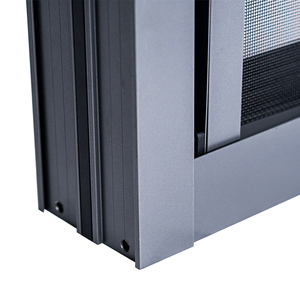
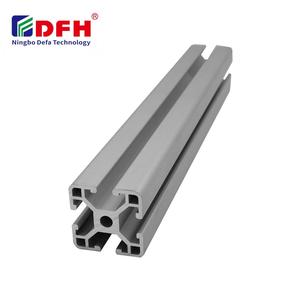
For custom OEM window fabrication, specifying the correct alloy temper is non-negotiable. 6063-T5/T6 is the gold standard for extruded window perimeter profiles and complex hollow lattice geometries, yielding an ultimate tensile strength of 190–240 MPa and exceptional surface smoothness suited for Qualicoat Class 2 architectural powder coatings. When manufacturing intricate laser-cut plate jali panels, sheet grade 5052-H32 (Aluminium-Magnesium alloy) is utilized for its extreme ductility, superior weldability, and resilience against intergranular stress corrosion in high-salinity marine atmospheres (ISO 12944 C4/C5 environments).
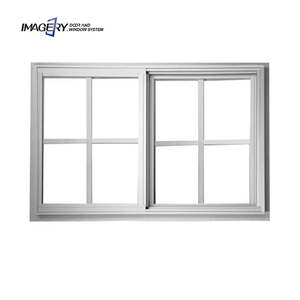
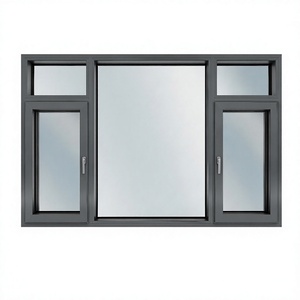
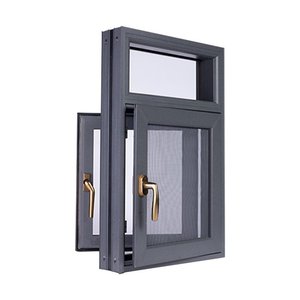
Through our comprehensive OEM and ODM processing pipelines located in Foshan, China—the epicenter of global aluminium extrusion technology—every profile, frame interface, and jali screen panel is built under closed-loop dimensional oversight. Integrating Computerized Numerical Control (CNC) laser profiling, high-tonnage precision extrusion presses (ranging from 800 to 3,600 metric tons), automated robotic welding, and inline pre-treatment anodization, our production base delivers seamless compatibility between the protective jali barrier and the underlying sliding, casement, or tilt-and-turn window frame.