High-Performance Soundproof Windows Direct from Foshan Factory
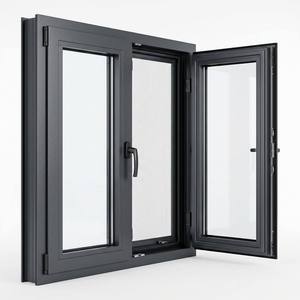
Explore our export-grade double and triple-glazed soundproof casement, tilt-and-turn, and sliding window configurations precision-calibrated for severe urban noise mitigation and climate resilience.

Industrial Fenestration Whitepaper: Sourcing Soundproof Aluminium Windows from China
The global demand for high-performance soundproof fenestration has transitioned from an elite luxury requirement to a baseline architectural specification. Driven by rapid urbanization, high-density metropolitan developments adjacent to transit arteries, and stricter acoustic building codes (such as WHO Environmental Noise Guidelines and Document E in the UK), building envelope engineers are prioritizing envelope acoustic attenuation (Sound Transmission Class — STC, and Weighted Sound Reduction Index — Rw).
China, particularly the industrial fenestration manufacturing cluster centered around Foshan in Guangdong Province, commands over 60% of the world’s extruded aluminum window output. Sourcing wholesale soundproof aluminum windows from certified Chinese factories provides developers, general contractors, and trade importers with an unbeatable nexus of custom structural engineering, multi-layer acoustic glass fabrication, and economies of scale. However, navigating the technical landscape requires discerning genuine acoustic attenuation from superficial double-glazing marketing claims.
Acoustic Engineering Breakdown: Glass Make-up, Profiles, and Gas Cavities
A window’s acoustic performance is governed by the weakest link principle (Mass Law and Coincidence Dip). Sound traverses through the frame, glass pane resonance, air infiltration leaks, and perimeter anchoring voids. Direct factory suppliers from China utilize three foundational engineering vectors:
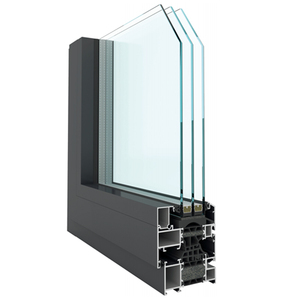
1. Asymmetric Multi-Layer Laminated Glass (Acoustic PVB vs SGP): When two panes of identical glass thickness are assembled in a double-glazed unit (e.g., 6mm + 12A + 6mm), sound vibrations resonate at the same critical frequency, creating an acoustic “coincidence dip” where sound attenuation collapses. Leading Foshan factories counteract this by specifying asymmetric compositions (e.g., 8mm Toughened + 1.14mm Acoustic PVB + 6mm Toughened + 16mm Argon Warm-edge + 10mm Laminated). The viscoelastic acoustic polyvinyl butyral (PVB) interlayer transforms sound wave shear kinetic energy into dissipated thermal energy.
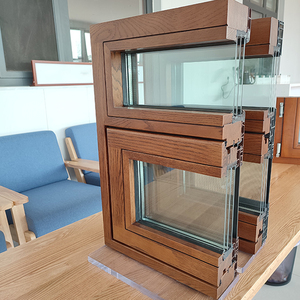
2. Multi-Chamber PA66GF25 Thermal Extrusions: Standard hollow aluminum conducts sound as a rigid diaphragm. Modern soundproof extrusions utilize 6063-T6 or 6060-T66 aluminum alloys segmented by wide multi-chamber 24mm–34mm Technoform polyamide 66 reinforced with 25% fiberglass (PA66GF25). These acoustic-thermal break strips decouple the interior aluminum profile from exterior acoustic waves, functioning as a high-density acoustic baffle.
3. Isobaric Decompression with Triple Continuous EPDM Gasketing: Airborne noise leaks effortlessly through microscopically cracked or non-continuous weatherstripping. Premier Chinese manufacturers incorporate three-tier co-extruded automotive-grade EPDM (Ethylene Propylene Diene Monomer) or foamed Santoprene rubber seals along the sash frame interface, creating an airtight, isobaric drainage and decompression cavity preventing flank transmission.
| Acoustic Configuration Grade | Glass Pane Composition | Thermal Break Strip | Sound Decibel Drop (Rw/STC) | Optimal Architectural Application |
|---|---|---|---|---|
| Standard Double Glazed | 5mm Float + 12A + 5mm Float | 14.8mm Single Chamber | 30 – 32 dB | Suburban residential, low ambient suburban noise |
| Commercial Thermal Soundproof | 6mm Low-E + 16A Argon + 6mm Clear | 24mm Multi-Chamber | 35 – 38 dB | Urban residential complexes, perimeter school zones |
| Acoustic PVB Laminated Dual-Cavity | (5mm + 0.76 PVB-A + 5mm) + 12A + 6mm | 28mm Isobaric Thermal | 40 – 43 dB | Arterial highway frontage, railway corridors |
| Extreme Triple Laminated Acoustic | (6mm + 1.14 PVB-A + 6mm) + 16A + (4mm + 0.76 PVB + 4mm) | 34mm Multi-Cavity Co-extruded | 46 – 49 dB | Airport perimeter villas, 24/7 industrial boundaries |
| VIG Hybrid Acoustic (Next-Gen) | 8mm Vacuum Insulated Glass + 12A + 6.38mm Lam | 40mm Thermal Foam Injected | 50 – 54 dB | Broadcast studios, ultra-luxury high-density penthouses |
Future Procurement Trends in the Soundproof Fenestration Industry
International procurement agents, property developers, and façade engineering consultants are transforming their soundproof window buying methodologies. The transactional model of simply requesting price-per-square-meter is obsolete. Forward-thinking procurement strategies reflect four macro shifts:
BIM-Driven Custom Modular Engineering
Global procurement teams demand full Building Information Modeling (BIM) Level 2 integration. Certified Chinese factories deliver digital twin CAD/Revit parameter models, allowing structural engineers to verify acoustic, wind load deflection, and thermal bridging properties prior to containerized batch fabrication.
Circular Low-Embodied-Carbon Aluminium
With cross-border carbon border adjustment mechanisms (such as EU CBAM), leading B2B buyers now mandate verified Environmental Product Declarations (EPD). Modern Foshan manufacturers are switching to hydroelectric-smelted low-carbon primary aluminum billets with >30% post-consumer recycled aluminum alloy content.
Dual Performance: Acoustic + Cyclonic Rating
Developers in coastal and subtropical zones (e.g., Florida, the Caribbean, Southeast Asia, Australia) demand acoustic attenuation paired with hurricane and cyclonic resistance. SGP (SentryGlas) laminated assemblies combined with multi-point stainless steel shoot bolts now offer both STC 43+ and AS2047 / ASTM E1886 missile impact integrity.
Technological Evolutions in Soundproof Fenestration Manufacturing
The boundary of fenestration engineering is expanding from passive mass damping to smart, responsive materials science. R&D divisions inside advanced Chinese manufacturing complexes are operationalizing three cutting-edge technological innovations:
1. Vacuum Insulated Glass (VIG) Acoustic Integration: While conventional gas-filled double glazing relies on 12mm–20mm air cavities, acoustic wave transfer through air molecules persists. VIG units introduce a 0.15mm high-vacuum chamber (<0.001 Pa) separated by micro-pillars. Sound cannot traverse a true vacuum, resulting in acoustic decoupling that yields an extraordinary Rw ≥ 40 dB within an ultra-thin 10.3mm total glass thickness, ideal for heritage retrofits and minimalist narrow profiles.
2. Aerogel-Infused Extrusion Cavities: Standard thermal break hollow chambers are vulnerable to acoustic reverberation inside the profile walls. Tier-one factories now offer acoustic cavity dampeners composed of non-combustible silica aerogel matrices or injected open-cell acoustic foams. This reduces profile resonance by an additional 3 to 5 dB without altering external profile sightlines.
3. Micro-Perforated Sub-Frame Noise Absorbers: Borrowing acoustic dissipation methods from aerospace engine nacelles, new sub-frame extrusions feature laser-perforated Helmholtz resonance micro-channels along the window jamb perimeter. These micro-perforations absorb and cancel targeted high-volume traffic noise bands before sound reaches the primary rubber sealing plane.
Guangdong Dejiyoupin Doors and Windows Co., Ltd. (DERCHI)
Headquartered in Foshan, Guangdong — China’s global epicenter for high-end aluminum system window engineering — Guangdong Dejiyoupin Doors and Windows Co., Ltd. (DERCHI) represents the pinnacle of industrial-scale custom fenestration production. With over 25 years of specialized manufacturing experience, DERCHI operates one of the sector’s largest modern processing bases, certified to CE, ISO9001, AS2047, and UL standards.
DERCHI provides worldwide developers, architects, and direct import contractors with unified single-source accountability. From profile extrusion, CNC miter sawing, and acoustic glass tempering to multi-tier quality control and international containerized seaworthy crating, our turnkey engineering ensures seamless installation and proven acoustic performance on every project.


Frequently Asked Questions on Sourcing Soundproof Windows
Clear, technical, and commercial answers addressing common engineering challenges, test certifications, minimum orders, and shipping logistics.