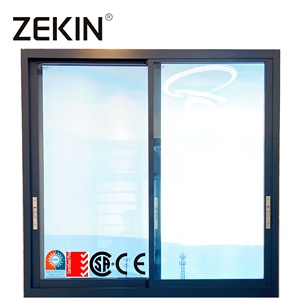
Featured Commercial & Residential Door Systems
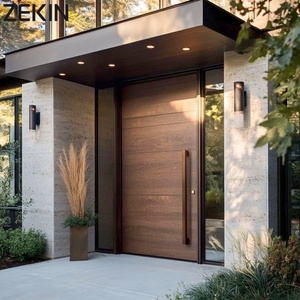
Engineered from architectural grade 6063-T5/T6 aluminum alloy billets, our primary entrance collections integrate multi-chamber thermal barriers, advanced anti-sag pivot assemblies, and cyclone-rated multipoint locking arrays built for global building codes.
180,000㎡
Foshan Industrial Base
25+
Years Engineering Mastery
100+
Global Patents & Certs
600+
Specialist Production Staff
Industrial White Paper
Navigating the Global Procurement of Wholesale Aluminium Main Doors
Modern architectural fenestration has undergone a decisive paradigm shift. In luxury residential villas, institutional premises, and high-footfall commercial developments, the traditional wooden portal and cold-rolled hollow steel door have yielded substantial global market share to precision-engineered aluminium main door assemblies. As commercial developers, procurement directors, facade consultants, and general contractors seek building envelopes capable of enduring decades of intense climatic exposure without dimensional distortion, sourcing directly from verified China wholesale aluminium main door suppliers has emerged as the definitive procurement standard.
The manufacturing cluster located in Foshan, Guangdong Province, commands the technological apex of this industry. Integrating primary aluminum smelting, automated CNC billet extrusion, high-pressure die casting, multi-axis computerized milling, electrostatic fluorocarbon (PVDF) coating, and automated assembly, Foshan manufacturers deliver structural tolerances measured in fractions of a millimeter. For foreign procurement specialists, understanding the metallurgical fundamentals, structural wind-load engineering, thermal barrier continuity, and multi-point security hardware kinematics is paramount to mitigating risk and securing superior lifecycle performance.
When engineering an architectural entry portal, the primary load-bearing profiles must be extruded from prime virgin 6063-T5 or 6061-T6 structural aluminum alloy. Substandard fabricators frequently incorporate scrap or recycled remelt billets laden with secondary impurities, which compromise profile tensile strength, induce galvanic micro-cracking, and severely degrade anodizing or powder coat adhesion. Certified tier-1 manufacturers in China formulate profiles with web wall thicknesses ranging from 2.0mm to 3.5mm for standard swing assemblies, extending to 4.0mm to 6.0mm for monumental pivot portals spanning over 4 meters in height. This metallurgical integrity guarantees that under severe structural design pressures (positive and negative wind loads), the primary door sash maintains an ultimate deflection limit well within L/175 or L/240 architectural criteria.
Polyamide Thermal Barriers
Continuous PA66 GF25 (25% glass fiber reinforced polyamide) thermal break strips physically decouple interior and exterior aluminum chambers. This stops condensation, achieves thermal transmittance U-factors down to 1.1 W/m²K, and preserves indoor climate control.
High-Load Pivot Mechanics
Engineered for monolithic door leafs weighing up to 800kg. Ground concealed hydraulic floor springs coupled with top needle-bearing pivots provide silky 360° or 180° swing arcs, adjustable closing damping, and zero sag over 500,000 duty cycles.
Marine Surface Passivation
Qualicoat Class 2 certified powder coatings and AAMA 2605 compliant 3-coat/2-bake fluorocarbon PVDF systems prevent peeling, chalking, and filiform corrosion in extreme coastal saline atmospheres (exceeding 3,000 hours of continuous neutral salt spray testing).
Comparative Engineering Specifications: Main Door Classifications
| Structural System | Primary Profile Alloy | Thermal Transmittance (U-Value) | Max Leaf Dimensions (W x H) | Acoustic Damping (STC/Rw) | Hardware / Lock Array | Target Application |
|---|---|---|---|---|---|---|
| Cast Aluminum Art Portal | A356 Pure Ingot + 6063-T5 Core | 1.4 - 1.8 W/m²K | 2400mm x 3800mm | Rw 38 dB | Electronic Motorized Multi-Point | Luxury Villas & Estates |
| Thermal Break Pivot Door | 6063-T6 Structural Profile (3.0mm) | 1.1 - 1.5 W/m²K | 2000mm x 4500mm | Rw 42 dB | Concealed Hydraulic Pivot + Panic Bar | Modern Mansions & HQs |
| Heavy Commercial French Entry | 6063-T5 High Wall (2.5mm) | 1.5 - 2.0 W/m²K | 1800mm x 3000mm | Rw 35 dB | German Hoppe / G-U Multi-Latch | Storefronts & Boutique Hotels |
| Minimalist Glazed Entry Portal | Ultra-Narrow Sightline 6061-T6 | 1.2 - 1.6 W/m²K | 1600mm x 3200mm | Rw 40 dB | Concealed Magnetic Latch + Biometrics | Contemporary Showrooms |
Strategic Outlook
Future Procurement Trends: What Global Buyers Must Anticipate
International sourcing of wholesale architectural fenestration requires proactive foresight into municipal building codes, energy efficiency dictates, and modern aesthetic philosophies. Over the next five years, B2B procurement of wholesale aluminium main doors will be governed by four definitive manufacturing vectors:
01
Monumental Apertures & Integrated Pivot Geometry
Architects are eliminating standard residential door dimensions in favor of oversized monumental apertures (widths exceeding 1.8m, heights surpassing 3.5m). Sourcing these monolithic leaves demands advanced internal steel tension-rod engineering inside the aluminum extrusion cavity to counteract bimetallic deflection caused by drastic indoor-outdoor temperature differentials.
02
Smart Biometric & Access Control Automation
The standard mechanical keyway is becoming obsolete in high-end specifications. Leading wholesale orders require fully concealed motorized locksets (such as Siegenia or KFV systems) natively embedded inside the sash profile, fully interfaced with 3D facial recognition, biometric finger-vein sensors, and building management systems (BMS) with dry-contact relay integration.
03
Super-Insulated Envelope Compliance (Passive House Standard)
Global energy codes (such as ASHRAE 90.1, Title 24, and the European Energy Performance of Buildings Directive) require ultra-low U-factors. Future-proof aluminum main doors incorporate multi-chamber aerogel cavity insulation, warm-edge structural glazing spacers, and dual/triple EPDM co-extruded compression gaskets that guarantee air infiltration ratings under 0.1 CFM/ft².
04
Low-Carbon Aluminium Billets & EPD Verification
Corporate ESG mandates and green building rating systems (LEED v4.1, BREEAM) are imposing rigorous carbon accounting across procurement tiers. Premier China wholesale suppliers are transitioning to hydro-powered primary aluminum smelters and verifiable post-consumer recycled billets, backed by third-party audited Environmental Product Declarations (EPD).
Technological Metamorphosis
Evolutionary Trajectory of Aluminum Entrance Doors
Understanding the technological transformation of China's aluminum fabrication industry clarifies why Foshan has superseded historical European and American fabricators in terms of scalability, precision, and economic efficiency. The sector has navigated three distinct evolutionary epochs:
First Epoch (1995–2008): Non-Thermal Extrusions & Generic Assembly. Initial manufacturing focused on non-thermal break profiles with thin wall extrusions (1.0mm - 1.4mm) held together by simple mitered corner brackets and standard mechanical screws. These assemblies exhibited poor thermal performance, were prone to corner joint separation over time, and were largely restricted to basic interior partitions or low-end residential applications.
Second Epoch (2009–2018): The Thermal Break Revolution & Precision CNC Integration. Driven by surging national export demand and stringent European certifications (such as CE marking under EN 14351-1), Chinese factories invested heavily in Italian and German computerized profile-rolling machinery. Polyamide thermal break insertion became universal. Simultaneously, corner crimping progressed to pneumatically injected two-part structural epoxy corner joints, increasing diagonal sash rigidity by over 300% and completely eliminating joint water leakage.
Third Epoch (2019–Present): Monolithic Architectural Systems & Industry 4.0 Smart Manufacturing. Today, tier-1 manufacturers like DERCHI operate fully automated, digitally managed fabrication facilities spanning hundreds of thousands of square meters. Advanced 5-axis CNC machining centers perform continuous drilling, tapping, and water-drainage routing on aluminum profiles before surface treatment. High-tonnage hydraulic vacuum casting allows the fabrication of solid 10mm-thick sculpted cast aluminum relief panels that rival hand-carved heritage portals in detail, while possessing invincible structural resilience against forced entry, coastal salt corrosion, and ballistic threats.
Direct Factory Manufacturer
Guangdong Dejiyoupin Doors and Windows (DERCHI Brand)
Headquartered in Foshan, China's global capital for architectural aluminum manufacturing, DERCHI represents the pinnacle of industrial scale and metallurgical craftsmanship. As one of China's Top 10 fenestration enterprises, our operational footprint guarantees complete sovereignty over your supply chain—from raw billet extrusion to containerized export shipping.
- 180,000㎡ Mega-Production Facility: Comprehensive in-house extrusion, CNC milling, automated powder coating, vacuum cast panel molding, and rigorous QA test labs.
- 25+ Years of International Fenestration Expertise: Trusted by architects, commercial contractors, and luxury homebuilders across North America, Australia, Europe, the Middle East, and South America.
- 8 Major Global Certifications: Formally certified under AS2047 (Australia N6 rating), NFRC / AAMA (North America), CE (Europe), ISO9001, FCC, RoHS, and UL Fire Protection standards.
- Over 30 Proprietary Patents: Continuous engineering innovations spanning thermal barrier bridges, invisible anti-pinch pivot hinges, and acoustic perimeter sealing.
- Turnkey Architectural Project Service: Dedicated English-fluent engineering personnel who review door schedules and supply 100% complimentary CAD / BIM shop drawings prior to extrusion fabrication.

Frequently Asked Questions by Global Door Importers
Direct answers addressing technical compliance, container freight logistics, wind load verification, and custom tooling parameters.
Q1: How does DERCHI ensure oversized pivot doors do not warp over time?
Thermal bowing and sash warping are engineered out through a dual-mechanism protocol: first, by utilizing heavy structural aluminum web wall profiles (up to 3.5mm thick) aged to T6 hardness; second, by integrating dual internal stainless-steel adjustable anti-warp tension bars concealed within the door core. These tie-rods allow millimeter-precise camber adjustment even years post-installation, counteracting continuous direct solar heat exposure.
Q2: Can your aluminum main doors meet local coastal salt-spray codes?
Yes. For coastal projects (such as Florida, the Caribbean, coastal Brazil, or Australia), we specify architectural-grade PVDF fluorocarbon coatings conforming to AAMA 2605 or Qualicoat Seaside Class 2 anodized finishes (25 microns minimum). These surfaces resist oxidation, chalking, and filiform corrosion, successfully withstanding over 3,000 hours of acidified salt spray testing (ASTM B117 / ISO 9227).
Q3: What is the standard packaging protocol for full-container (FCL) and LCL ocean freight?
Export fenestration demands museum-grade shipping armor. Every door leaf and subframe undergoes a 5-layer protective packing sequence: (1) peelable surface protective adhesive film, (2) shock-absorbing bubble wrap, (3) heavy corrugated edge and corner angle guards, (4) moisture-proof polyethylene heat-shrink wrapping, and (5) fully enclosed, fumigated solid plywood crates with internal structural timber bracing to prevent shifting during maritime transit.
Q4: How are shop drawings and engineering submittals handled?
Upon receiving your architectural door schedule, CAD floor plans, or rough opening dimensions, our in-house engineering team generates comprehensive 2D CAD cross-sectional shop drawings within 48 hours. These details specify jamb depths, anchor plate placements, sill threshold drainage slopes, glass build-ups, and structural wind-load deflection calculations for your engineer's review and sign-off before manufacturing begins.
Q5: What are the standard lead times for custom bespoke wholesale manufacturing?
Standard architectural powder-coated door packages require an average production cycle of 25 to 35 business days from final shop drawing sign-off and deposit confirmation. Specialized finishes, such as custom die-cast three-dimensional relief panels or multi-point motorized smart-lock integration, typically require 35 to 45 business days. Fast-track production lines are available for time-sensitive commercial projects.
Q6: Can we consolidate windows, garage doors, and interior doors in one shipment?
Absolutely. As a total envelope manufacturer, DERCHI enables complete project consolidation. You can source custom thermal break main entrance doors, architectural impact sliding/casement windows, automated sectional garage doors, and matching interior architectural doors from our single 180,000㎡ manufacturing hub, consolidating everything into dedicated 20GP or 40HQ shipping containers to significantly lower freight and import costs.
Ready to Engineer Your Next Architectural Portal?
Direct your specifications, architectural elevations, or wholesale container inquiries directly to our technical sales engineering department. Receive a comprehensive quotation, thermal data analysis, and free CAD shop drawings within 24 hours.
Inquire Now