B2B Engineering & Export White Paper

China Wholesale Aluminium Kitchen Stable Doors Manufacturers & Factories

Precision Engineering, Thermal Break Metallurgy, and Strategic Supply Chain Architecture for Commercial Importers, Contractors, and Global Fenestration Distributors.

Alloy: 6063-T5 / 6063-T6 Thermal Break: PA66 GF25 Certifications: CE · ISO9001 · AS2047
Export-Grade Architectural Catalogue

Featured Commercial & Residential Door Systems

Direct factory fenestration systems manufactured under rigid ISO9001 and AS2047 protocols, fully customizable in dimensions, glass configurations, and hardware integrations.

180,000㎡
Foshan Mega Production Base
25+
Years Manufacturing Excellence
600+
Certified Engineers & Specialists
100+
Global Patents & Testing Marks
Engineering White Paper · Section 1.0

Mechanical Architecture of Aluminum Kitchen Stable Doors

An in-depth analysis of dual-leaf split operational dynamics, meeting stile rebating, vulcanized gasket continuity, and structural load distribution in modern kitchen fenestration.

In commercial and high-end residential architectural planning, the aluminium kitchen stable door (Dutch door) represents one of the most mechanically demanding profile assemblies. Unlike monolithic casement or single-action hinged doors, an aluminium kitchen stable door splits into independently swinging upper and lower leaves, necessitating specialized interlocking transoms, precision shoot-bolts, and continuous perimeter air barriers.

Interlocking Dual Meeting Stile

The central junction between the upper and lower sash employs an extruded stepped overlapping lip with dual extruded EPDM or silicone-finned weatherstripping. This prevents wind-driven rain infiltration while maintaining independent ventilation or coupled full-swing mode via an internal architectural shoot-bolt.

Polyamide PA66 GF25 Thermal Breaks

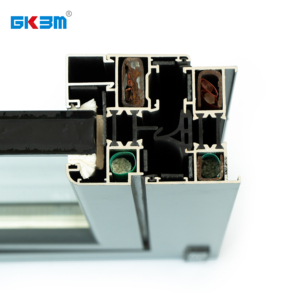
Kitchen areas generate extreme moisture differentials and thermal shifts. By cold-rolling 24mm to 34mm polyamide 66 reinforced with 25% glass fiber between outer and inner aluminum profiles, conductive heat transfer is eliminated, preventing internal condensation and mold formation.

Perimeter Multi-Point Shoot-Bolts

To resist torsional deflection under high wind loads, each leaf integrates individual multi-point locking hardware. European groove (Euro-groove) milling allows seamless hardware integration from certified Tier-1 suppliers such as Hoppe, Roto, Siegenia, or Kin Long.

Historically, stable doors constructed of solid hardwood suffered from hygroscopic expansion, swelling tightly against timber sub-frames in humid kitchen sculleries or shrinking during dry winter seasons. By pivoting to architectural aluminum alloys (primary billet 6063-T5 or high-tensile 6063-T6), China wholesale manufacturers have resolved frame fatigue, offering thermal stability with dimensional tolerances controlled within ±0.3mm across multi-axis 5-axis CNC machining centers.

Performance Parameter Commercial Grade Specification Residential Standard Testing Standard / Benchmark
Alloy Metallurgy & Temper AlSiMg 6063-T6 (Wall: 2.0mm - 2.5mm) 6063-T5 (Wall: 1.4mm - 1.8mm) GB/T 5237.1 / ASTM B221
Thermal Transmittance (U-Value) 1.3 - 1.6 W/m²K (Warm Edge Triple Glazed) 1.8 - 2.2 W/m²K (Double Glazed) ISO 10077-2 / EN 12567-1
Air Permeability Class 4 (≤ 3.0 m³/h·m²) Class 3 (≤ 9.0 m³/h·m²) EN 12207 / ASTM E283
Water Tightness Under Pressure Class 9A (≥ 600 Pa No Leakage) Class 7A (300 Pa No Leakage) EN 12208 / ASTM E331
Acoustic Attenuation (Rw/STC) 35 - 41 dB Sound Decibel Dampening 28 - 34 dB Standard Glaze ISO 717-1 / ASTM E90
Surface Corrosion Resistance Qualicoat Class 2 Fluorocarbon (PVDF ≥ 60μm) Standard Anodized (AA15 ≥ 15μm) AAMA 2605 / ISO 9227 Salt Spray
Strategic Sourcing · Section 2.0

Future Procurement & Manufacturing Trends (2025–2030)

Analyzing decarbonization requirements, smart security integration, modular shipping optimization, and automated robotic extrusion lines in Foshan factories.

Manufacturing Infrastructure

Guangdong Dejiyoupin Doors and Windows Co., Ltd. (DERCHI)

Operating out of the epicenter of global fenestration manufacturing—Foshan, Guangdong—DERCHI represents the pinnacle of China's direct-export door and window manufacturing capabilities. Spanning a monumental 180,000㎡ industrial footprint with over 600 full-time technical craftsmen and fenestration engineers, our facility delivers end-to-end extrusion processing, CNC machining, automated insulating glass lamination, and certified laboratory validation for world markets.

Rigorous Quality Accreditations

Certified to ISO9001 quality management, European CE machinery & building safety directives, Australian AS2047 fenestration standards, and UL fire-door ratings. We provide verifiable third-party physical test documentation per production lot.

Complimentary Architectural CAD

Our dedicated engineering department converts complex project door schedules and tender specifications into millimeter-accurate shop drawings, elevation models, and sectional anchoring details prior to raw material extrusion.

Export-Grade Maritime Crating

Each stable door unit is wrapped in multi-layer non-abrasive PE film, corner-protected with high-density EVA foam, and fully encased in heat-treated, fumigated ISPM-15 plywood crates engineered for crane sling and forklift handling.

Single-Factory Consolidation

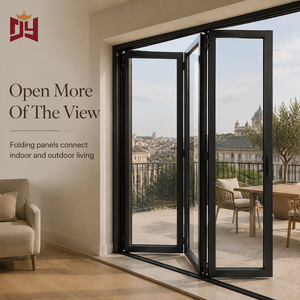
Eliminate procurement fragmentation. Consolidate kitchen stable doors, monumental pivot main entryways, slim bifold patio systems, bullet-resistant casements, and automatic garage doors within a single factory-direct ocean container.

Aligned Time-Zone Coordination

Our multilingual international trade engineers provide live video inspections, shop drawing reviews, and project management aligned with your local business hours across Europe, North America, Oceania, and Latin America.

Over 100 Technological Patents

Supported by more than 30 utility patents and 70 design patents in weather-sealing channels, concealed 3D heavy-duty hinge pivots, and high-pressure drainage weep-hole systems that outperform commodity market offerings.

Professional Procurement Q&A

B2B Sourcing, Technical Validation & Logistics FAQ

Clear, definitive technical and commercial answers addressing common engineering concerns for overseas project managers, procurement heads, and structural consultants.

1. What profile wall thickness and alloy temper are required for exterior kitchen stable doors?
For exterior architectural kitchen stable doors, we mandate primary billet aluminum alloy 6063-T5 or 6063-T6 with a nominal wall thickness of not less than 2.0mm on load-bearing outer frame members and 2.0mm to 2.5mm on active leaf stiles. Secondary interior-only stable partitions can utilize 1.4mm to 1.6mm profiles. Conformance to Chinese National Standard GB/T 5237 and American ASTM B221 ensures profile rigidity against heavy culinary wind loads and prevents sash sag across decades of split articulation.
2. How do aluminum kitchen stable doors achieve water-tightness at the split horizontal meeting joint?
The horizontal intersection between the independently swinging upper and lower sash represents the critical vulnerability in stable door engineering. Our factory utilizes a patented multi-layer labyrinth seal design comprising: (1) An overlapping extruded aluminum weather flange integrated with the upper sash; (2) Dual vulcanized co-extruded EPDM continuous hollow bulb gaskets with internal slip-coating; and (3) Concealed cascade drainage weep-holes routed via CNC machining with one-way silicon check valves. Under testing to EN 12208 and ASTM E331, this barrier prevents dynamic water penetration up to a test pressure of 600 Pa.
3. Can the door leaves operate both independently and in unison?
Yes. A hallmark of our factory-engineered stable hardware is the dual-mode architectural coupling mechanism. When the coupling deadbolt is engaged, the upper leaf locks rigidly to the lower leaf, functioning smoothly as a standard monolithic swinging door operated via the primary master handle. When disengaged, the upper leaf swings open freely (up to 180 degrees) for ventilation, cooking odor extraction, and natural light intake, while the lower leaf remains secured and weather-sealed against children or pets.
4. What are your factory Minimum Order Quantities (MOQ) and production lead times?
As a custom manufacturing enterprise, our standard baseline MOQ for standard profile stock colors (e.g., Anthracite Grey RAL 7016, Jet Black RAL 9005, Traffic White RAL 9016) is 5 sets for custom luxury residential projects, or 1x20GP container (approx. 80–120 sets) for commercial property developments. Production lead times typically span 25 to 35 calendar days following client sign-off on shop drawings and receipt of deposit, with sample rapid-prototyping available in 14 days.
5. How do you guarantee finish durability in aggressive coastal and grease-laden kitchen environments?
We apply chemical pretreatment using hexavalent-chromium-free eco-passivation followed by three primary surface options: (1) Architectural Anodizing exceeding Class AA20 (20μm minimum oxide layer) conforming to ISO 7599; (2) Qualicoat Class 2 certified super-durable architectural powder coating resisting 3,000 hours of continuous salt-spray testing; or (3) Three-coat Polyvinylidene Fluoride (PVDF) fluorocarbon liquid finishes containing 70% Kynar 500 resin. These coatings offer complete immunity to airborne cooking fats, detergent spatter, and maritime coastal saline fog.
6. What international building codes and test reports are supplied with commercial shipments?
Every export consignment is paired with comprehensive Quality Assurance Dossiers, including: Mill Test Certificates (MTC) detailing aluminum chemical composition and tensile elongation; glass safety compliance certificates (CE EN 12150, ANSI Z97.1, AS/NZS 2208); fenestration performance test reports (covering ASTM E283 air, ASTM E331 water, ASTM E330 structural deflection, or AS2047 Australian window and door performance); along with digital video inspection records captured prior to container stuffing.

Connect with Our Engineering & Export Technical Team

Send your architectural schedules, CAD elevations, or custom opening dimensions. Receive detailed shop drawings, thermal performance calculations, and factory-direct CIF/FOB pricing within 24 hours.