Engineered Solutions
High-Performance Aluminum Doors & Architectural Fenestration
Explore our premium architectural catalog designed for acoustic isolation, high-cycling reliability, heavy wind-load resistance, and seamless indoor-outdoor transitions for residential kitchens and expansive patio layouts.
Engineering Whitepaper
Material Science & Fenestration Structural Principles
In contemporary residential and mixed-use commercial designs, the boundary separating kitchen prep spaces, outdoor culinary environments, and interior living quarters has undergone a radical paradigm shift.
As China’s foremost tier-1 aluminum doors manufacturer operating a 180,000㎡ precision production complex in Foshan, Guangdong Dejiyoupin Doors and Windows Co., Ltd. (DERCHI) sets a rigorous benchmark for architectural door production. Modern culinary environments demand doors engineered to handle extreme environmental swings: high internal vapor emissions, volatile organic oils, localized heat gradients, and external airborne salts or harsh weather cycles.
Alloy Metallurgy: 6063-T5/T6
We source ultra-pure primary aluminum ingots alloyed specifically to 6063-T5 and structural 6063-T6 standards. This metallurgical formulation guarantees exceptional tensile yield strength, resistance to micro-cracking under heavy wind deflection, and flawless surface uniformity for electro-coating and anodization.
Polyamide Thermal Barriers
Condensation behind grease-generating cooking ranges is a leading cause of premature hinge decay and seal calcification. Our doors integrate PA66-GF25 (25% glass fiber reinforced polyamide) techno-polymer isolators, severing the conductive thermal bridge and eliminating thermal transfer across structural mullions.
Hermetic Gasketing & Glazing
Leveraging co-extruded EPDM vulcanized continuous corner-molded gaskets, our door perimeter prevents vapor intrusion. Combined with dual/triple tempered Low-E argon insulating glass units (IGU), our kitchen systems achieve structural acoustic attenuation exceeding Sound Transmission Class (STC) 38.
| Door System Typology | Ideal Architectural Location | Thermal Transmittance (U-Factor) | Acoustic Damping (STC) | Wind Load Class (AS2047) |
|---|---|---|---|---|
| Narrow-Stile Glass Bifold | Kitchen-to-Patio Transition / Outdoor BBQ Zone | 1.6 – 2.0 W/m²·K | STC 35 - 38 | Serviceability Limit State: Class N5 |
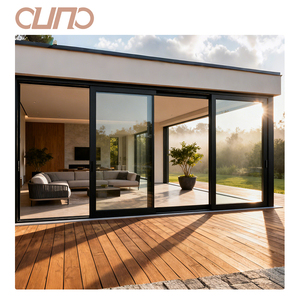
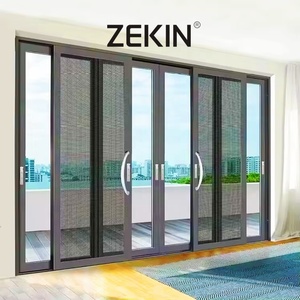
| Multi-Track Stacker Sliding | Open Kitchen Panoramic Envelope | 1.4 – 1.8 W/m²·K | STC 36 - 40 | Ultimate Limit State: Class N6 (Up to 3000 Pa) |
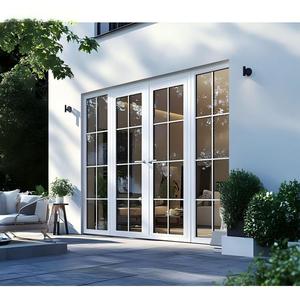
| Thermal Break Casement / French | Service Enclosure / Scullery Balcony | 1.2 – 1.6 W/m²·K | STC 38 - 42 | Water Penetration Resistance: 450 Pa |
| Hydraulic Flush Floor Pivot | Contemporary Luxury Pantry & Foyer Portals | 1.8 – 2.2 W/m²·K | STC 32 - 35 | Interior Division / High-Traffic Cycling (300k+ ops) |
Strategic Market Intelligence
Future Procurement & Architectural Engineering Trends
Analyzing key structural, economic, and aesthetic trends reshaping international fenestration specifications over the next 5 to 10 years.
1. Ultra-Minimalist Sightlines
Procurement demands across high-density urban residential towers and custom beachfront properties have pivoted decidedly toward ultra-slim interlocking stiles (less than 20mm visible sightline). Designers demand unobstructed glass spans that maximize ambient daylight while hiding heavy structural reinforcing profiles within recessed ceiling and floor pockets.
2. Zero-Threshold Drainage Channels
Universal design compliance and frictionless transitions between dry indoor kitchens and wet outdoor entertaining decks require flush-floor bottom tracks. Modern procurement projects heavily prioritize integrated subterranean drainage troughs with stainless steel siphonic slots that clear torrential tropical rainfall without water back-pooling.
3. Decarbonization & Circularity
With global green building codes like LEED v4.1, BREEAM, and WELL setting stricter embodied carbon ceilings, institutional developers favor tier-1 Chinese manufacturers capable of producing mill-certified green aluminum with high recycled scrap content (scrap utilization up to 60%) alongside low-VOC fluorocarbon finishes.
4. IoT & Motorized Automation
Heavy triple-glazed sliding leaves exceeding 400kg per sash are increasingly paired with integrated brushless DC magnetic levitation motors. These systems sync with whole-house building management systems (BMS), opening automatically when range exhaust hoods detect cooking air contamination or closing during wind storms.
5. Accelerated Lead-Time Modularization
To reduce skyrocketing overseas job-site labor overhead, developers actively procure completely pre-glazed, pre-hung aluminum door cassettes. By assembling, calibrating, and pre-drilling mounting brackets in our Foshan facility, project installation labor on site is cut by 60% compared to loose field assembly.
6. Marine-Grade Corrosion Armor
Severe coastal conditions in South Florida, the Caribbean, coastal Brazil, and Southeast Asia quickly ruin typical anodized coatings. The industry standard has moved decidedly toward Qualicoat Class 2 powders and 3-coat fluoropolymer (PVDF) liquid finishes that withstand 3,000+ hours of continuous salt-spray testing without chalking.
Enterprise Strength
Why Major Developers & Global Wholesalers Trust DERCHI
Guangdong Dejiyoupin Doors and Windows Co., Ltd. (DERCHI) stands among China’s Top 10 doors and windows manufacturers, delivering industrial manufacturing power and certified engineering backing from Foshan to international job sites.
Full CAD & BIM Shop Drawings
Our internal fenestration facade engineers draft customized shop drawings, thermal simulation reports, and anchorage schematics for architect approval prior to production, preventing costly field retrofits.
Dedicated Time-Zone Project Management
Our multilingual technical engineering teams schedule live CAD alignment calls matching North American, South American, European, and Australian business hours to keep multi-million dollar schedules strictly on track.
Export-Crated Sea Freight Protection
To withstand trans-oceanic shipping through high humidity and choppy waters, products are sealed in vapor-barrier film, fitted with reinforced corner armor, and placed in ISPM-15 compliant fully enclosed plywood crates.
Need Custom Fenestration Engineering for Your Next High-End Project?
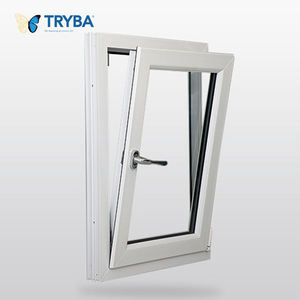
Whether you require NFRC-certified thermal break tilt-and-turn windows, AS2047-compliant bifold patio doors, or structural pivot entries, our Foshan factory provides seamless custom manufacturing directly to your project schedule.
Inquire Now
Clear Technical Answers
Frequently Asked Questions on Aluminum Doors Procurement
Essential guidance addressing technical specifications, logistics, glass security, and building compliance for international project managers and contractors.
How does aluminum compare to solid timber or uPVC in kitchen environments?
Aluminum alloy (specifically 6063-T5) possesses near-zero hygroscopic expansion, meaning it will never warp, swell, rot, or bind when exposed to steam, cooking oils, and heavy humidity—problems that frequently degrade solid timber. Compared to uPVC, aluminum delivers roughly three times the structural flexural rigidity, allowing for ultra-slim stiles that carry double and triple-glazed glass panes up to 3.5 meters high.
What testing data and certifications can DERCHI supply for customs and local engineering reviews?
Our complete fenestration lineups hold valid CE, ISO 9001:2015, Australian AS2047/AS1288, NFRC thermal, and North American AAMA hurricane-impact compliance records. We supply complete laboratory test documentation for structural deflection, uniform static air infiltration (ASTM E283), dynamic water penetration (ASTM E331), and sound transmission losses (ASTM E90) to assist your engineers with code approvals.
Can you manufacture oversized kitchen patio bifold systems tailored to custom rough openings?
Yes. Every door system manufactured in our Foshan production facility is built exactly to your custom schedule and rough-opening dimensions. Our engineering department develops free preliminary shop drawings and exploded-view CAD details, verifying hinge weight-bearing ratios, structural header deflections, and sill drainage channels before extrusion fabrication starts.
What surface finishes provide the best longevity for harsh coastal applications?
For coastal villas, islands, and high-salinity ports (such as Florida, the Caribbean, Sydney, or Santos), we specify certified fluorocarbon coatings (PVDF) meeting AAMA 2605 or high-density anodization up to Class 25 (minimum 25-micron thickness). These multi-coat finishes resist color fading, salt-spray oxidation, and chalking under severe UV sun exposure.
How does your factory protect double-glazed units and hardware finishes during ocean transit?
All glass units are built with automated secondary structural silicone seals, desiccant spacers, and protective peelable static film. Profiles are wrapped in high-density foam, corner-protected with thermo-formed rubber, sealed inside vapor-retardant barrier sheets, and anchored into fumigated, non-timber solid plywood crates designed for direct container crane loading and unloading.
Can multiple building materials be consolidated within a single export shipping container?
Yes. DERCHI's multi-product manufacturing capability allows developers to consolidate kitchen entrance doors, exterior folding patio doors, tilt-and-turn windows, cast aluminum main entry portals, and interior doors into single 40ft High Cube (HC) containers. This unified consolidation significantly lowers ocean freight, terminal processing fees, and customs documentation overhead for buyers.